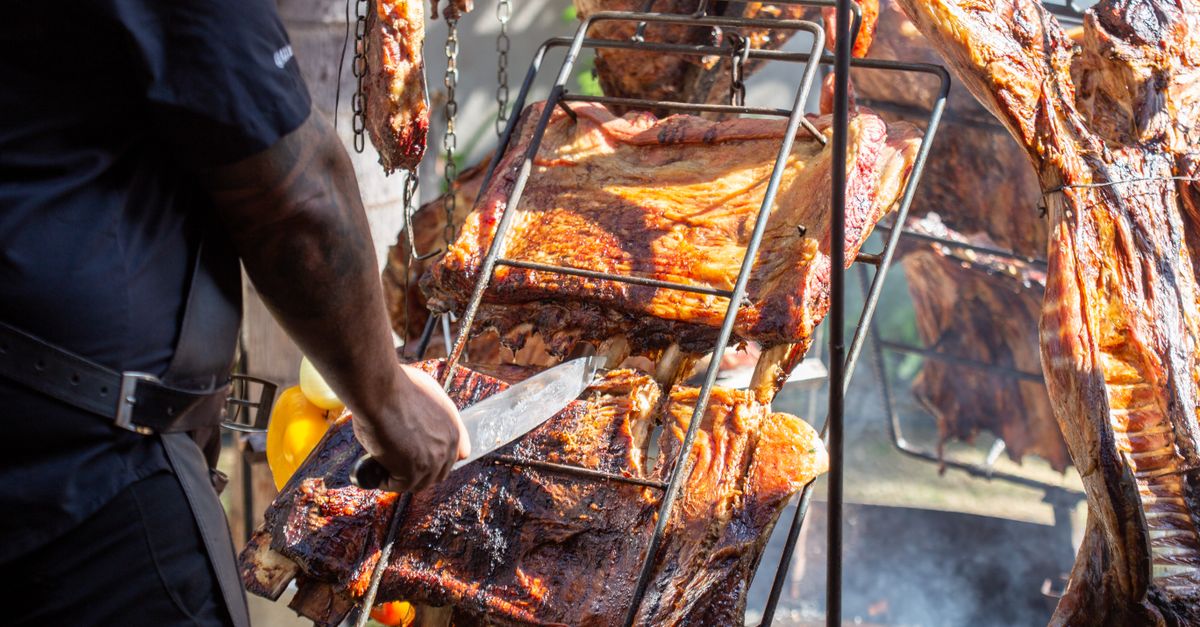
Okay, let’s get one thing straight right off the bat: most people are butchering their pastor link.
Not because they’re bad cooks. Not because they bought the wrong cut of meat. No, the problem is that they’re treating a humble, slightly ugly cut of beef like it’s a filet mignon. They’re trying to dress it up, sear it rare, and serve it with a smug side of arugula. And you know what? The pastor link—that glorious, gelatinous, slow-cooked slab of beef—laughs in your face.
Here’s the controversial truth: Pastor link is not a steak. It’s a project. And the moment you accept that, you unlock a world of flavor that makes dry-aged ribeye look like a boring consolation prize.
I’m Sebastian Gómez, and I’ve spent more hours than I care to admit wrestling with this cut. I’ve burned it, I’ve dried it out, and I’ve cried over it. But I’ve also cracked the code. This isn’t just a guide—it’s a confession. A love letter to the most underrated, misunderstood piece of meat in your kitchen.
Let’s fix this.
The Shocking Truth About Pastor Link (And Why It’s Not Your Fault)
Let’s be honest: the first time you bought a pastor link, you probably thought, “Cool, a cheap roast. I’ll just throw it in the oven for an hour.” And then you ate shoe leather for dinner. I’ve been there. I’ve spat out that shoe leather. And I’ve sworn off the cut for months before coming back, humbled, with a new game plan.
Here’s what most people miss: Pastor link is a muscle that works hard. It’s from the shoulder or the chuck area—a part of the cow that actually moves. That means it’s packed with connective tissue, collagen, and fat. That sounds like a problem, but it’s actually your secret weapon. When you cook it wrong, that collagen turns into a rubber band. When you cook it right, it melts into liquid gold.
The shocking truth? You don’t need a fancy sous vide machine or a smoker. You just need patience, a low oven, and the willingness to ignore every “medium-rare” influencer on Instagram. Pastor link doesn’t want to be pink. It wants to be fall-apart tender.
I’ve found that the best way to approach this cut is to think of it as a redemption arc. You take something tough, ugly, and forgotten, and you turn it into the star of the table. That’s not cooking—that’s storytelling.

The 3 Non-Negotiable Rules for Tender Pastor Link
I’m going to make this simple. Forget the 27-step recipes you see online. Forget the marinades with 18 ingredients you don’t have. If you follow these three rules, you will never serve dry pastor link again.
Rule #1: Low and Slow Is Not a Suggestion—It’s a Command.
You know that moment when you’re starving, the oven is preheating, and you think, “I’ll just crank it to 450°F and speed things up”? Don’t. I’m begging you. Pastor link needs a gentle heat—around 275°F to 300°F—for several hours. I’m talking 3 to 4 hours minimum. The internal temperature needs to hit 200°F to 205°F. That’s the sweet spot where collagen breaks down into gelatin. Anything less, and you’re chewing.
Rule #2: Salt It Like You’re Salting a Sidewalk in January.
This cut is thick. It needs time for the salt to penetrate. I’ve found that dry brining overnight (or even just 2 hours) makes a massive difference. Use kosher salt, pat it dry, and let it sit uncovered in the fridge. The salt pulls out moisture, then reabsorbs it, carrying flavor deep into the meat. The surface dries out, which gives you a killer crust. Skip this step, and you’ll have a bland, sad roast.
Rule #3: Moisture Is Your Best Friend (But Not Water).
Don’t drown it in water. That makes it taste like boiled meat. Instead, use a braising liquid—beef broth, red wine, a splash of soy sauce, maybe some Worcestershire. Add aromatics like garlic, onion, and rosemary. The liquid shouldn’t cover the meat; it should come about halfway up the sides. The steam does the work, and the liquid reduces into a sauce that will make you forget about gravy entirely.
BONUS RULE: Let it rest. For at least 20 minutes. If you cut into it immediately, all that juicy gelatin you worked so hard to create will run onto the cutting board. You’ll cry. I’ve cried. Learn from my tears.
The "Set It and Forget It" Method That Changed My Life
I used to hover over the oven like a nervous parent, opening the door every 15 minutes to check on the pastor link. Big mistake. Every time you open that door, you lose heat and extend the cooking time. You also dry out the meat.
Here’s my lazy-but-genius method:
- Season the pastor link with salt, pepper, garlic powder, and smoked paprika (trust me on the paprika).
- Sear it in a hot cast-iron skillet with oil until all sides are brown. This isn’t optional. The Maillard reaction is your best friend.
- Transfer to a Dutch oven or heavy roasting pan. Add your braising liquid (about 2 cups) and aromatics.
- Cover tightly with a lid or foil. Stick it in a 275°F oven.
- Walk away. I mean it. Don’t touch it for 3 hours. Go watch a movie. Call your mom. Read a book.
- Check it at the 3-hour mark. If a fork slides in like butter, it’s done. If not, give it another 30 minutes.
- Remove the meat, strain the liquid, and reduce it on the stovetop until it’s thick and glossy. You just made your own au jus.

The Secret Ingredient Nobody Talks About (Hint: It’s Not Spices)
Everyone wants to recommend a special rub or a fancy glaze. And sure, those things help. But the real secret to making pastor link taste like a million bucks is time.
Not cooking time—resting time.
I’m talking about letting the cooked roast sit in its own juices for at least 30 minutes after you pull it from the oven. Some chefs even recommend letting it cool completely, then slicing it cold and reheating it in the braising liquid the next day. Sounds crazy, right? But the flavor deepens overnight. The meat reabsorbs the juices. The texture becomes almost creamy.
Here’s what most people miss: The collagen doesn’t just melt during cooking. It continues to soften as the meat rests. If you slice it hot, you lose that. If you let it rest, you win.
I’ve started making my pastor link a day ahead of time for Sunday dinner. I cook it on Saturday, let it cool in the liquid, refrigerate it overnight, and then reheat it low and slow on Sunday. The results are mind-blowing. My family thinks I’m a genius. I just tell them I’m patient.
How to Serve Pastor Link Without Boring Yourself to Death
Let’s be real: a plain roast is boring. You need a supporting cast. Here are three ways I’ve used leftover pastor link that will make you forget about the original dinner:
- Tacos: Shred it, warm it in the braising liquid, and pile it onto corn tortillas with pickled onions, cilantro, and a squeeze of lime. This is my go-to. It’s better than any takeout.
- Sandwiches: Pile the shredded meat on a toasted bun, top with provolone or cheddar, and broil until bubbly. Dip it in the au jus. You’re welcome.
- Hash: Cube the leftover meat, fry it with potatoes, onions, and bell peppers. Top with a fried egg. Breakfast of champions.
The Real Reason You Should Master This Cut
Let’s step back for a second. Why does this matter? Why should you care about cooking a cheap, ugly piece of meat perfectly?
Because mastering pastor link is a badge of honor. It says you understand that cooking isn’t about buying the most expensive ingredients. It’s about technique, patience, and respect for the food. It’s about turning something overlooked into something unforgettable.
I’ve found that the best cooks aren’t the ones who buy prime cuts. They’re the ones who can take a tough, cheap cut and transform it into a meal that makes people close their eyes and sigh with pleasure. That’s real skill.
So next time you see a pastor link on sale at the grocery store, don’t walk past it. Grab it. Take it home. Give it the time and love it deserves. And when your friends ask how you made it so tender, just smile and say, “It’s a secret.”
But now you know the secret. Go make it happen.