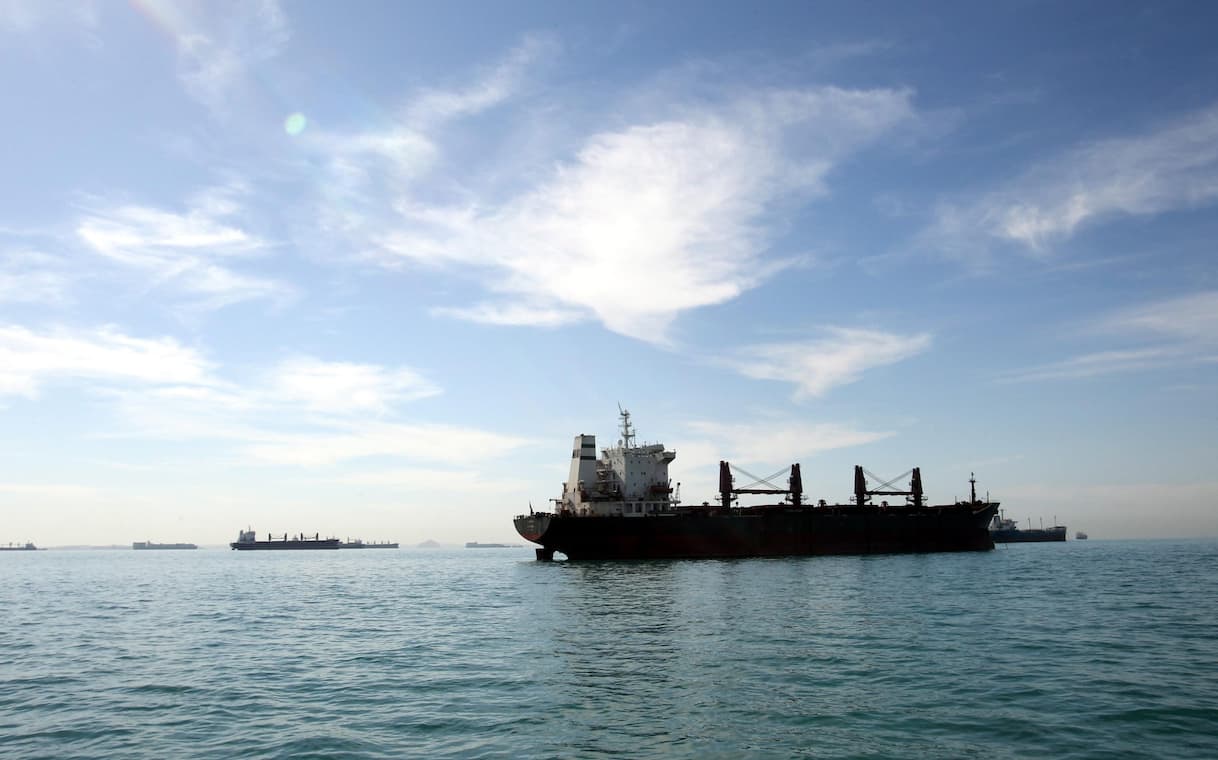
The United States carried out an attack on Iran's Qeshm Island on Monday, according to US officials cited by the Wall Street Journal, which said the report matched accounts from Tehran's own media. Sky TG24 reported the strike as the latest in a series of limited operations Washington has conducted against Iran in recent weeks without public announcement.
The timing is notable: President Donald Trump has continued to raise the prospect of a diplomatic agreement with Tehran, and the attack came after remarks in which he played down the idea of renewed hostilities once the US midterm elections are over. According to Sky TG24, Iran is meanwhile pushing ahead with negotiations and has received the green light from Supreme Leader Ali Khamenei to pursue talks in order to prevent the war from restarting.
Why it matters
Qeshm sits in the Strait of Hormuz, the waterway through which a large share of the world's seaborne oil passes. A military action there is not a peripheral event: it touches the chokepoint that Gulf states and global markets watch most closely. Reporting from Euronews described the targets as Iranian objectives on Qeshm in the Strait of Hormuz.
The strike also lands in an unusual diplomatic window. Washington is publicly keeping open the possibility of a deal while, according to the Wall Street Journal's account, quietly conducting limited missions. Tehran, for its part, is talking to Washington through a Qatari mediator even as it describes itself as still at war. Both tracks are running at once, which makes the next few weeks difficult to read.
Tehran condemns the raid and insists it is still at war
Iran's deputy foreign minister, Kazem Gharibabadi, condemned the US attacks on Qeshm in the Persian Gulf, which he said took place overnight. "In our view, the aggression against Iran is not over and we remain in a state of war," he said, adding that Iran reserves the right to defend itself until what he called the military aggression ends completely and definitively. He also said Tehran is prepared for any scenario and would take its own defence seriously if Washington chose a different course.
Gharibabadi addressed the US elections directly, saying Iran does not tie its foreign policy to other countries' votes. According to the Isna agency, as cited by Sky TG24, he described the US midterms as an internal American matter and said Tehran is neither waiting for results nor aligning its policies with them.
On the diplomatic track, he said an Iranian proposal serves as the basis for resolving issues with the United States through the Qatari mediator, that all current talks centre on that proposal, and that feedback has come back from the American side. If Iran's demands are met, he said, a diplomatic understanding could be reached.
Public rhetoric hardens on the streets of Tehran
Alongside the negotiations, Tehran has escalated its public messaging. A large billboard unveiled in the capital's busy Enghelab Square threatens Trump with death, showing the US president behind bars with his head bowed. A nearby poster depicts him alongside Vice President JD Vance, special envoy Steve Witkoff and Israeli Prime Minister Benjamin Netanyahu with bloodied faces and torn clothes, in front of tattered American and Israeli flags. Sky TG24 reported that dozens of people gathered in the square waving red flags and carrying banners reading "There will be blood," calling for revenge for Supreme Leader Ali Khamenei, whom the report says was killed in US-Israeli air raids on Tehran on 28 February, the event that began the Middle East war.
Such displays have become common in Tehran since the conflict started. In Tajrish Square in the north of the city, an open-air exhibition showed paintings mocking Trump, including one of him on the ground with a bloodied face under a foot, and another with a bomb obscuring his face in an apparent nod to René Magritte's 1964 painting "The Son of Man."
Regional pressure builds on several fronts
The Qeshm strike is one strand of a wider regional picture. Yemen's Iran-aligned Houthis, at war with the Saudi-backed government, said 17 civilians were killed and 59 wounded in Saudi raids since Sunday. The group's health ministry said most of the victims were children and argued the toll showed Saudi aircraft were hitting homes, residential districts and markets. Houthi military spokesman Yahya Saree said Riyadh carried out 109 raids in 24 hours across the governorates of Saada, Taiz, Lahj, Al-Jawf and Hodeidah, and the group claimed drone attacks on Saudi airports in the east and south of the kingdom.
Yemen has been at war since 2014, when the Houthis seized the capital Sanaa; a Saudi-led coalition entered the following year in support of the government. A 2022 truce collapsed in July, and in September the Houthis launched an offensive to take the Bab al-Mandeb strait, which links Europe to Asia via the Red Sea and the Suez Canal. According to the United Nations, 1,600 people have been killed and more than 300,000 displaced since fighting resumed.
In Israel, opposition leader Yair Lapid met with Gadi Eisenkot, Naftali Bennett, Avigdor Lieberman and Yair Golan to coordinate party positions ahead of consultations with the head of state beginning Tuesday. Lapid said the group faced "a serious and dangerous attempt to falsify the election results" and called for a government to be formed, arguing recent behaviour confirmed the need to remove Netanyahu from the premiership. The Israeli military said it was not involved in attacks carried out by the United States, according to the same reporting.
What to watch
The immediate question is whether the Qeshm strike was a one-off message or part of a continuing covert campaign, and whether the Qatari-mediated channel produces anything concrete before the US midterms. Watch for further statements from Gharibabadi on Iran's proposal, and for any sign from Washington that the limited operations are meant to pressure Tehran at the negotiating table rather than to close the door on talks.




