
Here’s a fact that stopped me mid-scroll: The world now adds more renewable capacity every single year than the total installed power capacity of entire countries like Germany or Brazil. Let that sink in. We’re not just tinkering at the edges anymore; we’re in the midst of a full-blown energy revolution. And 2024 isn't about incremental gains—it's about specific, tangible breakthroughs that are ready to walk out of the lab and kick down the doors of some of our biggest, most entrenched industries.
I’ve been tracking these trends for a while, and here’s what most people miss: the real disruption happens when a green tech doesn't just make energy cleaner, but makes it fundamentally cheaper, more efficient, or unlocks capabilities that fossil fuels simply can't offer. That’s the pivot point. That’s when boardrooms pay attention and markets shift overnight.
So, let’s look past the vague promises. Here are three innovations poised to cause serious, tangible disruption in 2024.

The Invisible Solar Revolution: When Every Surface Becomes a Power Plant
We all know solar panels. They’re on rooftops and in fields. But let’s be honest, they’re bulky, rigid, and have limitations. What if you could turn your factory’s walls, your car’s roof, or even your windows into efficient solar generators? Enter perovskite solar cells, and specifically, their leap into tandem cell technology.
This isn't new in concept, but 2024 is the year it gets real. Companies are now achieving commercial-scale production of perovskite-on-silicon tandem cells. The magic? They layer a thin film of perovskite—a crystalline material that’s cheap and easy to produce—on top of traditional silicon. The perovskite captures different light wavelengths (like blue light) that silicon misses. The result is a single panel that can be up to 50% more efficient than the best silicon-only panels on the market today.
But the disruption goes beyond just better rooftop panels. The real game-changer is in building-integrated photovoltaics (BIPV). We’re talking about solar films so thin and flexible they can be laminated onto steel cladding, curved glass, or vehicle bodies. Imagine an electric truck that charges itself while parked in the sun, or a skyscraper whose entire glass facade is a net energy producer.
The industry in the crosshairs? Construction and automotive. For builders, this turns a cost center (the building envelope) into a revenue-generating asset. For automakers, it’s a direct path to extending EV range and reducing grid dependency. This isn't just an energy shift; it's a materials and design revolution.
Green Steel: The Secret Weapon to Decarbonize… Everything
Here’s a shocking truth you rarely hear: If the global steel industry were a country, it would be the third-largest emitter of CO2 on the planet. We make over 1.8 billion tons of it a year, and the process is almost entirely reliant on coking coal to purify iron ore. It’s dirty, it’s old, and it’s been considered impossibly hard to green.
Until now. The breakthrough isn't a single gadget, but a process revolution centered on green hydrogen. The method is called Hydrogen Direct Reduction (HDR). Instead of using coal, you use hydrogen gas (made from water using renewable energy) to strip the oxygen from iron ore. The byproduct? Water vapor. Not CO2.
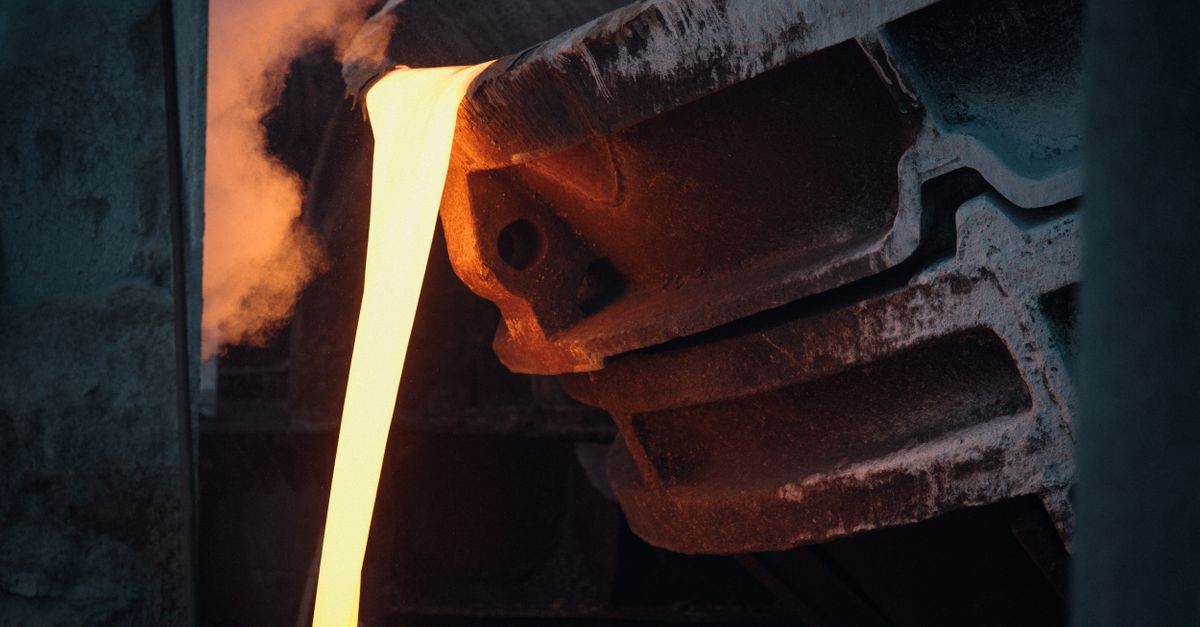
Why is 2024 the inflection point? Two words: policy and pilots. Europe’s Carbon Border Adjustment Mechanism (a carbon tax on imports) is now live, making dirty steel more expensive. Simultaneously, major commercial-scale plants from companies like H2 Green Steel in Sweden and SSAB in Sweden are moving from groundbreaking to production. They have binding offtake agreements from giants like Mercedes-Benz, Ikea, and Siemens.
The disruption here is tectonic. Steel is the skeleton of modern civilization—in our cars, appliances, and infrastructure. Green steel creates a domino effect. A car made with green steel instantly has a far smaller manufacturing carbon footprint. This innovation doesn't just disrupt the steel industry; it disrupts every industry that uses steel, forcing a supply-chain reckoning. It proves that even the hardest-to-abate sectors can fall.
The Grid Gets a Brain: AI and the Dawn of the Virtual Power Plant
Our electrical grid is an engineering marvel, but it’s also a bit of a dinosaur. It’s built on a one-way street: big power plants send electricity out, and we consume it. Throw in millions of intermittent solar roofs and wind farms, and the grid gets stressed. The traditional answer? Build massive, expensive battery storage facilities (which we still need).
But the smarter, more immediate answer is to use what we already have, more intelligently. That’s the promise of the Virtual Power Plant (VPP), supercharged by artificial intelligence. A VPP is a cloud-based network that aggregates thousands of distributed energy resources—home solar+battery systems, smart thermostats, EV chargers, even commercial HVAC systems—and coordinates them to act like a single, reliable power plant.

The 2024 breakthrough is in the sophistication of the AI and the scale of adoption. Companies like Tesla, Sunrun, and a host of startups are deploying software that can predict grid stress (like a heatwave), and within milliseconds, orchestrate a response. It might instruct 50,000 home batteries to discharge a little power, nudge smart water heaters to pause for 15 minutes, and slow down EV charging rates—all invisible to the homeowners.
Who gets disrupted? The entire traditional utility model. A VPP is a "peaker plant" that you don’t have to physically build. It defers billions in infrastructure spending. For the consumer, it turns their energy assets into income sources. For the grid, it’s the ultimate shock absorber for renewable energy integration. This is the soft, digital infrastructure that makes the hard, physical infrastructure work.
We often think of the energy transition as a slow, generational grind. But history shows it happens in sudden lurches. The switch from sail to steam, from horses to cars—it wasn't linear. These three green energy breakthroughs—tandem solar, green steel, and AI-driven VPPs—represent that lurch. They’re moving from pilot projects to purchase orders.
They prove that the future isn't just about being greener. It's about being smarter, more efficient, and ultimately, more economically resilient. The question for 2024 isn't if these technologies will start to reshape their industries, but how quickly the incumbents will adapt or be left behind. The disruption isn't coming from the energy sector alone; it's coming from material science, digital intelligence, and industrial chemistry. And that makes it unstoppable.
So, what’s your role in this? Pay attention. The next car you buy, the next building you work in, the next utility bill you see—they’re all about to feel the ripple effects of these quiet revolutions. The future isn't just powered differently; it's built differently.



