

⚡ Quick Answer
From 1 October 2026, TRAFFITECH-GH cameras automatically enforce Ghana's traffic offences, with one penalty unit set at GH¢12. Fines range from GH¢60 for jaywalking to GH¢2,400 for drink-driving. Repeat camera-detected offenders face court, retraining and licence suspension of at least 12 months, and notices go to the registered owner.
Ghana's roads are about to get a lot less forgiving. From 1 October 2026, the TRAFFITECH-GH camera network moves from monitoring to full enforcement, automatically capturing traffic offences and issuing penalties linked to a fixed penalty unit of GH¢12.
That means the phone call you take at a junction, the red light you squeeze through, or the car you lend a friend could all come back to you as a bill — or worse, a court date. This guide breaks down all 23 listed offences and their costs, explains how the camera escalation ladder works, and shows exactly what registered owners need to do to stay clean.
🔑 Key Takeaways
- TRAFFITECH-GH cameras begin full automated enforcement on 1 October 2026, with one penalty unit valued at GH¢12.
- Fines span from GH¢60 for jaywalking to GH¢2,400 for drink or drug driving, with imprisonment possible for serious offences.
- Camera-detected offences escalate from GH¢120 for the first three offences to GH¢240 by the fifth.
- A sixth camera offence within 24 months can lead to court, licence suspension or revocation for at least 12 months, plus retraining and retesting.
- Enforcement notices are sent to the registered owner of the vehicle — not necessarily the person driving.
📑 Table of Contents
- What Is TRAFFITECH-GH and Why Does 1 October 2026 Matter?
- The Full Offence Schedule: What Each Violation Could Cost You
- How the Camera Penalty Ladder Works
- Who Gets the Ticket? The Registered Owner Rule
- Practical Steps to Avoid Penalties Under TRAFFITECH-GH
- What Happens After a Camera Notice Arrives
- Frequently Asked Questions
What Is TRAFFITECH-GH and Why Does 1 October 2026 Matter?
 Traffic Camera Ghana Road
TRAFFITECH-GH is Ghana's automated traffic enforcement programme, using roadside cameras and sensors to detect and record traffic violations without an officer needing to pull a driver over. Until now, much of the system has operated in a monitoring and pilot phase. From 1 October 2026, that changes: cameras begin full enforcement, and captured offences translate directly into penalties.
The financial engine behind the system is the penalty unit, fixed at GH¢12. Every offence in the schedule is expressed as a multiple of that unit, which keeps fines consistent and easy to calculate. A GH¢120 fine, for example, represents 10 penalty units.
Why automation changes driver behaviour
Manual enforcement depends on an officer being in the right place at the right time. Camera enforcement is constant. It records speed, red-light compliance, lane discipline and phone use around the clock, which removes the element of luck that many drivers have relied on.
- Consistency: the same offence attracts the same penalty regardless of location or time.
- Evidence: each notice is backed by captured footage or sensor data.
- Scale: thousands of violations can be processed daily without extra personnel.
For fleet operators, ride-hailing drivers and private car owners alike, the practical message is simple: assume you are being watched on every major corridor.
The Full Offence Schedule: What Each Violation Could Cost You
 Ghana Police Traffic Stop
The published schedule lists 23 offences, each with a fine range and, in many cases, a possible prison term. The table below summarises the headline figures so drivers, riders and pedestrians can see the real cost of a moment's impatience.
Serious offences carry the heaviest penalties
Drink or drug driving sits at the top of the scale, with fines from GH¢600 to GH¢2,400 and possible imprisonment of up to 40 months. Using a phone while driving can attract up to GH¢600 and up to 3 months in prison. Unauthorised okada or aboboyaa operation is also treated severely: operators face GH¢600 to GH¢1,200 and up to 24 months, while riders face GH¢300 to GH¢600 and up to 8 months.
Mid-tier and lower-tier offences
Most moving violations — red-light jumping, failing to stop or yield, street racing, speeding, overtaking at a pedestrian crossing, disobeying a traffic officer and improper parking — fall in the GH¢120 to GH¢360 band, typically with up to 30 days' imprisonment possible.
At the lower end, boarding or alighting at the wrong place and jaywalking or refusing to use a footbridge attract up to GH¢60 with up to 7 days' imprisonment. Selling goods on the road or walkway, preaching or hawking in a moving trotro, and washing or repairing a vehicle on the road round out a schedule that targets behaviour, not just vehicles.
- Parking in a disability bay: up to GH¢300 and up to 8 months' imprisonment.
- Operating a TV monitor while driving: up to GH¢300 and up to 30 days.
- Overcharging passengers: GH¢120 to GH¢300 and up to 30 days.
- Failure to provide disability facilities on public transport: GH¢120 to GH¢300 and up to 30 days.
Notice that pedestrians and traders are not exempt. The schedule treats the road as a shared space with shared obligations.
How the Camera Penalty Ladder Works
 Speed Camera Highway Sign
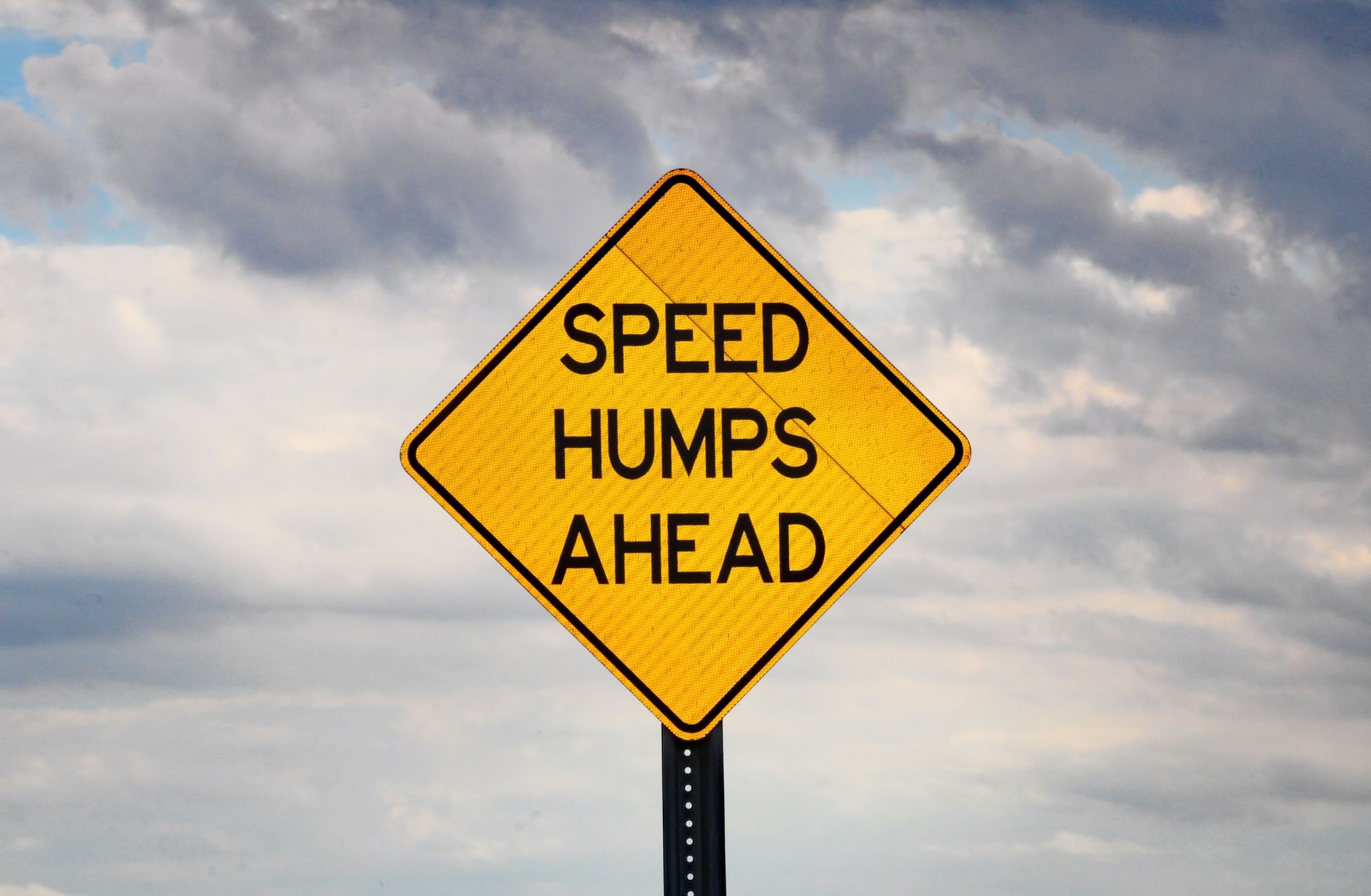
Camera-detected offences follow a separate escalation structure designed to punish repeat behaviour rather than a single lapse. The first three camera offences each attract a flat GH¢120. The fourth rises to GH¢180, and the fifth to GH¢240.
The sixth offence is where it gets serious
If you accumulate a sixth offence within 24 months, the consequences move beyond fines. You could be taken to court, and your licence could be suspended or revoked for at least 12 months, with mandatory retraining and retesting before you drive again.
Consider a realistic scenario: a commercial driver in Accra picks up a speeding ticket in November, a red-light notice in January, and a phone-use capture in March. Three offences at GH¢120 each is GH¢360 — painful but manageable. Add two more over the following year and the fifth notice costs GH¢240. A sixth within the 24-month window and that driver is off the road for a year, unable to earn.
- Offence 1: GH¢120
- Offence 2: GH¢120
- Offence 3: GH¢120
- Offence 4: GH¢180
- Offence 5: GH¢240
- Offence 6 within 24 months: court, suspension or revocation for at least 12 months, retraining and retesting
The ladder is cumulative and time-bound, so the clock matters as much as the count.
Who Gets the Ticket? The Registered Owner Rule
 Car Keys Handover Driver
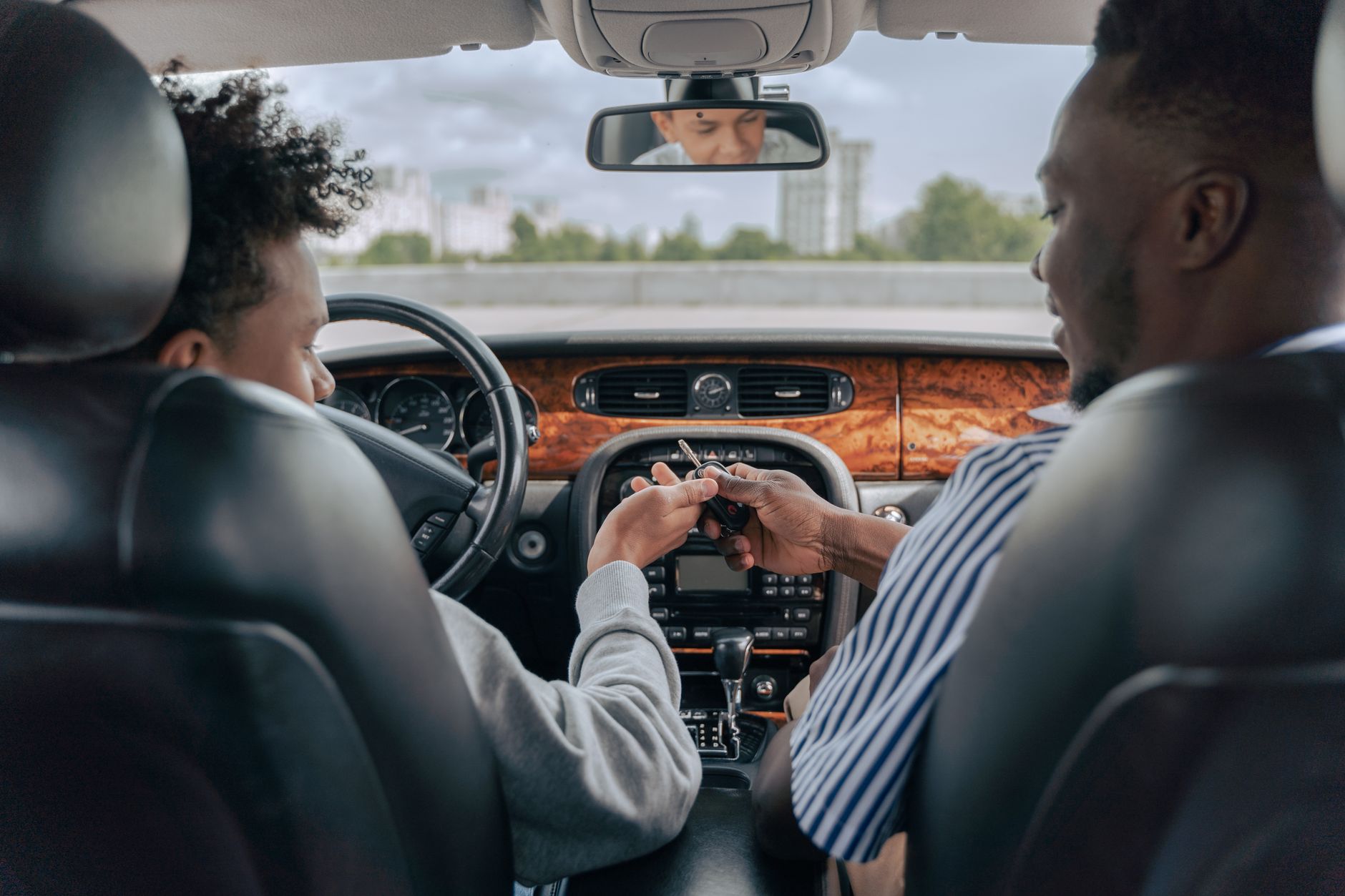
One detail catches more people out than any other: for camera-detected offences, the notice goes to the registered owner of the vehicle. The camera records a number plate, not a face. Whoever's name sits on the registration documents receives the penalty.
The borrowed-car problem
This is why the casual favour — "Boss, lend me your car small" — carries real risk. If your friend runs a red light or exceeds the speed limit, the notice arrives at your address, in your name, and lands on your record. You may be able to contest or transfer liability depending on the evidence and process, but the administrative burden and the escalation count sit with you until resolved.
The same applies to company vehicles, taxis and trotros with multiple drivers. A fleet with ten vehicles and no driver-tracking system is effectively absorbing every driver's risk.
- Keep a log: record who drives which vehicle and when.
- Be selective: lend only to licensed, insured drivers you trust.
- Act fast: respond to notices promptly rather than letting them stack up.
- Fleet owners: link each notice to a named driver at the time of capture.
Ownership is responsibility. The system is built on that principle.
Practical Steps to Avoid Penalties Under TRAFFITECH-GH
 Driver Checking Phone Car
Avoiding penalties is mostly about removing the small habits that cameras are designed to catch. Most violations are not deliberate acts of recklessness — they are shortcuts taken under time pressure.
Fix the phone habit first
Phone use while driving is one of the most commonly captured offences and one of the most expensive at up to GH¢600. Mount your phone, use hands-free where lawful, and pull over safely if you must take a call. A single avoided offence pays for a decent phone holder many times over.
Build a pre-trip routine
- Check your documents: valid licence, insurance and roadworthy certificate.
- Plan your route: know where pedestrian crossings, railway crossings and bus stops are.
- Leave earlier: most red-light jumping and speeding is a response to being late.
- Respect crossings: never overtake at a pedestrian crossing.
- Park legally: avoid disability bays, double parking and taxi ranks unless authorised.
For commercial operators, invest in telematics and driver training. A single licence suspension can cost a driver a year's income — far more than any training programme.
What Happens After a Camera Notice Arrives
Receiving a notice is not the end of the process, but ignoring it is the worst possible response. The system is automated, and unresolved penalties accumulate against the registered owner.
Respond, don't ignore
Review the evidence, confirm the date, time and location, and establish who was driving. If you believe the notice is incorrect, follow the official dispute process rather than simply not paying. Unpaid penalties can escalate to court action, and they count toward the 24-month escalation ladder.
- Verify the details: plate number, offence type and timestamp.
- Identify the driver: especially critical for shared and fleet vehicles.
- Pay or dispute on time: deadlines matter.
- Keep records: retain receipts and correspondence.
Drivers should also note that the schedule includes imprisonment as a possible outcome for many offences. Fines are the default, but courts retain discretion, particularly for repeat or serious violations such as drink-driving.
Frequently Asked Questions
When do TRAFFITECH-GH cameras start full enforcement?
Full automated enforcement begins on 1 October 2026. From that date, camera-detected traffic offences are processed into penalties, with notices issued to the registered owner of the vehicle involved.
How much is one penalty unit in Ghana?
One penalty unit is set at GH¢12. Every fine in the schedule is calculated as a multiple of this unit, so a GH¢120 fine equals 10 penalty units.
What happens if I get six camera offences in 24 months?
A sixth camera-detected offence within 24 months can result in court action and suspension or revocation of your licence for at least 12 months. You would also need to complete retraining and retesting before driving again.
Who receives the fine if someone else was driving my car?
The notice goes to the registered owner of the vehicle, because cameras record number plates rather than faces. Owners of shared or lent vehicles should keep a log of who was driving to manage liability.
What is the highest fine under the new schedule?
Drink or drug driving carries the highest fine range at GH¢600 to GH¢2,400, with possible imprisonment of up to 40 months. Phone use while driving can attract up to GH¢600 and up to 3 months' imprisonment.
Do pedestrians and traders also face penalties?
Yes. Jaywalking or refusing to use a footbridge attracts up to GH¢60 and up to 7 days' imprisonment, while selling goods on the road or walkway can attract up to GH¢600 and up to 3 months.
Conclusion
TRAFFITECH-GH marks a genuine shift in how Ghana enforces traffic law. From 1 October 2026, the cameras are not watching for statistics — they are watching for offences, and every capture carries a price measured in GH¢12 units.
The rules reward preparation and punish habit. Mount the phone, respect the lights, watch your speed, and think twice before handing over your keys. Because when the notice arrives, it will carry your name, not your friend's.
Sources & Further Reading
Check your documents, fix your driving habits and share this guide with anyone who borrows your car — before the cameras start counting.



