The share of journalist killings that go unpunished worldwide has climbed for the first time in more than a decade, according to a biennial UNESCO report released to mark the International Day to End Impunity for Crimes against Journalists on 2 November. The UN cultural agency recorded 189 confirmed deaths of journalists and other media workers during 2024-2025 — a 20 per cent increase over the previous two-year period and the highest toll since 2014-2015. Impunity reached 86 per cent, up one percentage point, according to UN News.
UNESCO Director-General Khaled El-Enany said reporters are increasingly losing their lives while covering war, and that those responsible for the killings frequently escape justice. UN Secretary-General António Guterres, in his message for the Day, said at least 34 journalists were killed over the past year and that six of every seven such killings go unpunished, with impunity in conflict settings nearing 100 per cent. He described the situation as a grave insult to the victims, their families and the public that relies on journalists for information.
Why it matters
UNESCO has tracked the unpunished-killing rate since 2012, and the report's authors treat the reversal as a warning. The findings, published in the Director-General's Report on the Safety of Journalists and the Danger of Impunity, indicate that killings occurred in every region during the biennium, which the report calls a worldwide problem.
The figures also point to a changing pattern of danger. Conflict zones accounted for 127 deaths, or 67 per cent of the total. The Arab States recorded the most verified cases at 97, followed by Latin America and the Caribbean at 37, Asia-Pacific at 34, Central and Eastern Europe at 14, Africa at 6 and Western Europe and North America at 1. The State of Palestine had the highest annual counts, with 30 killings in one year and 32 in the other.
Drones become a documented threat
UNESCO flagged the expanding use of drones to kill journalists as a disturbing new danger. Drone strikes accounted for 50 deaths during 2024-2025 — 40 per cent of all journalists killed in conflict zones, according to the report.
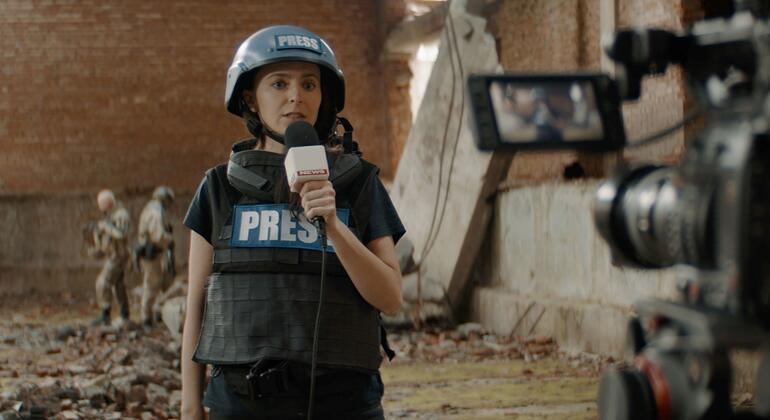
The report documented seven incidents in which multiple journalists were targeted and killed in a single attack, including strikes on media workplaces and temporary reporting centres. Fifteen journalists were reportedly killed while wearing press vests or travelling in vehicles clearly marked "Press."
El-Enany repeated his call for respect of UN Security Council Resolution 2222, adopted unanimously in 2015, which treats journalists, media professionals and associated personnel as civilians in conflict situations — a status he said was reaffirmed in the Pact for the Future.
Progress outside conflict zones
The report also records gains. In countries not at war, the impunity rate has continued to fall, from 94 per cent in 2012 to 77 per cent in 2026 — roughly one percentage point a year. Killings outside conflict zones numbered 85, the lowest in 18 years.
UNESCO said the trend shows that progress is achievable when governments put resources into investigations, prosecutions and protections for journalists.
Women in the profession remain especially exposed, the agency noted, both in war zones and online. Thirteen of the 14 women killed during the biennium died in countries affected by armed conflict. A 2025 study by UN Women and the International Center for Journalists found that 75 per cent of women journalists had faced abuse or harassment, online or offline. More than 40 per cent reported physical violence connected to online attacks, compared with 20 per cent in a 2020 UNESCO survey.
Guterres said journalists around the world continue to pay an unacceptable price for reporting the truth, and that silencing them harms everyone who depends on their work.
The report arrives as journalist groups press the issue. The National Union of Journalists and outlets including Punch Newspapers and THISDAYLIVE used the Day to demand prosecution of those who attack reporters and an end to impunity.
Watch whether the next biennial report, due in 2028, shows the impunity rate resuming its decline — or whether the 2024-2025 uptick marks the start of a longer reversal.




