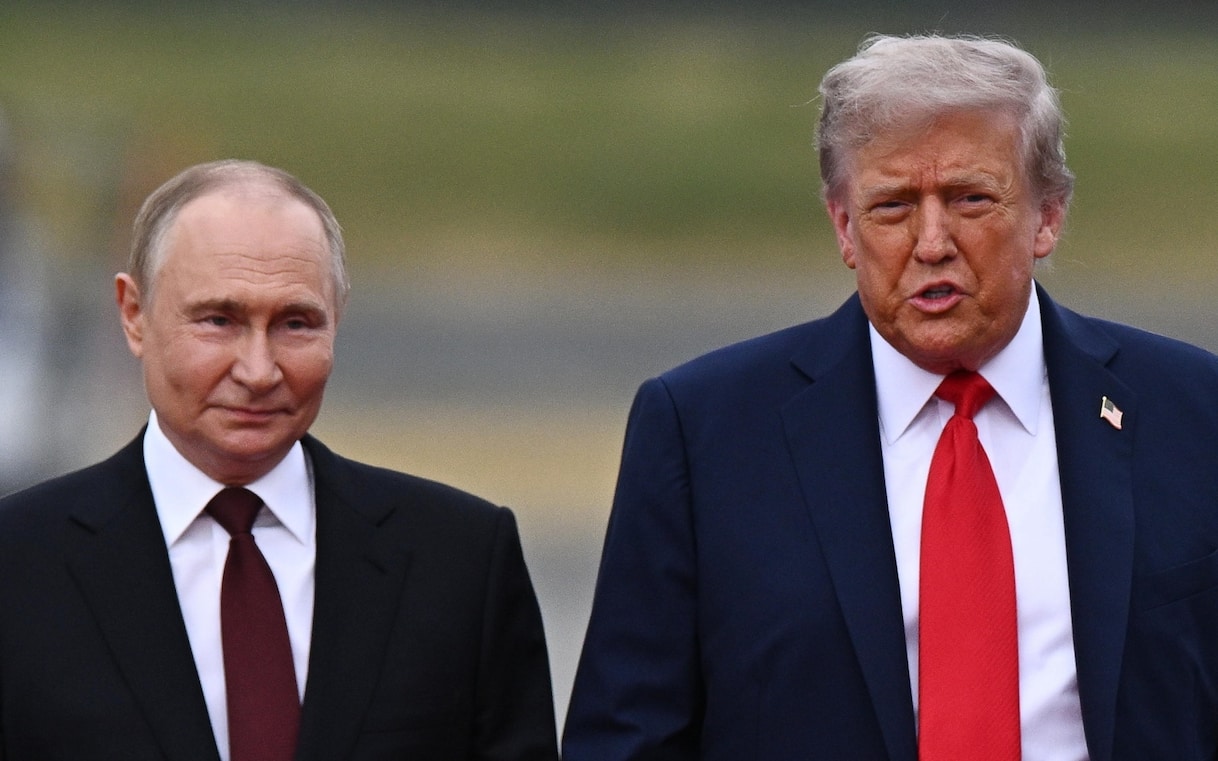
US President Donald Trump signed an executive order suspending major sanctions and tariffs on Russian exports that had been set out in the Lindsey Graham Act, stopping the measures just days before they were due to take effect. Sky TG24 reported that the move was intended to ease pressure on diesel prices in the United States ahead of the midterm elections. The suspension drew immediate reactions from Moscow and Kyiv, with each side framing it very differently.
Why it matters
The Lindsey Graham Act had been designed as a lever of economic pressure on Moscow over the war in Ukraine. By halting it before implementation, Trump has removed — at least for now — a tool that Kyiv had counted on to force Russia toward ending the conflict. The decision lands in the middle of an election campaign in which fuel costs are a domestic political concern, and it sharpens the divide between Washington's approach and the position of European allies, a gap HuffPost Italia described as a widening Atlantic.
Moscow calls it historic, Kyiv warns of encouragement
Kirill Dmitriev, the Russian president's special representative for investment, welcomed the decision in a post on X, describing it as an important and genuinely historic moment, according to Sky TG24. He argued that economic cooperation between Russia and the United States serves the interests of both countries and contributes to global stability.
Ukrainian President Volodymyr Zelensky took the opposite view. According to Il Fatto Quotidiano, he said that declining to apply the act — which was meant to exert real pressure on Russia to end the war — risks encouraging Vladimir Putin to keep fighting. In the same remarks, Zelensky said he expected Washington to lift further sanctions against Russia, ANSA reported.
Trump, for his part, renewed his criticism of the Ukrainian leader, saying Zelensky is a harder counterpart to deal with than Putin and blaming him for high energy costs, according to Il Fatto Quotidiano.
Signals of talks, and a proposed three-way meeting
Despite the exchange of criticism, Zelensky said channels with Washington remain open. Writing on X, he said the American side had given a signal that a meeting between Ukrainian and US officials could take place the following week.
He also said the United States is working on a possible meeting with Putin and has put forward a proposal for a trilateral gathering. According to Zelensky, such a meeting could be held in a Middle Eastern country, with the United States having repeatedly mentioned the United Arab Emirates or Saudi Arabia as options. He said another possibility is holding it on US soil during the G20 summit, and that a European country could also host it, noting that Europeans have begun making contacts on the matter. He added that neither Russia nor the United States has confirmed anything yet.
Starlink restrictions and a public clash with Musk
The sanctions decision came alongside renewed scrutiny of Ukraine's dependence on privately operated satellite technology. Sky TG24 reported that a block on Starshield — the military version of Elon Musk's satellite service — slowed Ukrainian drones for 36 hours. The restriction occurred hours after Washington took a new position favourable to Moscow and after another long-distance clash between Trump and Zelensky, the outlet reported. The episode has raised questions about American support for Kyiv and, more broadly, about the risks of tying the conduct of a war to technology controlled by a private company and, ultimately, by a government.
Musk himself weighed in publicly. Responding on X to a post discussing an interview Zelensky gave to British journalist Piers Morgan — in which the Ukrainian president said satellite slowdowns cost lives — Musk called for Zelensky to step down, writing that the "massacre" would continue and that it was time for him to leave, according to Sky TG24. Musk shifted responsibility to Washington, saying that any limit on speed or use is decided by the US military and, ultimately, by the US president.
Warnings from Belarus and a Russian diplomatic tour
Zelensky also warned that Russia could step up air attacks on western Ukraine with Belarusian help. Speaking to journalists in comments carried on his X account, he said the risk of increased attacks on the western part of the country is real and that Russia is preparing for it. He said transmission stations are being installed on Belarusian territory to use that corridor for drones and to intensify strikes, and that Moscow needs Lukashenko's support to deploy other weapons, including ballistic missiles, on Belarusian soil. Zelensky said such a deployment would pose a threat above all to western Ukraine and would mean drawing Belarus directly into the war — something he described as very dangerous, including for Belarus itself.
Separately, Russian Foreign Minister Sergey Lavrov arrived in Manama for the ninth strategic dialogue between Russia and the Gulf Cooperation Council, Russia's state agency Tass reported, according to Sky TG24. Bahrain is the first stop on a Middle East tour; Lavrov is expected to travel on to Tehran for consultations with Iranian Foreign Minister Abbas Araghchi. Russian Foreign Ministry spokeswoman Maria Zakharova said Lavrov is due to hold a series of bilateral meetings on the sidelines of the Russia-GCC dialogue.
What to watch next: whether Washington confirms the proposed meeting formats Zelensky described, and whether Congress or European governments respond to the suspension of the Lindsey Graham Act.