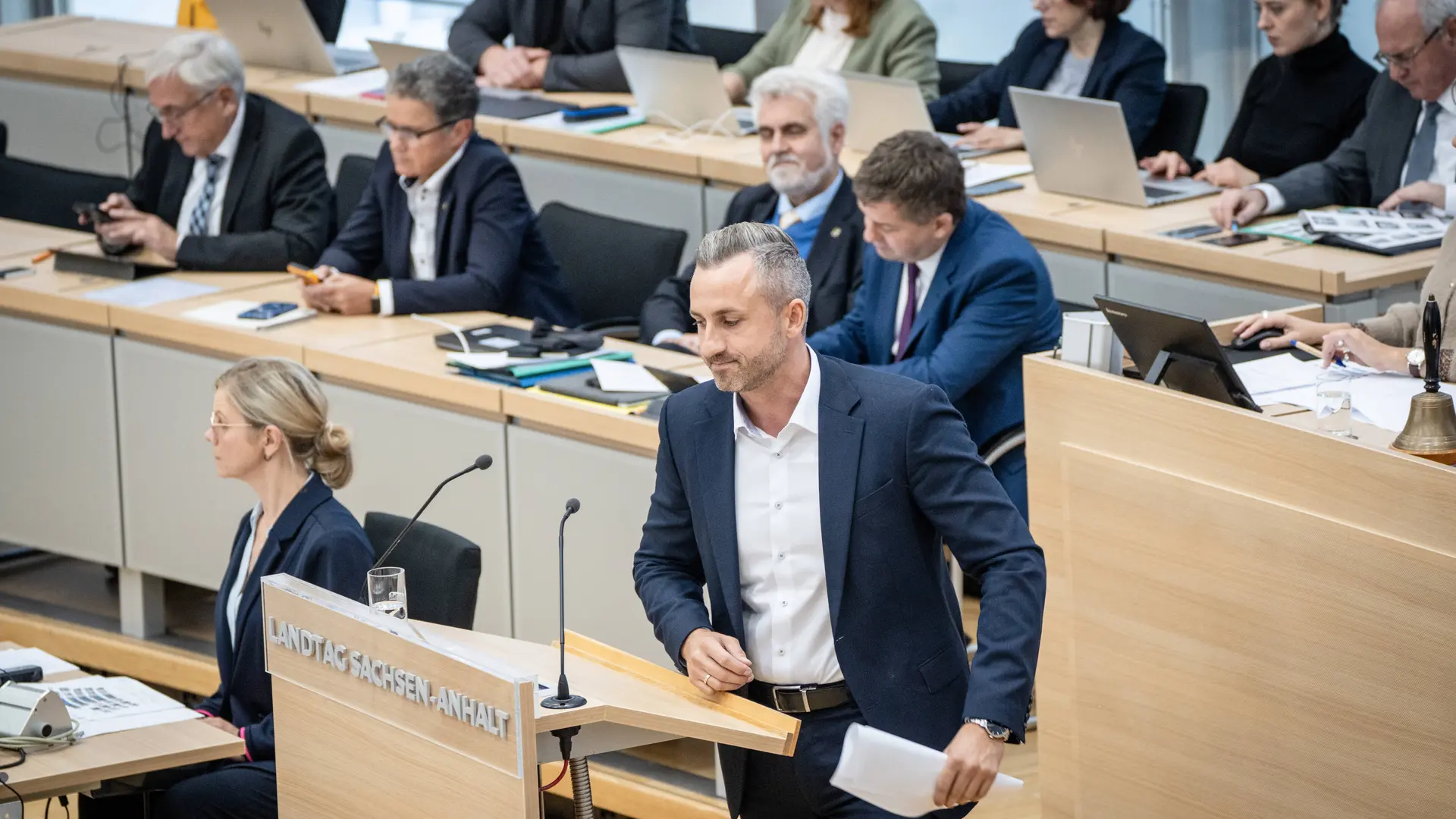
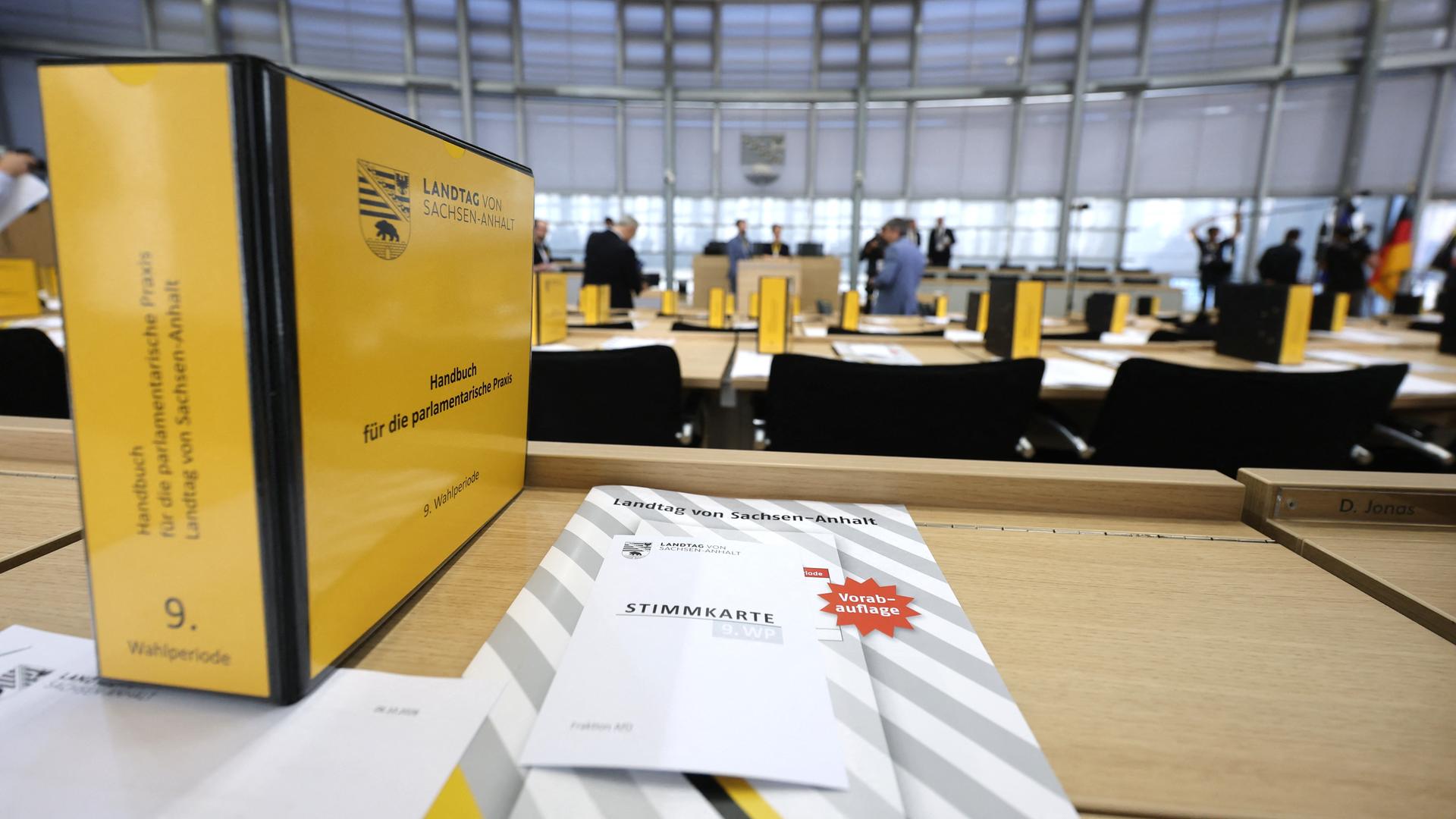
The state parliament of Saxony-Anhalt approved a joint motion from the Alternative for Germany (AfD) and the Sahra Wagenknecht Alliance (BSW) on Wednesday calling for an immediate end to all aid to Ukraine, according to MDR.de. The motion, titled "Peace Talks Instead of Expanding the War in Ukraine," passed during a special session in Magdeburg with the support of the two parties, which together hold 44 of the chamber's 83 seats. Every other faction — the Christian Democratic Union (CDU), Social Democrats (SPD), Greens and the Left — voted against it.
The text demands that the acting state government use every available means, including an initiative in the Bundesrat, the upper house of Germany's federal parliament, to prevent further escalation in Ukraine and to pursue a policy aimed at creating peace, with a focus on diplomacy. It also calls for economic sanctions against Russia to be lifted immediately, for financial support to Ukraine to stop at once except for humanitarian aid, and for weapons deliveries to Kyiv to be suspended.
Why it matters
The vote carries symbolic weight rather than legal force. Decisions on sanctions and military or financial assistance to Ukraine rest with the federal government and the European Union, not with individual German states — a point MDR.de reports was raised repeatedly during the debate. The motion therefore cannot change Berlin's or Brussels' policy on its own, but it signals that two parties with a combined majority in one eastern German state legislature are formally pressing for a reversal of Germany's current course.
The session also unfolded against the backdrop of an upcoming vote in the state parliament on the minister-president's office, expected in December. Acting Minister-President Sven Schulze of the CDU described the motion as a "wedding gift" to the BSW and characterized the proceedings as a show, according to MDR.de.
Heated debate and a one-hour interruption
The special session got off to a disrupted start. Because the factions could not agree on speaking times, the sitting had to be suspended for roughly an hour before lawmakers could move to the agenda, MDR.de reports.
When debate began, speakers from every party said they wanted peace, but they diverged sharply on how to reach it. Schulze and representatives of the CDU, SPD, Greens and Left condemned the motion in strong terms.
AfD co-faction leader Ulrich Siegmund criticized German support for Ukraine and argued that state funds should be directed more toward domestic needs. He also advocated for peace negotiations, saying no time should be lost in reaching a settlement.
The Left pushed back directly. Its faction leader, Eva von Angern, accused the AfD of ignoring Russia's role as the aggressor and of presenting the war from a Russian point of view. For the BSW, Claudia Wittig stressed the need for diplomacy and willingness to compromise on all sides, arguing that peace could only be achieved if Russian security interests were also taken into account. She further described the sanctions against Russia as ineffective.
SPD faction leader Katja Pähle noted that the state parliament has dealt with the consequences of the conflict several times since the war began and accused the AfD of a lack of engagement. Green politician Olaf Meister also rejected the motion, describing it as an instrumentalization of the issue, and pointed out that the state parliament has little ability to shape foreign policy.
Alternative motions put forward by the CDU, the Left, and the SPD together with the Greens were not adopted, MDR.de reports. Speakers from nearly every party used their time largely for personal attacks on the opposing side, according to the outlet. Ukraine's ambassador to Germany, Oleksij Makeiev, called the motion a "summit of absurdity," MDR.de reports.
A signal aimed at Berlin
The motion's practical reach is limited, but its political message is not. MDR.de notes that the initiative is best understood as a symbolic step, since the state legislature has no authority over sanctions or Ukraine aid. Schulze said his cabinet would examine the resolution and "deal with it accordingly" in the end.
Coverage of the debate also highlighted how the vote fits into the state's coalition arithmetic. With 44 seats between them, the AfD and BSW can command a majority in the 83-seat chamber on this question, even though the other four parties voted as a bloc against them.
The debate drew wider attention beyond Saxony-Anhalt. Reporting by n-tv.de framed the AfD and BSW's electoral gains as part of a broader question about whether public backing for supporting Ukraine is eroding. WELT covered a sharp exchange during the session, quoting Siegmund in a clash with another lawmaker. taz.de described the special sitting under the headline "A love letter to Moscow." FOCUS online reported that SPD politician Rolf Mützenich called an AfD-BSW motion on Russia sanctions "shameless."
Public reaction in the region was mixed, according to MDR.de, which said its audience discussed the initiative's effectiveness in the first week of October. Some readers saw the motion primarily as a signal directed at the federal level, with one comment arguing that other parties "seem to forget the Bundesrat and the influence of a possibly incoming AfD minister-president." Others expected the motion to spark further debate about the risk of war rather than immediately shifting Germany's national line on weapons deliveries and sanctions. The initiative was also described by some as a fundamental critique of the Ukraine policy pursued so far.
The vote in Magdeburg places Saxony-Anhalt among the state parliaments where parties skeptical of continued support for Kyiv have translated their seats into formal parliamentary positions. Because the motion explicitly asks the acting state government to act through the Bundesrat, it attempts to project the state's voice into federal decision-making even though the chamber itself cannot bind Berlin.
What happens next will depend on how the acting state government responds to the resolution and whether the state executive carries the demand into the Bundesrat, as the motion requests.



-U64146867642Zdk-1440x752@IlSole24Ore-Web.JPG?r=1170x507)