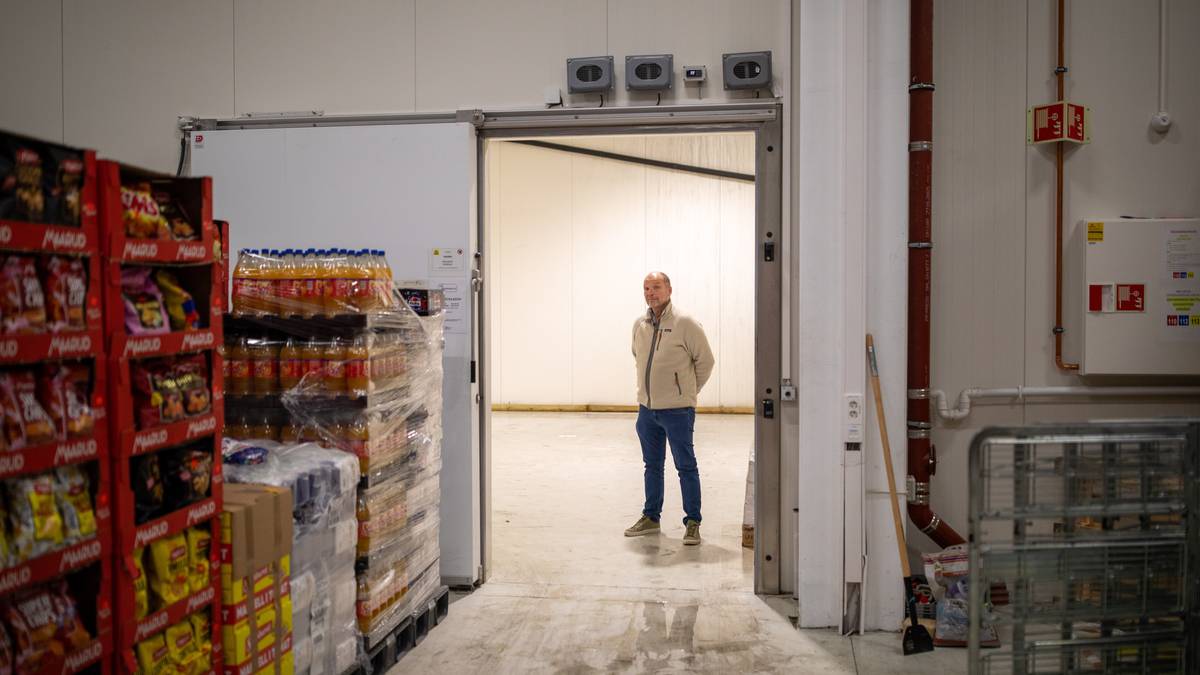
A warehouse in Ytre Enebakk, in Norway's Akershus county, was hit by a suspected hacker attack overnight into Tuesday, according to NRK. Someone appears to have entered the facility's freezing system and instructed it to raise the temperature in the evaporators or the defrost cycle, which caused the freezer room to warm up and set off its sprinkler system. The roughly 3,000-square-metre Havaristen warehouse, which recovers and resells damaged goods at reduced prices, reported significant losses.
Why it matters
The incident lands amid a wave of similar attacks on food retailers across Europe. NRK reports that several hundred grocery stores in Sweden, Belgium, Luxembourg and France have in recent days had the temperatures in their refrigeration and freezing equipment raised so high that all their food had to be thrown away. The Havaristen case suggests the same kind of intrusion has now reached Norway.
Norway's National Security Authority (NSM) told NRK it was not aware of the Havaristen incident, but said an attack of this kind would be serious if confirmed. NSM director Arne Christian Haugstøyl said the damage would fall on a single warehouse and the food it loses, and stressed that an attack on one facility does not threaten national food or supply security.
How the attack unfolded
Thomas Michelsen of Havaristen told NRK that staff initially assumed a fire had started and that the sprinklers had gone off as a result, melting something on the evaporators. The picture changed after the company spoke with the supplier of the equipment, which gave strong indications that the system had been tampered with.
The fire service was called out at 03:11, according to Martin Hereid Kristiansen, duty manager at the 110 emergency centre for eastern Norway. He told NRK that water from the sprinkler system was being pumped out when crews arrived, and that the water on the floor was cleared with wet vacuums.
Michelsen said the warehouse has many freezers, but the others are connected to a different system from the one affected. While the rest of the facility sits behind the company's own firewall, the freezer room believed to have been hacked was linked up through an external 4G transmitter. He said the supplier had been able to control the system remotely when faults occurred, and that someone had evidently gained access through that transmitter, as he understood it.
Staff rushed out to salvage what they could and remove stock. Michelsen said the effort probably made less difference than it would have in a small freezer counter, but that the damage was still considerable.
He also acknowledged that the company had spent time and money on internal security, and that this kind of risk needs more follow-up than people might expect even when it is on the agenda. It had not been clear to Havaristen that one transmitter at the site was unprotected, he said, adding that the company had read the news coverage and perhaps should have caught the problem earlier.
A wider pattern of attacks on food retail
The Havaristen case fits a pattern that has played out across several European countries in a short span. NRK's reporting describes stores in Sweden, Belgium, Luxembourg and France where cooling and freezing systems were pushed to high temperatures, forcing retailers to discard all their food. The method described at Havaristen — manipulating setpoints in refrigeration equipment rather than stealing data or demanding payment — points to attacks on the operational side of retail rather than its customer records.
Haugstøyl's advice to businesses focuses on exactly that layer. He urged companies to map the technology and equipment they deploy, particularly what is known as operational technology, the systems that govern more mechanical functions such as the fan on a refrigeration unit. He said old equipment should be phased out and security updates applied where possible, and that anyone still using the default password supplied with a device, or a very simple one, should change it without delay.
For Havaristen, the practical consequences are already visible: a freezer room out of service, a batch of goods written off or redirected to discount resale, and a supplier relationship now under scrutiny. The broader question — whether other Norwegian retailers have similar unprotected connections in their cold chains — has not been answered publicly.
Watch for whether NSM or Norway's food retail sector issues guidance on securing refrigeration and other operational technology, and whether investigators confirm the Havaristen intrusion as a cyberattack.




