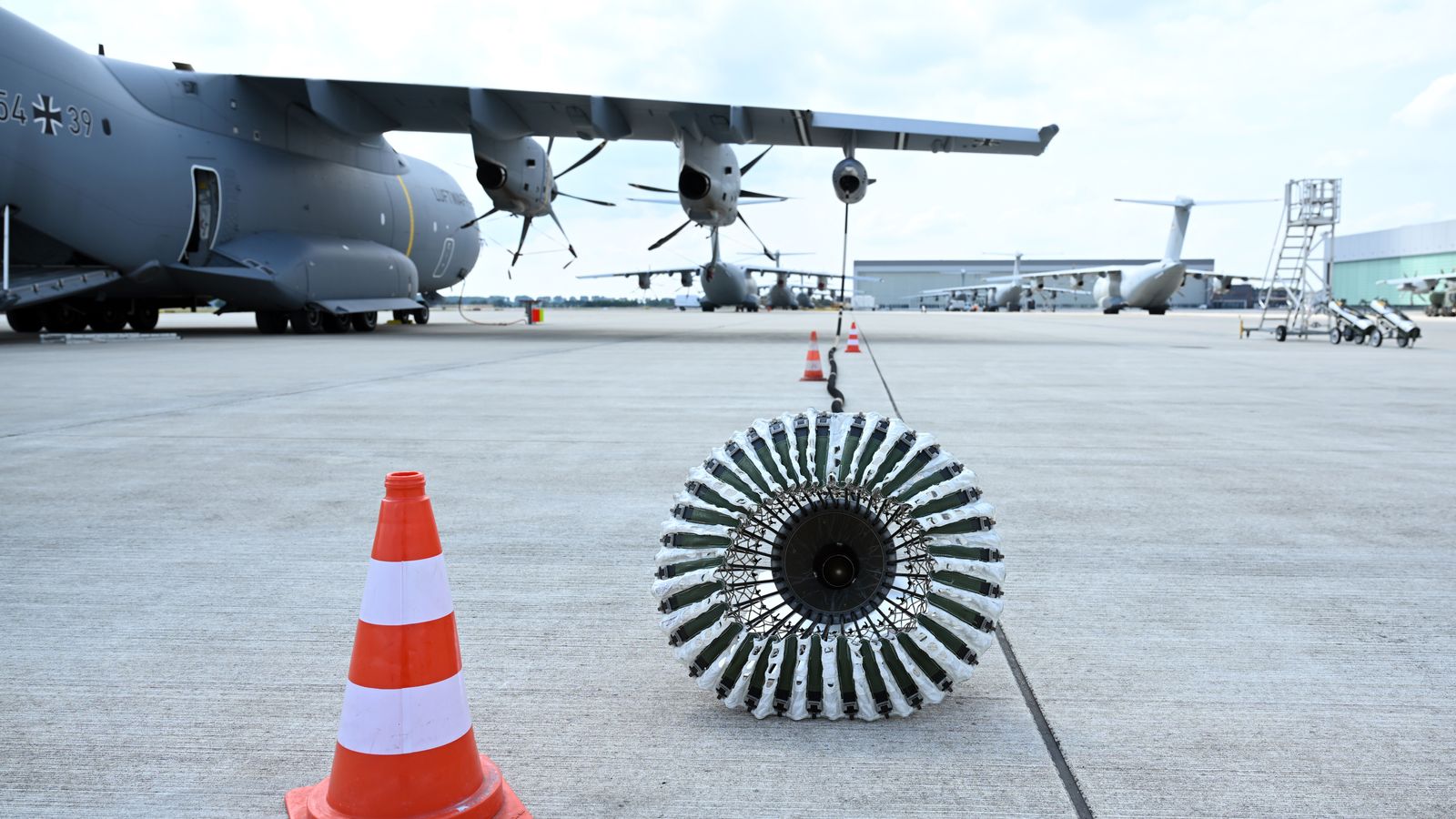
The planned multinational force for Ukraine began its first joint exercise on Monday, with most of the drills set to take place in Poland. A spokesperson for the Bundeswehr's Operational Command told reporters that the manoeuvre, named "Koalicja 26.2," started on schedule, according to BR. Roughly ten German staff officers are involved, working across various staff and functional roles in the exercise.
The training is intended to prepare the force for a future support mission for Ukraine. Moscow reacted sharply, with Russian officials describing the drill as a de facto military intervention, WELT and the Frankfurter Rundschau reported.
Why it matters
The exercise marks the first concrete step by the so-called "coalition of the willing" — the group of countries that have pledged to back Ukraine militarily over the longer term — from planning into practice. Until now, the force existed largely on paper. A live manoeuvre, even one built around staff work rather than troops in the field, signals that participating states intend to turn the concept into an operational structure.
The timing adds weight. The drill opened just a day before Russian, Ukrainian and US negotiators are due to meet in Abu Dhabi for three-way talks on the war. A visible military rehearsal in Poland, alongside fresh sanctions and diplomatic appeals from several capitals, frames the negotiating table with a show of Western organisation.
German officers in staff roles
The German contribution is small in numbers but sits at the centre of the exercise design. According to the Bundeswehr spokesperson, the roughly ten German officers are embedded in different staff and functional elements rather than deployed as a formed unit. That description suggests the drill is testing command, planning and coordination procedures — the machinery a multinational mission would need before any soldiers are sent.
The exercise is being held mainly on Polish territory, though the reporting does not specify further locations or a closing date. The name "Koalicja 26.2" links the manoeuvre to the coalition label used in Polish and German coverage of the project.
Russian criticism and a week of diplomacy
Moscow's response was immediate. Russian officials characterised the exercise as "de facto a military intervention," according to the Frankfurter Rundschau, and directed particular criticism at Germany and Europe. WELT likewise reported Russian condemnation of the first manoeuvre by the coalition.
The drill is one strand of a crowded diplomatic week. On Tuesday and Wednesday, envoys from Russia, Ukraine and the United States meet in Abu Dhabi. EU countries are not scheduled to sit directly at the table, though Brussels said the bloc would be present "together with our partners" and that the precise form of its involvement remained unclear, BR reported.
Ahead of those talks, US envoy Jared Kushner called for direct exchanges between European and Russian representatives, arguing both sides need to negotiate "broader security arrangements." Kushner, son-in-law of President Donald Trump, added that Washington was aware difficult decisions lay ahead, according to BR.
German Foreign Minister Johann Wadephul pressed Russia to demonstrate genuine willingness to negotiate, saying the coming days in Abu Dhabi would show whether Moscow was serious or merely going through the motions. He spoke on the sidelines of a G7 foreign ministers' meeting in Paris.
Canada's foreign minister, Anita Anand, welcomed the planned Ukraine-Russia talks and voiced hope that food security would feature on the agenda. Speaking in Paris at the G7 gathering, she said there appeared to be an understanding that food, fertiliser and grain stuck in the Black Sea must be allowed out before it spoils, and noted that many countries in need, particularly in Africa, would benefit. Ottawa also announced new sanctions, adding 38 entities and 24 individuals to its Russia list, with a focus on those involved in ballistic missile technology and Russian cyber activities, according to the foreign ministry.
Strikes, a nuclear plant death and a shuttered newspaper
Separately, Ukraine's general staff said its forces struck a facility near St. Petersburg that produces solid fuel for Iskander-M ballistic missiles. The claim, reported by BR, could not be independently verified.
At the Russian-occupied Zaporizhzhia nuclear plant in Ukraine, a staff member was killed when a drone hit his car on the way to work, according to the plant's Moscow-installed management and the International Atomic Energy Agency in Vienna. The plant leadership blamed Ukrainian forces. Russian accounts say another plant employee died in a similar drone strike on his vehicle in late October, and that a cleaner was killed in a drone attack in the nearby town of Enerhodar in early November. The IAEA does not assign responsibility after military incidents, but its director general, Rafael Grossi, condemned the attacks, BR reported.
Peru has asked Russia for information on the fate of its citizens recruited to fight against Ukraine. Foreign Minister Carlos Espa, visiting Moscow, said Russian forces had deployed at least 459 Peruvians and demanded details of their situation and whereabouts, saying families have the right to know whether their relatives are alive, dead or prisoners of war. Peruvian prosecutors are investigating networks that recruit citizens under false promises. Russian Foreign Minister Sergei Lavrov asked Lima to send "as concrete requests about concrete people as possible" and said those involved had signed contracts with the Russian armed forces voluntarily.
In Moscow, the newspaper Novaya Gazeta ceased operations on Monday and vacated its newsroom, saying pressure from Russian authorities had made reporting impossible. Co-founder and Nobel Peace Prize laureate Dmitry Muratov appealed to the public to stand up for free speech and human rights, saying the constitutional guarantees of political and civil rights had effectively stopped working in Russia. He called for the release of around 4,000 political prisoners and for a ceasefire in Ukraine.
What to watch: whether the Abu Dhabi talks produce any agreed framework, and whether the coalition's staff exercise in Poland expands into further joint training.




