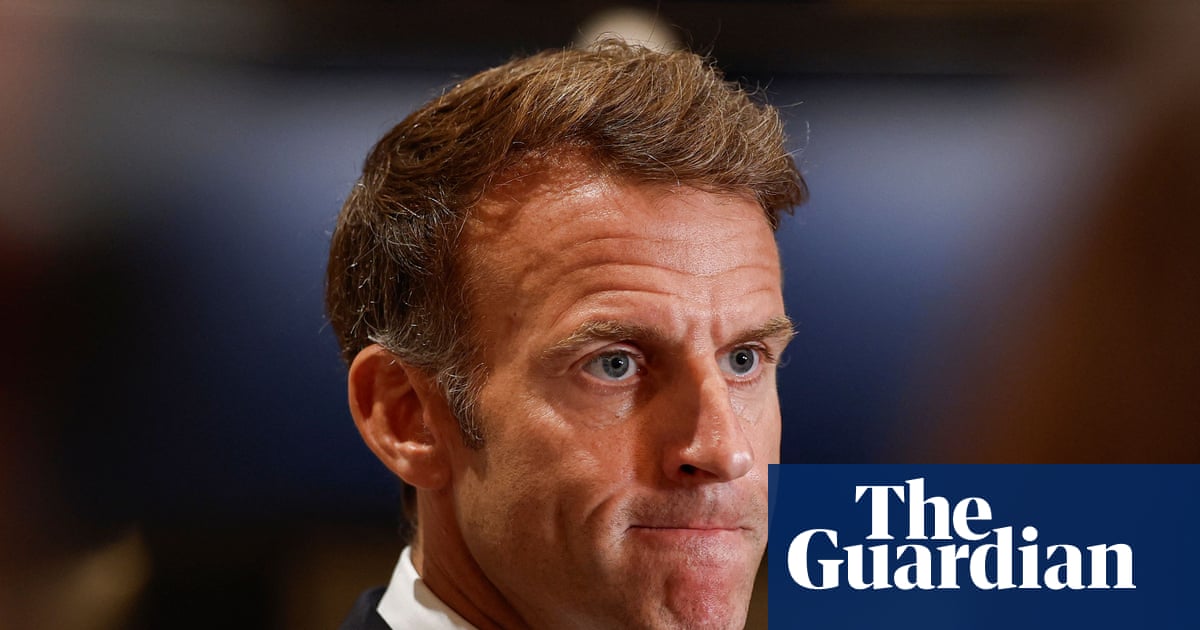
Emmanuel Macron has accused Donald Trump and other foreign leaders of making "stupid comments" about the unrest in France and using the country's troubles to advance their own political campaigns. The French president made the remarks during a visit to Qatar, according to The Guardian, as his government prepared for further protests expected this weekend.
Macron did not single out any leader by name. He told reporters in Doha that the spread of manipulated information after Saturday's riots had produced remarks that were "as unacceptable as they are stupid, from many people, including foreign leaders." When a journalist asked whether he meant Trump, Macron answered: "Among others."
Why it matters
The dispute pulls France's domestic crisis into foreign election campaigns. Trump, campaigning for his Republican party ahead of midterm elections, has blamed the violence on "migrants, jihadists and communists," The Guardian reports. Macron said some leaders caught up in election battles, "whether here in the region or on the other side of the Atlantic," were repeating narratives that certain groups are deliberately pushing.
The French president said those leaders were "using our country for their own political campaigns," adding: "And we don't need that. We already have difficulties to deal with."
A government under pressure
The accusations come as Macron's administration struggles to contain a crisis that erupted six months before a presidential election to choose his successor. Ministers have acknowledged that the state "lost control" during Saturday's rioting, The Guardian reports.
What began as largely peaceful demonstrations over the cost of living escalated into violence and widespread looting, particularly in Paris, Marseille, Lyon and Limoges, where the town hall was set on fire and partly destroyed. Several countries have issued travel advisories for France, and financial markets have reacted nervously: the yield on France's benchmark 10-year government bonds passed 5% on Wednesday, its highest level since 2002, according to The Guardian.
Macron has promised to stop a repeat of last weekend's disorder. The yellow vest movement, known in France as the gilets jaunes, has formally filed plans for a march through central Paris on Saturday, which is likely to be the government's next major test. Student groups have called for demonstrations the same day to demand more investment in education. The yellow vest activists are seeking to revive their nationwide 2018 campaign against rising living costs and shrinking public services.
"Those who want to cause disorder in city centres next Saturday will be prevented from doing so," Macron said during the Gulf trip, where he was pursuing energy deals to help offset rising fuel costs. "There must be no wavering at the top of the state."
Ministers have pledged a "massive" security operation, with some troops expected to be deployed alongside police reinforcements after the government conceded shortcomings in its initial response. Partial night-time curfews imposed on Monday and Tuesday in areas prone to violence and looting, including parts of Paris, Marseille and Lille, helped keep relative calm and were expected to be renewed on Wednesday, The Guardian reports.
Macron said France "doesn't need a state of emergency," insisting the state has the means to handle further unrest.
Unions demand a political answer
France's main trade unions have called a nationwide mobilisation for 5 November. Sophie Binet, head of the CGT union, said there is "huge and legitimate anger" and argued that "the answer to that situation is not repression. It is a political response." Union representatives met Prime Minister Sébastien Lecornu on Wednesday, but no concrete announcements followed, according to The Guardian.
The tensions are not confined to France. Sometimes violent protests in Italy and Belgium have raised concerns that anger over living standards could spread across a continent where many countries, France included, face budget difficulties. Italy's government has ordered 500 troops to Milan to curb street violence there, The Guardian reports.
What to watch: whether Saturday's planned Paris march stays peaceful, how the reinforced security deployment performs, and whether the bond market pressure on French debt eases once the immediate unrest subsides.