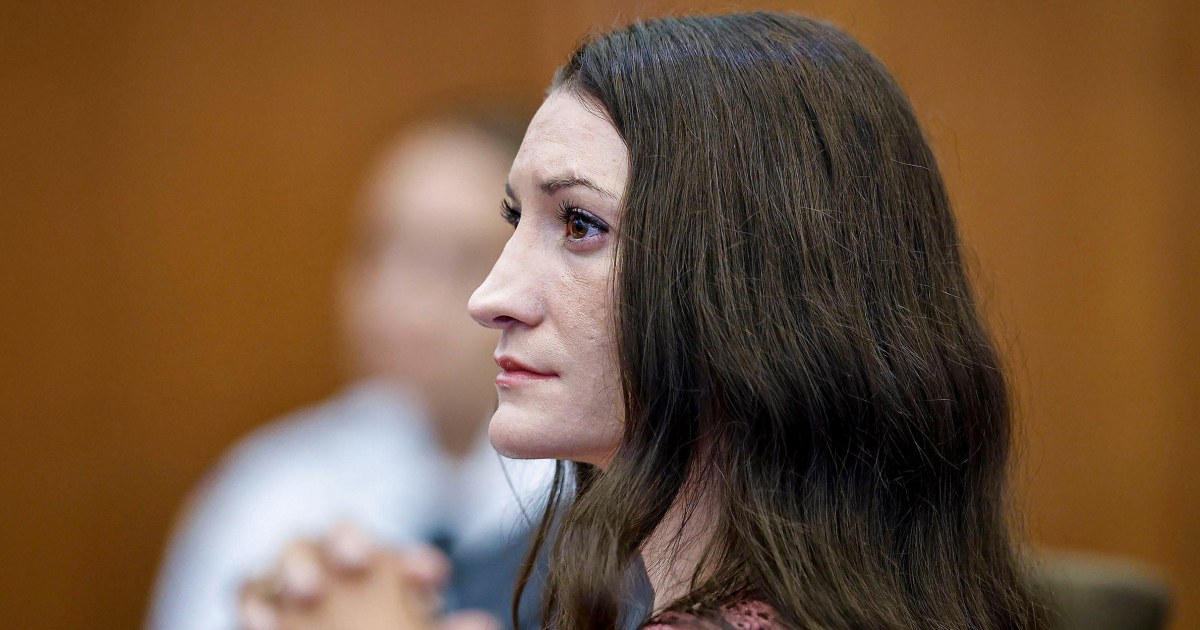
A Massachusetts judge said Monday that he will wait until later this month to rule on whether Lindsay Clancy, the woman accused of killing her three children in 2023, must stand trial a second time on three murder counts, according to NBC News. The decision followed a hearing of nearly three hours in which prosecutors and defense lawyers argued a series of motions, including the defense's request that the charges be thrown out. The judge set a status hearing for Nov. 16, at which he is expected to resolve those motions.
Why it matters
The case turns on a legal principle known as double jeopardy, which generally bars the state from prosecuting a person twice for the same offense. Clancy's first trial ended in a mistrial in September, and her lawyers contend that a second prosecution would violate her constitutional protection against being tried again. Prosecutors argue they retain the right to pursue justice for the three children. How the judge resolves the question could determine whether one of the state's most closely watched cases goes back before a jury at all.
The defense's argument
Attorney Martin Weinberg, representing Clancy, told the court that the prosecution bears the burden of showing that a mistrial was justified by "manifest necessity" — the standard that allows a retrial after a jury fails to reach a verdict. He argued that the court should have questioned the single juror who held out before declaring the mistrial, NBC News reports.
Such questioning, Weinberg said, might have shown that the juror's reasons for refusing to agree were personal rather than a product of how deliberations unfolded inside the jury room. Had that been established, the juror could have been removed and deliberations resumed with an alternate, which Weinberg described as a workable alternative that undercut any claim of manifest necessity.
The defense also presented a fallback position: if the judge declines to dismiss the charges outright, he could reduce them, a step that might allow the case to be decided by a judge alone rather than by a second jury. In addition, the defense asked the court to preserve records related to the jurors and to look into the conduct of the holdout juror.
The prosecution's response
Assistant District Attorney Jennifer Sprague countered that the judge's assessment should rest on what unfolded in the courtroom and what the court knew when it declared the mistrial, not on information that surfaced in news coverage afterward. "Your decision to declare it in this trial should be assessed based on what happened here in this courtroom," Sprague told the judge, according to NBC News.
She disputed the characterization of the holdout, telling the court that the record in cases where a mistrial has already been declared makes clear the juror did not decline to deliberate but rather declined to agree with the others. In a filing last Thursday, prosecutors urged the judge to deny the motion to dismiss, asserting their right to seek accountability for the deaths of Clancy's three children despite the September mistrial.
Timing and a pardon request
If the charges survive, the judge indicated Monday that a new trial could begin in March. Defense attorney Kevin Reddington said during the final week of the first trial that he was prepared to move to a retrial quickly, and in the days after the mistrial he asked President Donald Trump to pardon Clancy — a request that falls outside a president's power, since pardons apply only to federal offenses, not state charges.
The Boston Globe also reported that the judge admonished a member of Clancy's legal team for naming the holdout juror in open court during Monday's proceedings.
The next step is the Nov. 16 status hearing, when the judge is expected to rule on the dismissal request and the related motions and, if the case proceeds, to set a trial schedule.