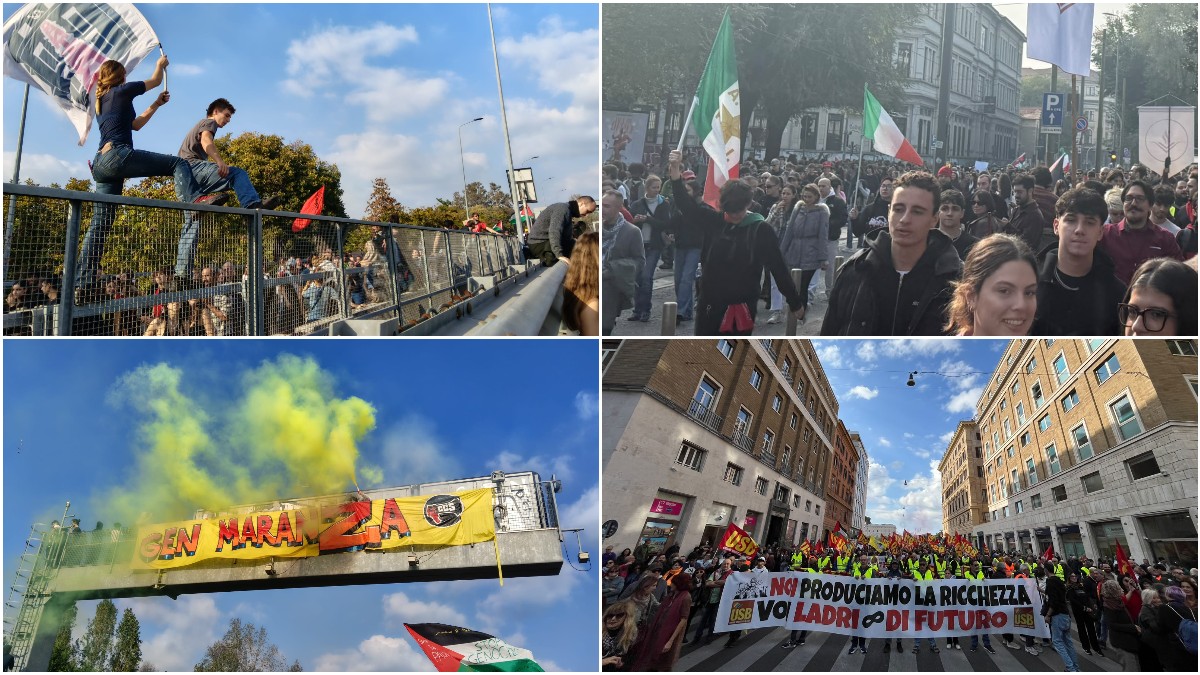
A nationwide general strike called by the Italian union confederation USB brought workers and students into the streets of more than 60 Italian cities on Friday, 30 October, according to Il Fatto Quotidiano. The union estimated that around 1.5 million people took part, a figure it described as a first assessment. Rallies were largely peaceful, but the day ended with confrontations between police and demonstrators in Rome, and ANSA reported three people injured in clashes in Vicenza.
The strike was organized around the slogan "Stop Carovita, no alla guerra, no al riarmo" — a call against the rising cost of living, war and rearmament — as reported by Il Fatto Quotidiano. The union said the turnout exceeded its expectations and that young people and students made up a large share of those in the squares.
Why it matters
The size of the mobilization, if confirmed, would make it one of the larger protest days in Italy in recent years. USB framed the strike as a response not only to prices but to what it calls an ongoing attack on schools, healthcare, housing, wages and pensions. The participation of students alongside workers signals that the cost-of-living argument is reaching beyond organized labor.
The day also showed the fault lines that can open when large marches move through city centers. Most rallies ended without incident, but in Rome and Vicenza, smaller groups broke away from the main processions and met a heavy police response.
Rome: a breakaway march and a police cordon
In Rome, the main USB procession wound through the city during the afternoon, passing along Via dei Fori Imperiali, where some participants said they intended to set up camp, according to Il Fatto Quotidiano. A separate student march reached the Ministry of Education, where police were stationed on the entrance steps. Il Fatto Quotidiano reported no tension there at the time, though traffic in the area was thrown into disarray as the students walked along the roadway.
Later, a group of several hundred people split from the main demonstration and headed toward the ministry, then changed direction with chants of going to Parliament, passing through Trastevere toward the center. Police stopped them at Ponte Sisto, where riot units formed a line with shields and batons. According to Il Fatto Quotidiano, the situation escalated on Lungotevere Testaccio: fireworks and objects were thrown at officers, who pushed the crowd back, and at Largo dell'Emporio police used water cannon and dispersal charges. After bottles were thrown, the demonstrators were scattered toward Testaccio.
The paper also reported that a group of students threw eggs in front of the education ministry before moving toward Ponte Sisto, where they tried to break through the police line and were met with a charge. Earlier in the afternoon, bins and e-scooters caught fire near the Colosseum, and a breakaway group of about 300 people threw bottles at police.
Milan, Bologna, Naples and Vicenza
In Milan, the procession moved onto the eastern ring road, where a banner referring to General Vannacci was displayed, and the march was filmed passing along the highway. Milano Serravalle-Milano Tangenziali later announced that the ring road had been fully reopened, and Autostrade per l'Italia said that around 17:15, in agreement with police, the earlier traffic measures were lifted and normal circulation restored. The Melegnano exit on the A1 toward Milan was reopened, as were the junctions with the eastern and northern ring roads on the A4 and the Agrate exit for traffic coming from Milan.
In Bologna, the march entered the ring road, which remained blocked into the evening, with a picket still active among the squares monitored by Il Fatto Quotidiano. In Naples, demonstrators reached the port after a moment of tension, and earlier in the day they tried to occupy the central station; images of Giorgia Meloni and Anna Maria Bernini were burned during the strike, the paper reported. In Turin, thousands gathered, including students, teachers and parents, and the procession featured participants in superhero costumes.
Vicenza saw the day's most serious disorder. ANSA reported three people injured in clashes, and Il Giornale di Vicenza reported around 2,000 people in the march there, with confrontations at Ponte Alto involving firecrackers, water cannon and tear gas.
Union response and the wider picture
USB said it was "enormously satisfied" with the response to its call, adding that it remains determined to continue its campaigns against war, austerity and what it describes as attacks on schooling, health services, housing, pay and pensions. The union also disputed the arrest of Youssef Siher, saying he was detained only because he was tired "like all of us" and had done nothing wrong, according to Il Fatto Quotidiano.
By late afternoon, most of the day's marches had ended. A group of demonstrators in central Rome continued walking peacefully through the streets, and in Genoa a second procession was scheduled from the port toward Principe.
Watch for the final turnout figures and any official accounting of injuries or arrests, and for whether USB's demands translate into further mobilizations in the coming weeks.



