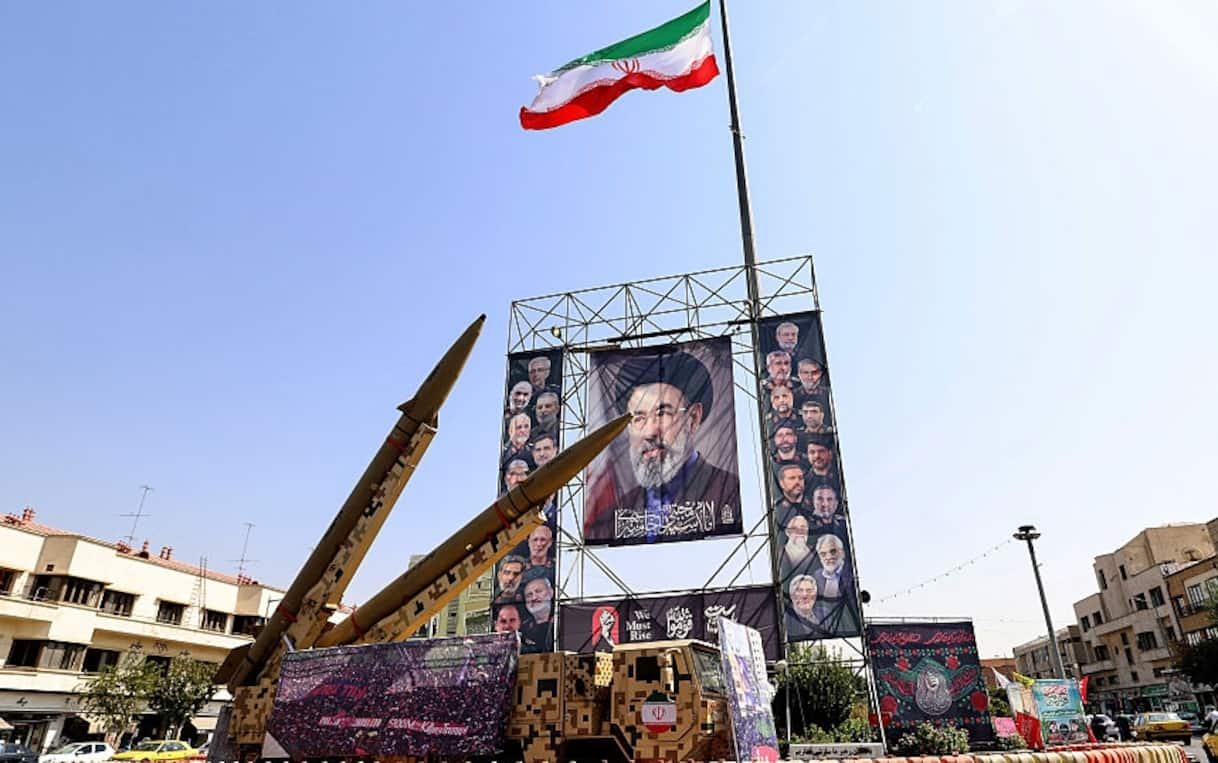
Iran's supreme leader, Ayatollah Mojtaba Khamenei, has instructed the country's armed forces to answer any new American attack at once, forcefully and with no geographic boundaries, according to Sky TG24. The order was reported by the Tehran Times and follows warnings from Donald Trump to Gulf states about possible fresh raids once the US midterm elections are over.
Speaking at a meeting attended by armed forces chief of staff Ali Abdollahi, army commander Amir Hatami and Revolutionary Guards commander Ahmad Vahidi, Khamenei said that if enemies resume military or terrorist attacks, Iran's military will set the timing and terms for ending them. He described intelligent combat readiness as the foundation of maximum deterrence, Sky TG24 reports.
Why it matters
The exchange puts two explicit threats on the table at the same time. Washington has signaled that military action is on the table after the vote, and Tehran has said its answer would not be confined to any one battlefield. The wording matters because "no geographic limits" leaves open the possibility of retaliation beyond Iran's own territory, including against US assets or allies in the region.
The timing is also significant. Trump's warning to Gulf countries ties the prospect of strikes to the outcome of the midterms, which means the political calendar in Washington is now part of the security picture in the Gulf.
A divided administration and a narrow diplomatic window
According to Axios, cited in the reporting, Trump would be more likely to order a military operation against Iran if Republicans lose the midterm elections. An American source told the outlet that a president feeling embarrassed tends to do something bold, and that this is what Iranians are being told. The same source said the best moment to reach an agreement is now.
The administration is not speaking with one voice. Secretary of State Marco Rubio and Pentagon chief Pete Hegseth are skeptical that a deal can be reached with the current Iranian government, Axios reports. Qatar, for its part, is working actively to find a formula that would allow negotiations to restart.
Iran's foreign minister, Abbas Araghchi, told Al Jazeera that no meetings with US officials are currently planned and that talk of such contacts is media speculation. He said Tehran does not see a need to meet the Americans for now, that Iran's conditions are clear, and that mediators are continuing consultations on them. Whether talks happen directly or through intermediaries, he said, depends on whether those conditions are met.
Araghchi also addressed a letter sent by US Vice President J.D. Vance, saying it had been studied carefully in high-level meetings. He called the American attempt to open a door to dialogue and broader understanding a positive step, but warned that if Washington's aim in sending it was to sow discord, that would be one more mistake added to earlier ones.
Hormuz, piracy and the wider region
The standoff is unfolding against a backdrop of pressure on Gulf shipping. Liquefied natural gas exports through the Strait of Hormuz in October stayed close to their highest level since the start of the war, according to the reporting.
Separately, armed pirates seized an Iranian fishing vessel off northeastern Somalia, according to the EU naval force Eunavfor and security sources in the Puntland region. The EU Maritime Security Centre for the Indian Ocean identified the boat as the Azini and said it was taken between the coastal towns of Bandar Beyla and Xaafun in the semi-autonomous Puntland region. A Puntland security official said eight gunmen from a remote coastal area near Bandar Beyla carried out the attack, overwhelming two Somali guards on board. A second security source said 21 crew members were aboard apart from the guards, and that four more gunmen later boarded, bringing the total to 12. The vessel then headed further out to sea, an official said. It is the third Iranian fishing boat hijacked off Somalia since July.
In Gaza, the health ministry said at least six Palestinians were killed in the past 48 hours, bringing the toll since the ceasefire with Israel took effect in October 2025 to 1,580. Four of the six died recently and two from earlier wounds, the ministry said in its daily count, adding that 5,711 people have been wounded and the bodies of 845 recovered since the truce began on 11 October 2025.
In the occupied West Bank, four of the five Italian activists detained a day earlier while taking part in a Palestinian olive harvest campaign will be expelled from Israel under an immediate administrative procedure, with departure for Italy expected the same day.
What to watch is whether Qatar's mediation produces a formula Tehran and Washington can both accept before the midterms, and whether the post-election period brings the raids Trump has warned Gulf capitals about.