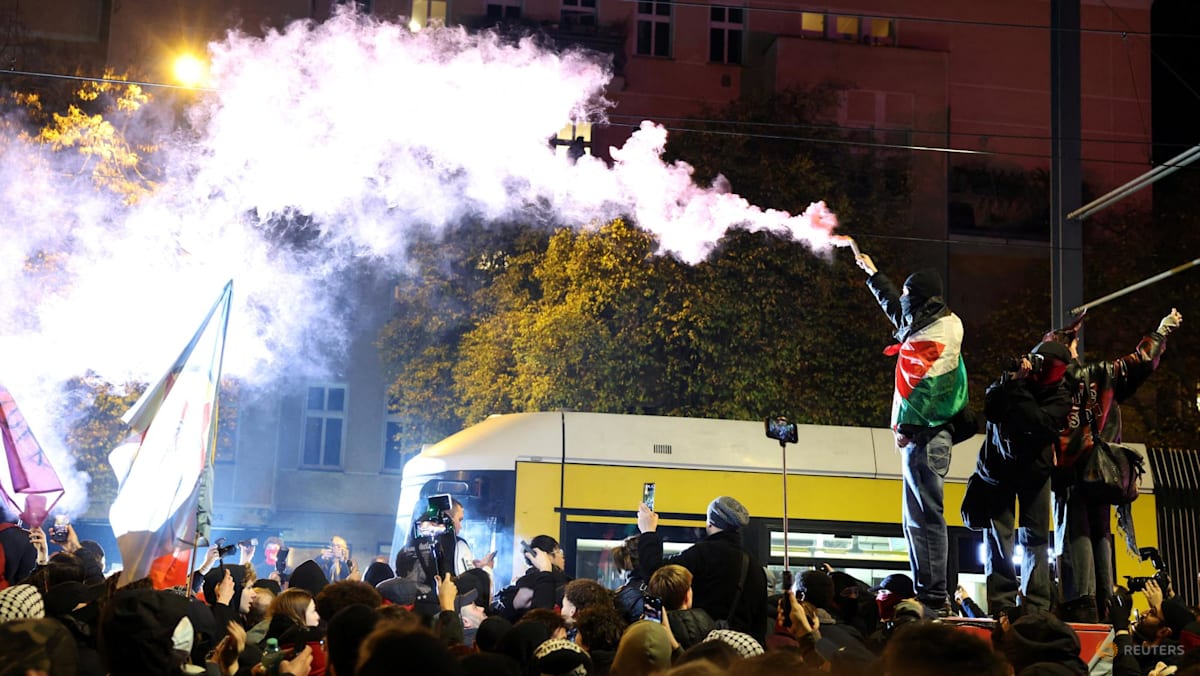
Youth-led demonstrations spread across Germany on Saturday, with a campaign group called GenZ regelt — which translates roughly as "Gen Z has got this" — organising rallies in more than 30 cities, according to CNA. The German action follows weeks of unrest elsewhere in Europe, particularly in France, where protests that began over school conditions have widened into a broader challenge to the cost of living and to President Emmanuel Macron's leadership.
The German group states on its website that it wants higher spending on education, social security, health and climate protection, along with a more affordable way of life, and that it opposes any reintroduction of compulsory military service, CNA reports.
Why it matters
The unrest has moved well beyond individual grievances. CNA reports that although the triggers differ from country to country, the complaints voiced by young Europeans share common roots: ageing populations that strain public budgets and weak economic growth.
Sascha Riaz, a Presidential Assistant Professor at Singapore Management University, told CNA that the youth-heavy character of the demonstrations reflects what he described as a widely held sense of generational unfairness. He said European societies are growing older, young people form an electoral minority, and many feel their concerns are disregarded while an increasing share of public spending goes to older generations — chiefly through pension systems that take up a growing portion of government budgets.
Genevieve Pons, president and director general of the Brussels-based think tank Europe Jacques Delors, told CNA that slow growth is also feeding public frustration, and that sustaining the European social model under current conditions is difficult. She said managing the phenomenon will be very hard.
From school ceilings to street clashes
In Berlin, high school student Janelle Schulz told AP that her school building is falling apart. She described a ceiling damaged by water and left unrepaired, a shortage of teachers and broken toilets, and argued that education needs more funding, according to CNA.
France's movement started in mid-September over deteriorating school conditions, a lack of teachers and discontent with the university admissions system. According to the Council on Foreign Relations, a US think tank, it began with a teachers' strike at a high school in Creteil, outside Paris, then spread to more than 1,000 high schools and drew hundreds of thousands of people. Trade unions and the Yellow Vests movement later lent their support as the protests took up living costs, public services and Macron's leadership.
CNA reports that on Oct 17, a demonstration estimated at 550,000 people turned into some of the country's worst rioting in years, citing AP. Further demonstrations on Saturday drew about 320,000 people nationwide, with more than 560 arrests recorded by nightfall.
Student Corentin Cabreux, 21, told AP that his state-run student residence was riddled with damp along the base of the walls, peeling surfaces, cockroaches and rats, CNA reports. Rafaela Uzan, a research associate at the Council on Foreign Relations, pointed to a generational split, saying many young French people believe the government puts older generations first even as youth unemployment stays high and pressure on education mounts.
Spain's protests were set off in September by the eviction of an 87-year-old woman from her long-standing Madrid home following a steep rent rise, CNA reports. Demonstrators have demanded rent freezes, an end to evictions of vulnerable people and stricter rules on short-term and room rentals, according to The Guardian.
In Italy, young people have marched over living costs, education and anxiety about their prospects. CNA reports that demonstrations in cities including Milan, Turin and Bologna turned violent in mid-October.
Violence and its limits
Most of the demonstrations have been peaceful, but CNA reports that looting, arson and confrontations with police broke out in several cities.
In Germany, Hesse state interior minister Roman Poseck said about 100 identified left-wing extremists had joined Saturday's protest in Frankfurt, where rioters broke shop windows, stole from businesses and threw Molotov cocktails at officers. A gun shop was among the premises targeted; police said one suspect was arrested and two weapons seized, according to CNA.
In Cologne, police cut a march short after some participants set off pyrotechnics, threw stones at officers and hid their faces in defiance of a ban, CNA reports. Water cannons were used to break up the crowd.
In France on Oct 17, rioters hit boutiques, supermarkets and public buildings. They forced their way into Marseille's city hall, and in Limoges the town hall was set on fire, according to CNA. The Council on Foreign Relations estimates that roughly 3,000 shops, including luxury outlets and small businesses, were looted that day.
What to watch
The coming weeks will show whether the German rallies remain largely peaceful and whether France's movement keeps drawing crowds of the size seen in mid-October — and whether governments respond with spending commitments or with policing.




