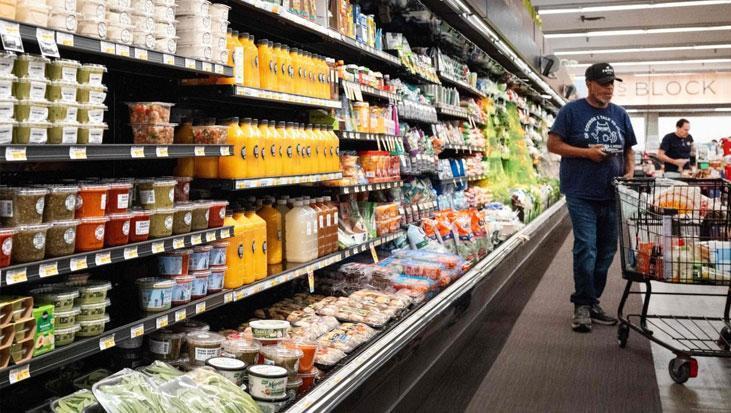
A wave of digital sabotage targeting grocery refrigeration has reached Sweden and Belgium, according to Milliyet, after earlier incidents in France spread across the continent. Attackers gained access to cooling and freezing systems at supermarket chains and raised temperatures, rendering fresh and frozen food unsellable. Stores in several cities reported flooded floors and destroyed stock.
Why it matters
The incidents point to a vulnerability that sits outside the usual scope of retail security. Nobody broke in, and no power cut occurred, yet entire refrigeration sections failed. According to Milliyet, the pattern has raised concerns about how exposed Europe's food distribution networks are to remote interference, and the European Union has now acknowledged the events publicly.
What happened in Sweden
Swedish media reported that cooling systems at several supermarket chains were targeted in cities including Stockholm, with temperatures inside refrigerators and freezers pushed upward, Milliyet reports.
Mats Olsson, an official at an Ica store on Öland, told the press that the air temperature in the coolers had been driven as high as 55 degrees Celsius, and that he arrived in the morning to find the premises covered in water. Other Ica branches said on social media that a cyberattack on their cooling units had spoiled large quantities of food, with particular problems in the frozen goods section.
Coop, another Swedish chain, confirmed it was affected. Store official Carlos Cancino said the company had received reports of refrigerator and freezer problems at six of its branches nationwide.
Belgium and the Delhaize alert
In Belgium, temperatures rose abruptly in the cooler and freezer units of numerous stores belonging to one supermarket chain, spoiling products, with a possible link to a cyberattack under investigation, according to Milliyet.
Belgian broadcaster RTL reported that Delhaize management sent a text message to store managers at around 04:00 warning that cooling systems at some locations had seen a sudden temperature increase. At various stores in the chain, refrigerator and especially freezer temperatures reportedly climbed to roughly 15 degrees Celsius.
Managers and staff took emergency steps to limit the damage, and some outlets brought in refrigerated trucks to protect their stock, Milliyet reports. The economic consequences are already being felt: some affected stores had to discard all refrigerated and frozen goods because the cold chain could not be maintained. Serious losses in fresh and frozen products are expected. Delhaize's refrigeration unit has been mobilised to address the problem, though the cause has not been confirmed and a cyberattack remains the focus of suspicion.
Brussels responds
European Commission spokesperson Thomas Regnier said the Commission was aware of the incidents. "These events show that cyberattacks can disrupt services, affect businesses and directly disturb citizens' daily lives," he said, according to Milliyet.
Regnier said the EU has various instruments in force to respond to such incidents. Because more than one member state was affected, the bloc has turned to the European Cyber Crisis Liaison Organisation, known as EU-CyCLONe, for coordination and information sharing. He said the Union would continue working with member states to strengthen cybersecurity across the bloc.
The stockpile warnings in the background
The refrigeration attacks come shortly after 33 countries, led by the United States and 17 European nations, advised citizens to keep food for three to seven days along with a torch, cash and batteries, Milliyet reports. Newsweek put the guidance on its cover, prompting speculation about an impending global crisis. Among the measures cited by Milliyet: the United Kingdom launched a "Be Ready" programme recommending nine litres of water per person for three days plus dry food, medicine and a torch; Japan asked households to hold three days of supplies and is activating a new disaster management agency; France advised a three-day stock and an emergency bag with cash, document copies and spare keys; the US updated a 2003 emergency advisory calling for three days of food, 3.8 litres of water per person, a whistle and a torch; Norway asked for sleeping bags and candles alongside food, drink and medicine; Denmark published a sample three-day menu; and India recommended an emergency kit with a battery torch, chlorine tablets for water treatment, a first aid book and thick rope, while advising against salty and spicy food because it increases thirst.
According to Milliyet, the most likely scenario cited in the world press is a cyberattack that brings down digital systems, described as low in cost but large in effect.
What to watch
Whether investigators in Sweden and Belgium confirm a cyberattack as the cause, and whether EU-CyCLONe coordination produces a common response, will determine how far this refrigeration campaign spreads.




