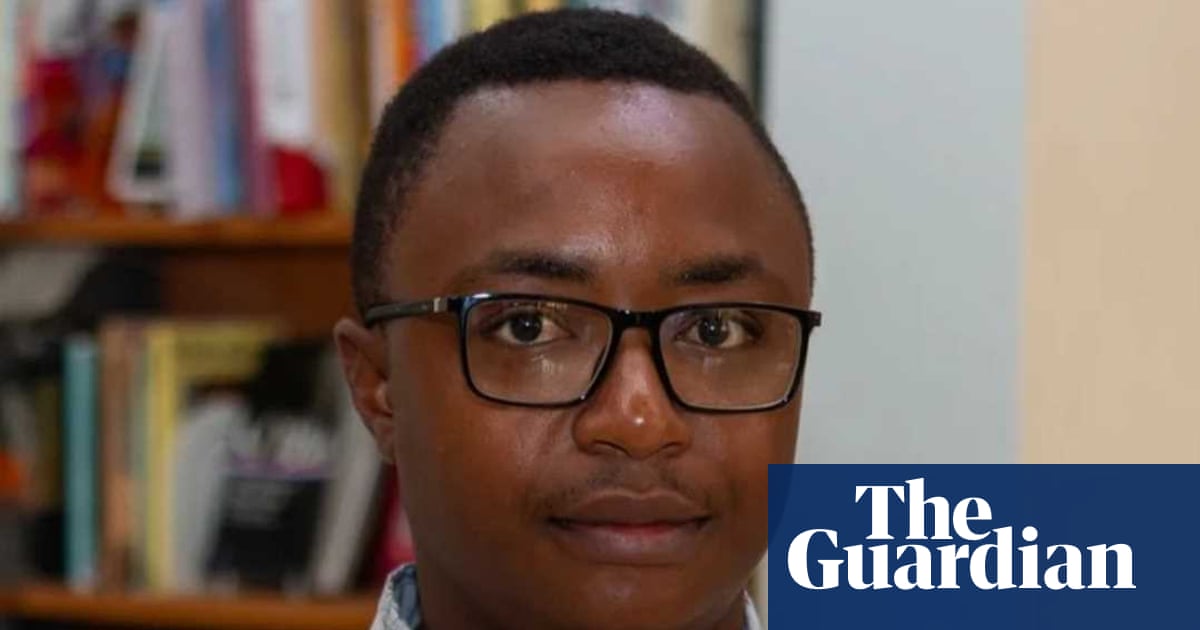
Zimbabwean author Simbarashe Kundizeza has denied that artificial intelligence wrote his prize-winning short story, after The Atlantic reported that detection software flagged the text as almost entirely machine-generated.
Kundizeza's story The Blue Fighter was named the winner of the Caine Prize for African writing on 6 October. Five days later, The Atlantic published an article by writer and journalist Vauhini Vara under the headline "Yet Another Literary Prizewinner Seems to Be AI."
In a statement posted on X, Kundizeza said he wrote the story himself and did not use generative AI. "It is entirely my own work," he said, adding that he would keep writing and continue working with the Caine Prize team.
Why it matters
The dispute has grown into a wider argument about how much weight AI detection tools should carry in literary judging, and who bears the cost when those tools are wrong.
The Caine Prize said it was reviewing the allegations. In a statement, it said that when such claims are made it is the organisation's responsibility to look into them, and that it aims to do so through a human-centred process that supports and cares for writers along the way.
Ellah Wakatama, who chairs the prize, told the BBC's Front Row radio programme that she is not opposed to AI in principle but objects to it being treated as the final arbiter in this case. She said The Atlantic had already declared the winner a cheater without investigating the matter properly.
Wakatama also said she was unhappy that the work of writers — and in this case especially Black writers — should serve as a testing ground for technology she described as at best still rough and ready.
How the allegation was made
According to The Guardian, Vara ran The Blue Fighter through Pangram, an AI-detection tool that itself relies on AI. Vara said the software judged the story to be almost completely artificially generated, with the exception of an epigraph attributed to an unpublished poem by the South African writer Vangile Gantsho.
Vara wrote that while reading the story she noticed a heavy presence of language she associates with AI output: sentence constructions built on the "not x, but y" pattern, an excess of metaphors, and aphorisms that struck her as platitudinous. She described the story as maudlin and full of worn tropes, while acknowledging that taste is subjective.
In her article and again in her Front Row interview, Vara said she had read a 2021 story by Kundizeza that differed in tone and style from The Blue Fighter.
Kundizeza pushed back on that reasoning in his statement. He said the idea that a writer cannot work in different styles or genres, or improve substantially over five or more years, misunderstands how writing is practised.
The limits of detection software
Vara pointed to Pangram's own research, which found that false positives were uncommon — including among people who write in English as a second language. She also cited a peer-reviewed journal article that rated Pangram's accuracy as strong when it assessed mock academic papers written entirely with AI, partly with AI, or without it.
She nevertheless told the BBC that there is relatively little independent research on how accurate AI detection software actually is.
That gap sits at the centre of the current dispute. Detection tools produce a probability, not proof, and the Caine Prize has not said what standard it will apply or what evidence it will weigh. The prize has also not set out a timeline for finishing its review.
A pattern across literary prizes
The questions raised by The Blue Fighter are not isolated. The Guardian notes that similar accusations have landed on other prize winners in recent months.
In July, Trinidadian writer Jamir Nazir won the Commonwealth Foundation's short story prize with The Serpent In The Grove, even as critics on social media said the text carried obvious markers of AI writing.
Literary Hub addressed the broader climate in a piece titled "Is It or Isn't It? How Generative AI is Poisoning the Literary Well For Everyone," framing the suspicion itself — rather than any single verdict — as a problem for writers and readers alike.
What Kundizeza says he will do
Kundizeza's statement was brief and forward-looking. He said he looked forward to continuing to work with the Caine Prize team and to celebrating the recognition alongside the people who helped bring the story into the world. He closed by saying he would continue to write.
The Caine Prize has not announced the outcome of its review, and neither the prize nor Kundizeza has indicated whether the win could be revisited. What happens next rests on how the prize defines its human-centred process — and whether it publishes enough of that process for writers to know what they are being measured against.


