
Let’s be honest. When I first heard about pickleball a few years ago, I rolled my eyes so hard I nearly pulled a muscle.
A sport named after a dog? Played with a whiffle ball and paddles that look like they belong at a summer camp? Come on. This was supposed to be the thing that saved America’s athletic soul? Please.
But here’s the truth I had to swallow: I was dead wrong.
Pickleball isn’t just a quirky pastime for retirees swapping bingo cards for volleys. It has become, against every ounce of my cynical skepticism, America’s fastest-growing sport — and the numbers are so ridiculous they feel like a typo. According to the Sports & Fitness Industry Association, participation has skyrocketed by over 158% in the last three years alone. We’re talking 36.5 million players in the U.S. as of 2023. That’s more people than the entire population of Canada picking up a paddle.
How did a game invented on a summer day in 1965 by a congressman and his bored friends go from backyard joke to billion-dollar industry? Let me take you inside the secret sauce. Because what I’ve found is that pickleball’s rise isn’t an accident — it’s a masterclass in cultural timing, human psychology, and a little bit of beautiful chaos.
The "Boomer Sport" Myth That Needs to Die
Let’s address the elephant in the pickleball court. You’ve heard the stereotype: It’s just for old people with bad knees and good orthopedic shoes.
I used to believe that too. But then I actually showed up.
The first thing I noticed? The average age of players is dropping like a rock. The fastest-growing demographic? Adults aged 18–34. That’s right — millennials and Gen Z are driving the craze. In 2021, that age group saw a 123% increase in participation. Meanwhile, the 65+ crowd? Only up 48%. The narrative is broken.
Here’s what most people miss: Pickleball isn’t easy. It’s accessible — which is different. You can learn the basics in 15 minutes, but mastering it? That’s a rabbit hole of spin, dinking, and court geometry that would make a chess player sweat. I’ve watched tennis players cry after losing to a 12-year-old with a killer drop shot. The learning curve is real, but the reward curve is immediate. That’s a rare combo.

The 3 Things Tennis Got Wrong (And Pickleball Got Right)
I grew up playing tennis. I love tennis. But let’s be real: tennis has a gatekeeping problem. You need a court that costs thousands to maintain, a racket that’s confusing to choose, and a skill level that takes months to not embarrass yourself.
Pickleball said, “Hold my Gatorade.”
Here are the three secrets that explain the explosion:
- The Court Size is Genius. A pickleball court is 44 feet long and 20 feet wide — roughly a quarter of a tennis court. That means you can build four pickleball courts in the space of one tennis court. Cities love this. It’s cheap, it’s efficient, and it turns underused tennis courts into community hubs.
- The Ball is the Hook. That plastic whiffle ball with holes? It doesn’t bounce high. It doesn’t move fast like a tennis ball. That means you don’t need elite reflexes to have a rally. The ball slows down, which creates longer points, more laughter, and less frustration. It’s the first sport where beginners and pros can actually play together without one person dominating.
- The Social Loop is Addictive. Pickleball is inherently social. Games are short — about 15 minutes — so you rotate partners constantly. You talk between points. You high-five strangers. There’s a culture of inclusivity that tennis, with its quiet, serious vibe, rarely matches. I’ve seen complete strangers become best friends over a shared love of the dink shot.
Why the Pros Are Taking It Seriously Now
You know a sport has arrived when the money shows up.
LeBron James bought a Major League Pickleball team. Tom Brady did too. Drew Brees. Kevin Durant. The list reads like a billionaire’s fantasy draft. But here’s the part that surprises people: the prize money is getting real. The 2023 Pickleball Slam paid out $1 million to the winners. That’s not pocket change — that’s a signal.
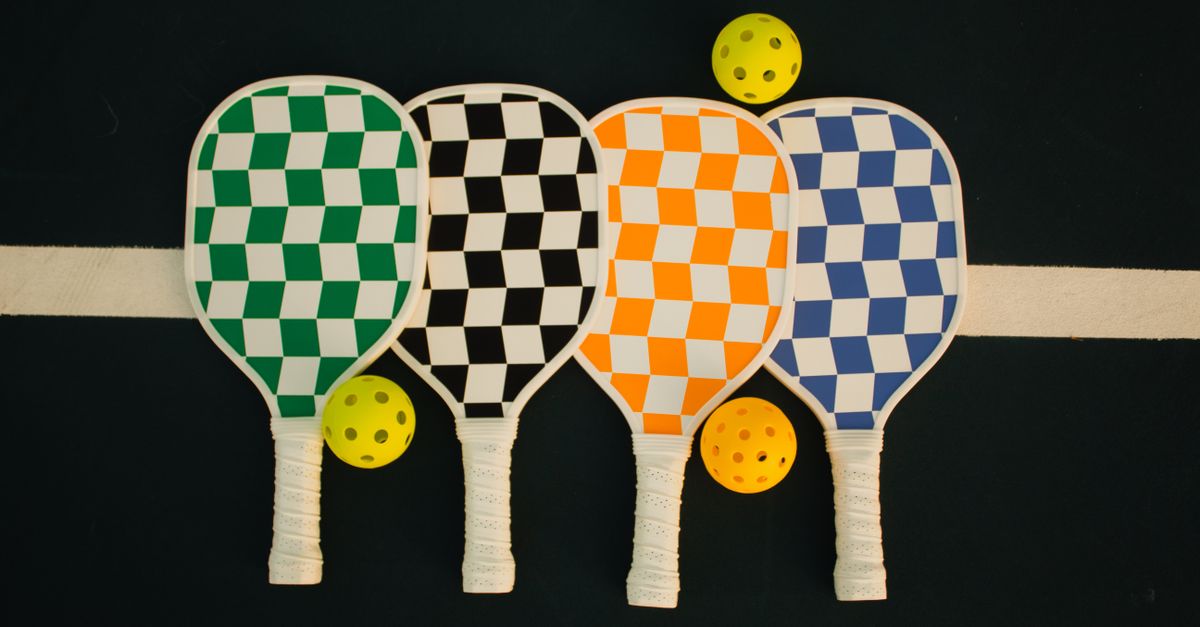
And the equipment industry is following. Paddles that used to cost $40 now go for $250. Wilson, Selkirk, and Engage are selling out constantly. I own three paddles now — one for indoor, one for outdoor, and one that I’m convinced has magical spin properties (it doesn’t, but I like the confidence boost).
The Hidden Controversy Nobody Talks About
Let’s get real about the elephant that’s actually on the court: noise.
That pop-pop-pop sound of a pickleball hitting a paddle? It’s not a soothing white noise machine. It’s been described as “a thousand ping-pong balls dropped on concrete” or “a swarm of angry birds.” Neighborhoods are fighting over it. In some cities, like Park City, Utah, they’ve actually banned pickleball on certain courts due to noise complaints.
I’ve played at 7 AM next to houses. I get it. The sound carries. But here’s the kicker: manufacturers are now making “quiet paddles” and foam-core balls specifically to reduce noise. The sport is adapting faster than its critics expected. That’s the mark of a movement — not a fad.
The Real Reason You Should Pick Up a Paddle
I’ve played over 200 games in the last year. I’ve lost count of how many times I’ve laughed mid-point, how many high-fives I’ve exchanged, or how many times I’ve said “one more game” and played five more.
But here’s what I’ve learned that matters most: Pickleball is the first sport of the loneliness epidemic.
We live in a time where connection is scarce. Social media is a hollow substitute. Gyms are isolating. Running is solitary. Pickleball forces you to look at another human being, talk to them, and work together toward a common goal. It’s low-stakes fun that feels high-stakes when you’re in the moment.
And it’s changing lives. I’ve watched people who hadn’t exercised in years lose 20 pounds just because they kept saying “one more game.” I’ve watched friendships form that outlasted relationships. I’ve watched a 70-year-old woman crush a 25-year-old athlete because she had better touch and patience.
That’s the kind of sport that sticks.
The Verdict: Is Pickleball a Fad or Forever?
Let me answer that with a question: Do you think a sport that has 36 million players, celebrity investors, dedicated pro leagues, and its own equipment industry is going anywhere?
It’s not a fad. It’s a cultural shift. Pickleball is filling a void that traditional sports left behind — a void where fun, community, and health meet on a 44-foot court. It’s not replacing tennis or basketball. It’s creating its own lane.
So here’s my challenge to you: If you’ve never played, find a court this weekend. Borrow a paddle. Prepare to be humbled. And if you already play? Bring someone new next time. Because the sport didn’t become America’s fastest-growing by accident. It grew because people like you and me showed up, laughed, and kept coming back.
See you on the court. I’ll be the guy with the ugly paddle who still can’t dink properly.


