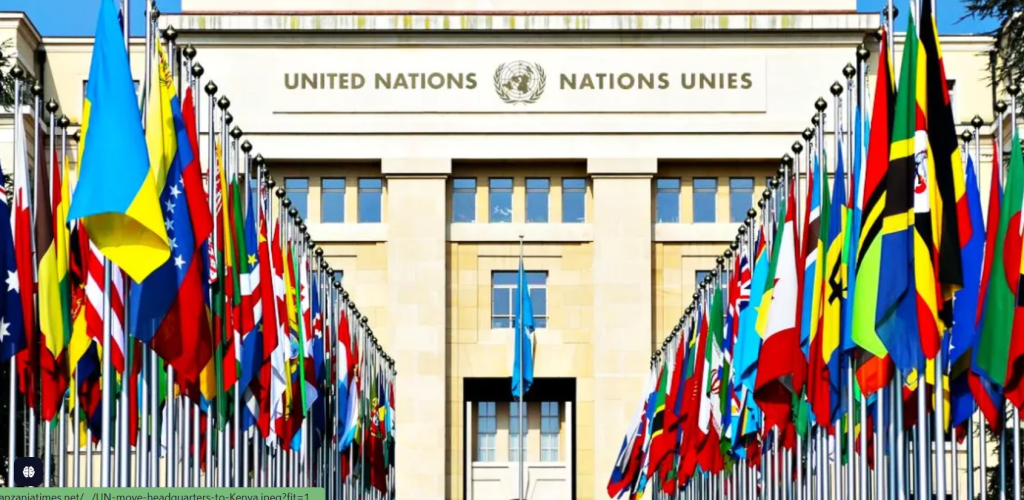
The United Nations has called on Tanzania's Parliament to tighten its scrutiny of government performance so that the country's Development Vision 2050 and the Sustainable Development Goals are carried out fully and on time, Daily News reports.
UN Resident Coordinator in Tanzania Susan Ngongi made the appeal in Arusha during the 153rd Assembly of the Inter-Parliamentary Union, which ended on Friday. She told attendees that lawmakers hold a central role in turning national and international development pledges into results that citizens can see.
According to Daily News, Ms Ngongi said MPs should examine how the government is performing, pass suitable laws, sign off on budgets and routinely press the authorities responsible for meeting agreed targets.
She said legislators have considerable scope to act once goals and indicators are fixed, and that following up with the key players is what makes oversight meaningful. In her view, that monitoring function carries exceptional weight.
Ms Ngongi also praised Tanzania's parliamentary leadership for stressing monitoring and evaluation, and said the UN stands ready to help with assessing programmes and spotting the areas that need fixing. She argued that identifying what is working — and correcting what is not — early on is the way to make sure public money produces the outcomes it was meant to.
Why it matters
The push comes as Tanzania works toward Vision 2050, its long-term blueprint for economic and social transformation, alongside the global goals that all UN member states have signed up to. Parliaments sit at the point where those commitments meet money and law: they represent voters, watch over the executive and authorise spending.
Ms Ngongi framed legislatures as indispensable to development for exactly those reasons, adding that MPs carry a duty to make sure citizens' concerns and needs shape national policy and spending priorities. Her remarks place parliamentary follow-through, rather than new strategy documents, at the centre of whether the targets are reached.
The wider picture she painted is sobering. She warned that delivery remains a serious problem worldwide, with roughly 36 per cent of SDG targets currently on course to be met. That figure, cited by Daily News, underlines how much of the global agenda is lagging even as countries draft fresh plans.
A platform for cross-party cooperation
Ms Ngongi described the IPU as a valuable space where parliamentarians from ruling and opposition parties in different countries can compare notes on common problems and build cooperation, according to Daily News. She observed that people across the world tend to want the same things: good schooling, health care they can reach, and stronger economic prospects for their children.
On the UN's partnership with the IPU, she said the two bodies work together to move international agreements down to the level of national development plans and concrete steps. That bridge between commitments made in global forums and action taken locally is where the relationship adds value, she indicated.
She also welcomed the attention Tanzania's parliamentary leaders have given to monitoring and evaluation, and repeated the UN's willingness to assist with programme reviews and with pinpointing where improvement is needed. The emphasis throughout was on using evidence to steer decisions rather than simply producing reports.
From policy documents to grassroots results
Turning to Vision 2050, Ms Ngongi said the UN and other development partners are prepared to back Tanzania's ambitions, but she stressed that the moment calls for execution rather than more planning. She noted that strategies and policies are already plentiful, and that what remains is making sure implementation actually reaches communities at the grassroots.
Progress, she said, ought to show up in people's daily lives through better health services, a stronger agricultural sector, more jobs and greater opportunities for young people. Those are the areas where citizens would feel the difference if the plans are delivered, she suggested.
Ms Ngongi also commended Tanzania's long record of peace and stability, calling it a vital foundation for tourism and for economic growth more broadly. Keeping that stability intact, she said, would allow the country to build up its tourism sector further and let more of its people gain from the natural attractions it possesses.
Her remarks tie the oversight question back to ordinary livelihoods: budgets approved in Dodoma and targets set in international forums ultimately determine whether clinics are stocked, farms are productive and young people find work.
The Arusha assembly, the 153rd of its kind, brought together lawmakers from many countries and closed after Ms Ngongi's address. Daily News reported her comments as the gathering wrapped up.
What to watch next is whether Tanzania's Parliament acts on the call — through sharper budget scrutiny, more frequent questioning of ministries and closer tracking of the indicators attached to Vision 2050 and the SDGs.