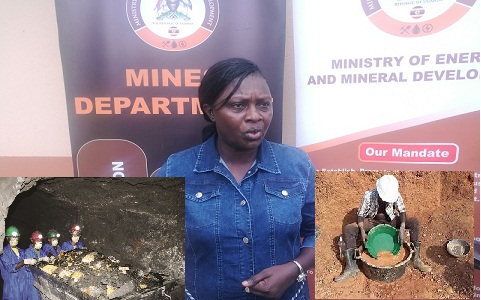
The Inspectorate of Government has directed the acting board chairperson of Uganda's National Mining Company to interdict two senior executives while it investigates allegations of maladministration, financial mismanagement and abuse of office. The directive, issued to cover Chief Executive Officer Dr Gerald Banaga-Baingi and Chief Corporate and Legal Affairs Officer Lelia K. Bwambale, was reported by Daily Monitor, Uganda Business News and other outlets. Red Pepper reported the development on Sunday, October 25, 2026, and used it as the starting point for a broader question: whether scrutiny will now extend to the Ministry of Energy and Mineral Development, and specifically to Agnes Alaba, the Commissioner for the Geological Survey and Mines Department.
Why it matters
The interdictions do not amount to findings of guilt, and the Inspectorate did not publicly set out the specific acts under investigation. But the action lands on a state company already in turmoil, and it comes alongside audit findings that point to weak controls across the mineral sector. Red Pepper reports that there is no publicly established indication that Alaba is personally under investigation or facing removal. Her department, however, oversees geological infrastructure and the digital mining cadastre, and it is responsible for the licensing, compliance and enforcement systems that the Auditor General's 2025 report on the Mineral Development Programme found wanting.
Leadership upheaval at the state mining company
The National Mining Company had already lost its pioneer board chairperson, James Mukasa Ssebugenyi, and his deputy, James Byakagaba. According to Red Pepper, Ssebugenyi resigned while Byakagaba was removed in leadership changes announced by the Ministry of Energy and Mineral Development on September 24, 2026. Minister Dr Monica Musenero described the changes as measures to address governance and management challenges at the company, and Maria Kiwanuka was appointed acting board chairperson.
The Inspectorate's directive to interdict the CEO and legal affairs chief cited Article 230(2) of the Constitution and Section 13(6) of the Inspectorate of Government Act. Pulse Uganda and ChimpReports both reported that the CEO remained in office despite the interdiction order, indicating the directive had not been fully implemented at the time of those reports.
What the audit found
The Auditor General's report identified at least 17 mineral traders operating without the required mineral rights or dealer licences, according to Red Pepper. Section 140(1) of the Mining and Minerals Act prohibits buying and selling minerals without a valid licence. The finding raises questions about how unlicensed dealers operated and whether monitoring and enforcement were adequate to stop them.
The Ministry has reported shutting down more than 30 illegal mineral outlets in Kampala together with the Police Mineral Protection Unit. It has also indicated plans to tighten controls through integration with the Uganda Revenue Authority's single window and the creation of formal mineral markets.
The audit also flagged problems in licensing. Ten mining licences faced delays in conversion, eight applicants were reportedly granted licences without proper evaluation, and 114 applications remained pending for more than 100 days. The report further identified 14 exploration areas where full-scale mining was taking place beyond the scope of the licences issued. Red Pepper also reported that Shs2.82 billion in assessed mineral royalties remained unpaid beyond the legally prescribed 30 days.
The report does not establish that Alaba personally authorised, enabled or knew about the activities of the unlicensed dealers, and it does not on its own prove personal wrongdoing by the commissioner. It does, however, raise institutional questions about how mineral-sector controls performed during the period audited.
The regulatory questions in focus
For Alaba's department, the issue is less whether rules exist than whether the licensing and monitoring systems work well enough to keep mineral trading within the law. The audit findings touch both sides of the licensing process: legitimate applications facing long delays, and cases where approvals or mining activity reportedly fell outside expected procedures or licence conditions.
Prolonged delays can leave investors uncertain. Weak evaluation and compliance monitoring can undermine confidence in the system that governs extraction of valuable resources. The questions now facing the authorities include whether applications are processed within reasonable timelines, whether approvals receive the required technical scrutiny, and whether operators are monitored to stay within their licence terms.
Red Pepper frames the wider issue as one of accountability: who answers when illegal dealers operate, licence applications stall, royalties go unpaid and government-funded projects fail to deliver their intended benefits. The interdictions at the National Mining Company have intensified those questions without resolving them.
What happens next will depend on how the Inspectorate's investigation proceeds and whether the interdiction directive is enforced. Watch for the Ministry's response to the audit findings and for any signal that the scrutiny extends beyond the state company to the department that regulates the sector.



