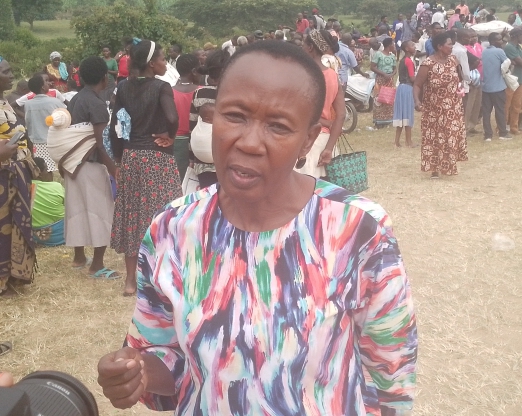
Rushenyi County MP Naome Kabasharira has accused corrupt security officers and judicial officials of undermining Uganda's fight against violent crime, saying suspects are escaping justice through bribery while victims are left without redress. Speaking as the country marked its independence, the legislator said officers tasked with enforcing the law are instead shielding those accused of murder and other offences, according to Red Pepper.
Kabasharira said Uganda has recorded meaningful progress since gaining independence in 1962, pointing in particular to gains in education, but warned that the safety of communities is being eroded by rising criminality. She called on the Police, other security agencies and the Judiciary to carry out their constitutional duties without favour and to stop protecting offenders.
"Let us celebrate Independence in Uganda when we are free from criminality, when we are corruption-free. I urge security and Judiciary to stop causing corruption, help us and end criminality from our communities," she said, as reported by Red Pepper.
Why it matters
The MP's remarks place the justice system itself at the centre of Uganda's crime problem, rather than treating it only as the institution meant to solve it. If suspects can buy their way out of prosecution, she argued, efforts to arrest, charge and convict offenders are weakened and communities are left exposed to further violence.
Her intervention also links two pressures facing her constituency and the wider region: insecurity and climate-driven hardship. Kabasharira framed independence as more than political sovereignty, saying citizens should be able to live without fear of criminals and to receive help when drought threatens their livelihoods.
Bribery said to stall prosecutions
Kabasharira alleged that corruption within the justice system frustrates the pursuit of suspects and prevents cases from reaching conclusion. She said officers and judicial officials accept payments from people accused of crimes instead of ensuring that victims see justice, a practice she said leaves violent offenders free to act again.
The legislator called on security agencies and judicial officers to exercise the powers granted to them under the constitution and to ensure that those responsible for killing innocent Ugandans are held accountable. She directed her appeal at the institutions as a whole rather than naming individual officers or cases.
She also urged ordinary citizens to play a part in confronting corruption and crime where they live, arguing that vigilance and cooperation at community level are necessary to address the problem. Her message was that the public, security agencies, government leaders and religious institutions all have roles to play.
Kabasharira said murders in local communities have been connected to domestic violence, political disagreements and other criminal activity. She called for stronger enforcement, public sensitisation and closer cooperation among communities, security agencies, government leaders and religious institutions as part of the response.
Drought and famine in the west
Alongside her demands on law and order, Kabasharira raised concerns about the effects of climate change on farmers in Western Uganda. She said repeated droughts in recent years have caused farmers to lose livestock and agricultural produce, deepening food insecurity in the communities affected.
The MP asked the government to help farmers with irrigation schemes so that they depend less on rainfall that has proved unreliable, and to protect agricultural livelihoods. She also encouraged communities that have the means to set up their own irrigation systems to shield their farms from long dry spells.
Kabasharira warned that climate change is becoming a threat that needs collective attention and should not be left to individual farmers to handle alone. She appealed to the Office of the Prime Minister to send relief to parts of Rushenyi facing famine after the prolonged drought that has hit sections of the constituency hard.
What to watch
The coming weeks will show whether Kabasharira's calls produce action from the Police, the Judiciary and the Office of the Prime Minister, or remain a parliamentary appeal made during the independence period.