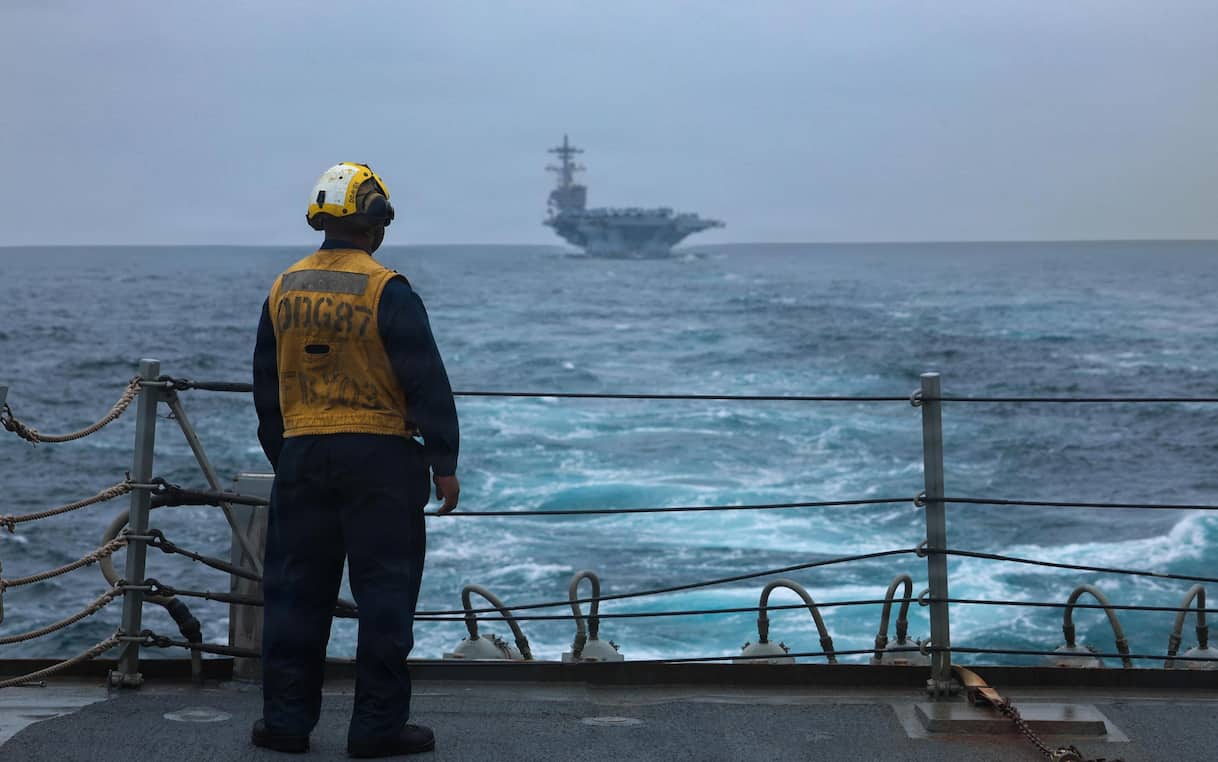
Two supertankers carrying more than two million barrels of oil caught fire in the Strait of Hormuz after striking mines, according to Sky TG24. Tehran asserted authority over the waterway and issued a warning to vessels it considers to be operating outside Iranian rules. The incident comes amid a wider regional confrontation involving Iran, its Houthi allies and Saudi forces.
Why it matters
The Strait of Hormuz is the world's most important oil chokepoint, and any disruption there carries immediate consequences for global energy markets. The reported mine strikes are the most direct physical threat to shipping in the waterway in this phase of the conflict. Sky TG24 also reports that Houthi attacks backed by Tehran kept Saudi forces occupied around Riyadh and in the kingdom's east, where oil facilities are concentrated — suggesting pressure on energy infrastructure from more than one direction at once.
Tehran's warning and Washington's response
Iran's Revolutionary Guard framed the burning tankers as a consequence of defiance. According to Sky TG24, the force said ships it deems illegal for failing to follow Iranian regulations in the Gulf of Hormuz would "burn in the fire of the trust of the American terrorist army" — a formulation that ties the vessels' fate to US involvement in the region.
US President Donald Trump, speaking at a rally at Dalton Municipal Airport in Georgia in support of Republican candidates ahead of November's midterm elections, said his government is aware of every Iranian move. Sky TG24 reports that Trump told the crowd: "We know everything they do. We hear everything they say." He added that results with Iran were going well, that the matter would be settled "very, very soon," and that Iran would never obtain a nuclear weapon.
The two statements — one from a military force describing vessels burning, the other from a president promising a swift end — point to sharply different expectations about how quickly the confrontation might resolve.
European diplomats attacked in the West Bank
In a separate development the same day, masked Israeli settlers attacked a group that included European diplomats near the Palestinian village of Taybeh, close to Ramallah, Sky TG24 reports. The delegation included French, Belgian and Polish representatives. According to accounts from activists on the ground and Israeli military radio cited by Sky TG24, about ten masked young men armed with sticks threw stones at the diplomatic vehicles.
The Belgian consulate car in Jerusalem was damaged. Activists said those attacked included Anick Van Calster, Belgium's consul, and Bernard Baudoux, mayor of the French town of Aulnoye-Aymeries. Amit Orfali, an Israeli activist working with a network that assists Palestinian farmers targeted by violent settlers, told the ANSA news agency that his group had been nearby helping a Palestinian family whose olives had been stolen from ten trees overnight when they were alerted to an ongoing assault. On arrival, he said, seven masked Israelis armed with sticks surrounded their cars, attacked them and demanded documents. Video filmed by Orfali shows Baudoux slumped beside a vehicle with diplomatic plates and masked men approaching with clubs, one of them striking Orfali's car. Orfali described the attackers as more violent than those usually encountered in the area.
Sky TG24 reports further coordinated attacks that day aimed at halting the Palestinian olive harvest in other parts of the West Bank, including Deir Jarir, Jalud, Burqa and Umm Safa. According to the Israeli rights group Yesh Din, 234 cases of Israeli violence in olive groves have been recorded since the harvest season began less than a month ago.
Belgium's foreign minister said the country would keep pressing for EU sanctions against those responsible for such violence and those who support them. Israeli Prime Minister Benjamin Netanyahu condemned the violence in a statement but called for caution before the facts were fully established; police have opened an investigation involving the foreign ministry. The Israeli military said the diplomatic visit had not been coordinated in the manner normally required, adding that coordination is essential to preventing incidents of this kind. Netanyahu went further, speaking of concern about a coordinated campaign to discredit Israel and Jewish residents of Judea and Samaria before the facts were clear.
Opposition figure Gadi Eizenkot, Netanyahu's main rival in elections set for 27 October, described the violence as "Jewish terrorism sponsored by the government," according to Sky TG24.
The same outlet reports that photojournalist Heidi Levine, attacked in the West Bank the previous day, was transferred from Ramallah to Israel's Beilinson hospital, where she underwent surgery for her injuries. President Isaac Herzog phoned to apologize, saying the assault did not represent Israel's citizens or values. No arrests have been made in that case.
Citing security sources reported by Ynet, Sky TG24 says the violent attacks are driven by a hard core of roughly 300 to 500 young men. The source said that where such actions were once justified as responses to Palestinian attacks, the pattern has shifted to proactive assaults.
What to watch
Watch whether the Hormuz shipping threat escalates further and how oil markets and naval deployments respond, alongside the police investigations in Israel and whether EU sanctions pressure on settler violence gains traction.



