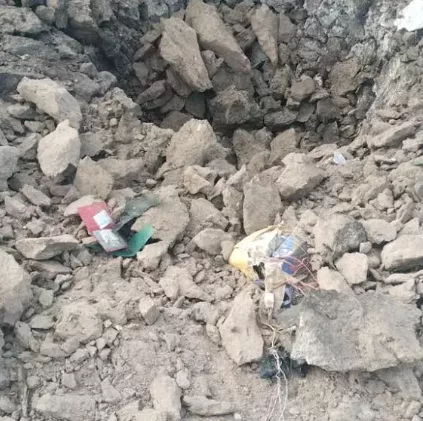
Two police officers were killed on Friday, October 9, when their vehicle struck an improvised explosive device on the Saretho–Dadaab Main Supply Route in Garissa, according to The Star, Kenya.
The Star, Kenya reports that the incident happened at about 6am. The vehicle, a Land Cruiser attached to Hagadera police station, was travelling along the route when it hit the suspected device.
Those killed were a senior officer and the driver, according to the outlet. The vehicle was badly damaged in the blast.
Why it matters
The deaths add to a long list of security personnel killed on roads in Kenya's north-eastern region, where improvised explosive devices have become a recurring hazard for police and military convoys.
The Saretho–Dadaab route serves the Dadaab area, home to one of the world's largest refugee complexes, and the road is used by police units stationed at camps such as Hagadera. Attacks on this corridor disrupt both security operations and the movement of people and supplies.
The Star, Kenya notes that dozens of government officials have died in similar incidents, while others have been left with serious injuries. The pattern has drawn repeated deployments of additional personnel and equipment to the region.
What police say happened
According to an initial assessment cited by The Star, Kenya, the Land Cruiser was on the main supply route when it ran over the suspected explosive. The senior officer and the driver were killed.
Witnesses told the outlet that a team responded to the scene but did not find those responsible for planting the device.
The attackers are believed to be al Shabaab members or local remnants of the group, and they are thought to have placed the explosive overnight. The Star, Kenya reports that it is not clear whether they had prior knowledge that police would use that road.
Investigations are ongoing, according to the team that responded to the scene. Security operations in the area were stepped up as the inquiry continues.
A wider pattern of roadside attacks
Friday's blast is the latest in a series of similar incidents in Kenya's north-east, where the border with Somalia runs for hundreds of kilometres.
On July 28, six Kenyan security officers were killed in Mandera county when their vehicle struck an improvised explosive device before coming under fire from suspected al Shabaab militants, according to The Star, Kenya. Those killed included five members of the elite Special Operations Group and one National Police Reservist.
That incident took place in the El-Raamo area of Kutulo, along the Alungu Main Supply Route, near the Kenya–Somalia border. Security sources told the outlet that the device had allegedly been planted on July 21, with the militants waiting for a security patrol before launching what was described as a coordinated ambush. The explosion was followed by an exchange of gunfire between the Special Operations Group officers and the attackers.
The July attack illustrated a tactic that has become familiar in the region: explosives placed on roads, sometimes days in advance, followed by gunfire when a target is hit. In Friday's case, The Star, Kenya reports that no attackers were found when a response team reached the scene.
Why the border area remains volatile
Kenyan officials have long pointed to Somalia's decades of unstable government as a factor allowing al Shabaab to operate and cross into Kenya to carry out attacks. The Star, Kenya notes that the area around the Kenya–Somalia border is frequently breached by the group's fighters.
Kenya has mounted operations aimed at addressing the threat, which officials say has held back development across the region at large. More personnel and technology have been deployed in response.
Officials say those efforts have reduced the overall number of such incidents, though attacks continue. The terrorists typically plant explosives on roads, leaving Kenyans dead and property destroyed, according to the outlet.
For communities along routes like Saretho–Dadaab, the consequences extend beyond the immediate casualties. Road closures and security crackdowns after each blast slow traffic, complicate aid delivery and raise costs for residents and traders. Police units stationed at camps in the Dadaab area rely on the same roads for patrols and resupply, making convoys vulnerable to devices planted under cover of darkness.
What to watch
Investigations into Friday's blast are ongoing, and no arrests had been reported as of The Star, Kenya's account. The key questions are whether anyone is held over the planting of the device and whether security operations along the Saretho–Dadaab route produce further details on who carried out the attack.



