My niece called me last week, genuinely distressed. Not about a breakup or a bad grade — about a chair. Her favorite corner spot at the local library had been taken by "some guy with a laptop and, like, seven books." She'd been going there three afternoons a week for months. It wasn't about the books. It was about the place.
And honestly? I got it immediately.
Because what she was describing has a name, and it's been quietly reshaping how young people live for the past few years. Sociologists call it the third place — the spot that isn't your home (first place) and isn't your work or school (second place). It's the café, the diner, the library, the community rec center. The place you go not because you have to, but because you want to be around other humans without any particular agenda.
For a while there, we all assumed third places were dying. Malls emptied out. Bowling alleys closed. Everyone retreated to their couches and their phones. But a funny thing happened on the way to total isolation.
The Loneliness Math Finally Added Up
Let's be honest — we spent the better part of a decade being told that digital connection was enough. You could "hang out" with friends over Discord, "attend" events via livestream, and "build community" in a subreddit. And all of that is real. I'm not going to pretend my group chat isn't one of the most important relationships in my life.
But there's a difference between talking to people and sharing space with them. That's the part nobody talks about.
Gen Z grew up with more digital connection than any generation in history — and reported the highest rates of loneliness. That contradiction isn't a coincidence. It's a signal. When the Surgeon General dropped that advisory on loneliness a couple years back, it hit younger people hardest. Suddenly, the abstract idea of "needing community" became a concrete, measurable problem.
So what did they do? They started showing up. In person.

Why the Library Became Gen Z's Living Room
I've found that libraries are the most underrated third place in America, and Gen Z figured this out before the rest of us.
Think about what a library offers: free Wi-Fi, free heat in the winter, free AC in the summer, no expectation to buy anything, and a built-in excuse to be there. You can sit for four hours and nobody asks you to leave. Try that at a Starbucks and watch the baristas start circling like sharks.
For a generation drowning in student debt and rent prices that make you laugh-cry, that "no purchase required" thing is enormous. It's one of the last genuinely free spaces left in public life.
But it's not just about money. It's about ambient company. There's a term for it — being alone together. You don't have to talk to anyone. You just have to be near people. And that, it turns out, does something to your brain that a solo Netflix binge simply doesn't.
Here's what most people miss about the library revival: it's not nostalgic. Gen Z isn't going to libraries to cosplay as their grandparents. They're going because libraries are one of the only places left where you're not being sold something. No ads, no upsells, no algorithmic feed. Just a room, some shelves, and other humans existing quietly alongside you.
That's radical in 2025.
Diners, Dive Bars, and the Return of the $4 Bottomless Coffee
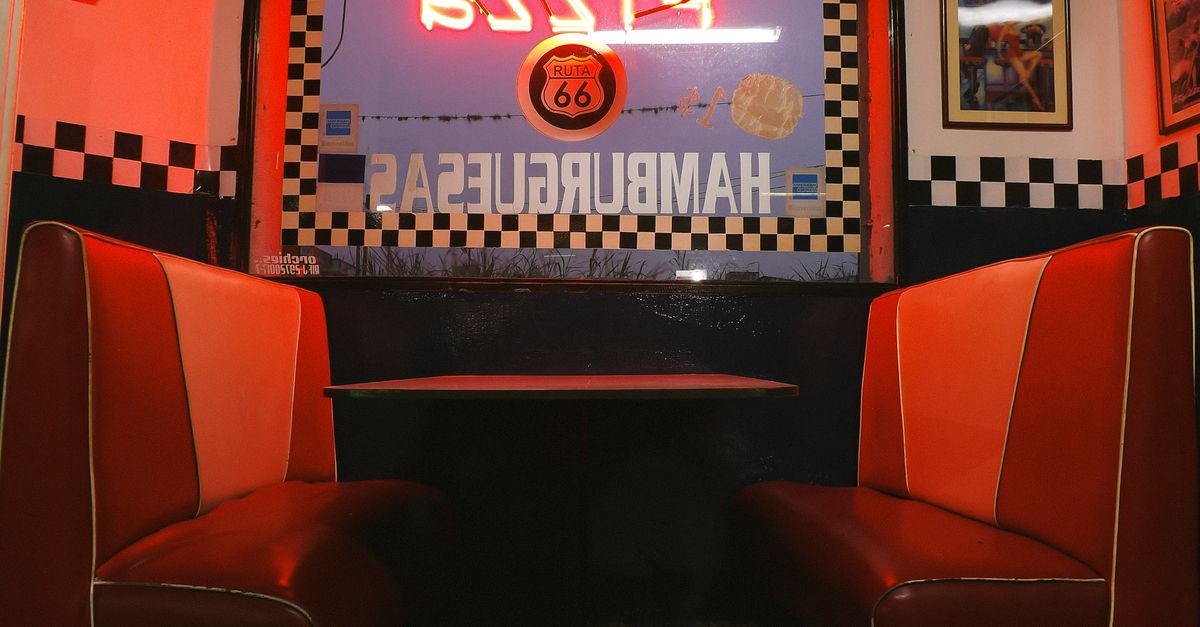
The library story is great, but it's not the whole picture. Walk into any 24-hour diner near a college campus at 11 p.m. on a Tuesday and you'll see it — tables of twenty-somethings nursing one plate of fries between six people, arguing about movies, doing homework, just being.
The diner has always been a third place. What's changed is who's showing up and why.
A few things are driving this:
- Remote work made home feel like an office. When your bedroom is also your conference room, you start craving somewhere that isn't either.
- Rent is so brutal that people live in smaller spaces. Your apartment can't host six friends comfortably, but a diner booth can.
- There's a hunger for uncurated experiences. You can't algorithmically optimize a greasy spoon. That's the point.
- Cash-strapped doesn't mean antisocial. A $4 coffee you can stretch for three hours beats a $60 dinner you can't afford.
The Secret Ingredient Nobody Advertises
Here's the thing about third places that gets lost in all the trend pieces: they only work if you show up consistently.
You can't build community in one visit. The magic of a third place is repeated, low-stakes contact with the same people. The barista who starts remembering your order. The retiree who nods at you every morning. The kid who always has the corner seat you secretly want.
That's the part our convenience-obsessed culture keeps trying to skip. We want instant belonging. But belonging is a slow-cooked thing. It's built out of a hundred tiny, unremarkable interactions.
Ray Oldenburg — the sociologist who coined "third place" back in the '80s — laid out what makes one work. I'll paraphrase:
- It's neutral ground. Nobody's hosting, nobody's a guest.
- It's a leveler. Money and status matter less inside than outside.
- Conversation is the main activity.
- It's accessible. You can get there easily and often.
- There are regulars. And the regulars set the tone.
This Isn't a Trend. It's a Correction.
I'll be honest — I'm a little suspicious of anyone framing this as a "Gen Z trend," like young people invented wanting to be around other humans. They didn't. What they did was refuse to accept that loneliness was just the price of modern life.
And that refusal is spreading.
Cities are experimenting with community fridges, free little libraries, and parklet seating. Some libraries are loaning out tools, seeds, even cake pans. Diners are leaning into their role as unofficial clubhouses. The infrastructure of belonging is being rebuilt, one small, stubborn space at a time.
Is it enough? Probably not yet. Third places don't solve the housing crisis or pay off anyone's loans. But they do something quieter and maybe more important: they remind us that we're not supposed to do this alone.
So here's my challenge to you. Pick a spot. Any spot — the library, the diner, the weird little coffee shop with the mismatched chairs. Go there this week. Then go again next week. Say hi to the person who's always there at the same time you are.
You don't need a grand plan. You just need to keep showing up.
That's how third places get built. Not by architects. By regulars.
And who knows — one day, some stressed-out college kid might get annoyed that you took their favorite chair. Consider it a compliment.