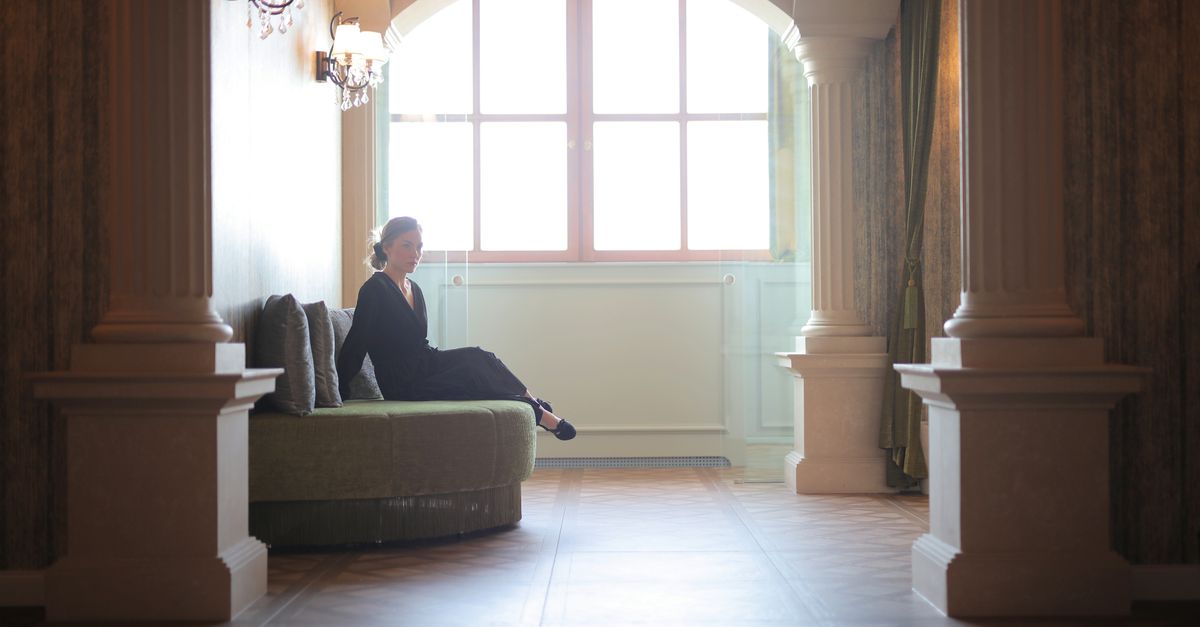
Picture this: it's a Tuesday afternoon, and my phone buzzes with a notification from my calendar. "Free hour," it says. Not "Meeting with client" or "Call mom" or "Dentist." Just a blank, beautiful hour. And for the first time in maybe five years, I didn't immediately fill it. I didn't open Instagram, didn't start a podcast, didn't "optimize" the time by cleaning my kitchen.
I sat on my balcony with a cup of chai that went cold, and I watched the traffic go by. That was it. That was the whole hour.
Sounds almost shameful, doesn't it? That's exactly what 2025's slow living movement is asking us to sit with. And honestly, it's the most radical thing I've done all year.
The notification that started my slow living experiment
I'm not a wellness influencer. I don't own a linen jumpsuit (well, one, but that's a different story). I'm a blogger who works from home, drinks too much coffee, and measures her days in word counts and page views. But last November, a friend sent me a TikTok of a woman in Kyoto who spends her mornings doing absolutely nothing. No journaling, no meditation app, no green smoothie. Just sitting.
My first thought? That's a luxury I can't afford. And then I realized — she's a freelance illustrator with the same deadlines I have. The difference wasn't time. It was permission.
I've found that most of us don't actually want to be busy. We're just terrified of what people will think if we're not.

Why "quiet luxury" quietly became about time, not handbags
Remember when quiet luxury was all about unlabeled cashmere and stealth-wealth blazers? In 2025, that aesthetic has mutated. The new flex isn't a $3,000 bag — it's a Saturday with zero plans and the ability to say "I'm not available" without a reason.
I've been tracking this shift for months across the platforms I write for, and the pattern is unmistakable. Search interest in terms like "slow living," "intentional downtime," and "digital minimalism" has been climbing since early last year. But the surprising part? It's not just the wellness crowd. Finance creators are talking about it. Tech founders are posting about it. There's a TikTok genre now of people filming themselves doing nothing — making tea, staring out a window, folding laundry without a podcast on — and racking up millions of views.
Here's what most people miss: this isn't laziness with a marketing budget. It's a quiet rebellion against a culture that turned every hobby into a side hustle and every rest into a productivity hack.
Let's be honest — we're exhausted. Not the kind of exhaustion a nap fixes. The kind that comes from treating our own lives like a quarterly earnings report.
The surprising economics of doing less
I ran a little experiment on myself for three weeks. For two hours every afternoon, I did nothing that could be "logged." No reading for content ideas, no scrolling for "research," no voice notes for future blog posts. Just... existing.
The results were weird.
- My writing got faster. Fewer words but better ones. I stopped padding paragraphs.
- I slept better. Not because of some supplement — because my brain wasn't marinating in 47 open tabs at midnight.
- I got pickier about projects. The slow living movement has a way of making you realize how many things you were doing purely out of momentum.
The slow living movement isn't anti-ambition (and that's the point)
I want to push back on something. A lot of the anti-slow-living commentary frames this as a generational cop-out. "Nobody wants to work anymore," etc. But the people I know who've adopted this lifestyle are some of the hardest workers I've met. They just drew a line.
The quiet luxury of doing nothing is not about quitting your job and moving to a farm. (Although, fair, that's one version.) It's about small, deliberate gaps in a schedule that used to be wall-to-wall. It's leaving your phone in the other room while you eat lunch. It's saying "I'll get back to you tomorrow" and meaning it.
Here's what I tell friends who ask how to start: don't call it a routine. The moment you schedule your "nothing time" into a habit tracker, you've turned it into another task. Just find one pocket of your day — a commute, a lunch break, the ten minutes before bed — and let it stay empty. No podcast. No scrolling. No "mindful breathing." Just you and your own thoughts, which are apparently terrifying but also kind of nice once you get used to them.
What the slow living movement gets right about 2025
We're living through a moment where every algorithm is designed to make us feel behind. Behind on trends, behind on news, behind on side hustles, behind on our own potential. The slow living movement doesn't fight the algorithm. It just logs off for a while.
I've found that the quietest moments of my week are the ones I remember. Not the meetings, not the viral posts, not the launches. The cold chai on the balcony. The walk with no destination. The Tuesday afternoon I'll never be able to put on a résumé.
So here's my challenge to you: this week, block out one hour. Call it "nothing." Don't tell anyone. Don't post about it. Just sit with it and see what happens.
The world will still be spinning when you come back. I promise.
And if your calendar app sends you a "Free hour" notification, maybe — just this once — don't fill it.