
The next person to walk on the Moon probably won't work for NASA.
Let that sink in for a second. For the entire history of human spaceflight, planting a flag on another world was a government-only club. You needed a superpower's budget, a military-grade supply chain, and a president willing to stake his legacy on it. Now? A guy who made his money selling rocket rides to paying customers is building the lander that will take astronauts back to the lunar surface.
I've been following spaceflight since I was a kid taping shuttle launches off cable TV, and I genuinely never thought I'd see the day when the most reliable rocket in the world belongs to a private company. But here we are.
The $2.6 Billion Wake-Up Call
Remember when NASA's Space Launch System finally launched in 2022? The Artemis I mission was a triumph, no question. It also cost roughly $4.1 billion per launch, and that's being generous with the accounting. The rocket took over a decade to build, and it can't be reused. Not a single bolt of it.
Meanwhile, SpaceX was landing boosters on drone ships in the Atlantic like it was a party trick, then flying them again a few weeks later. The Falcon 9 became the most-launched rocket in history, and its price tag sits somewhere around $67 million per flight. That's a rounding error compared to SLS.
Here's what most people miss: this isn't just about cheaper rockets. It's about a fundamental shift in who gets to decide what happens in space. When NASA was the only game in town, every mission was a political football. When private companies can undercut you by a factor of 50, the game changes entirely.

Four Companies Quietly Rewriting the Playbook
Let's be honest, "private space companies" usually means one company in most people's heads. That's a mistake. The new space race is crowded, and the competition is brutal in the best possible way.
- SpaceX — the obvious one. Starship is the biggest rocket ever built, and the company's HLS (Human Landing System) contract with NASA means its vehicle is the designated lunar taxi. Love him or hate him, Musk's outfit dragged the entire industry into the 21st century.
- Blue Origin — Bezos's slow-burn project finally showed signs of life with New Glenn reaching orbit. The company's Blue Moon lander is targeting cargo missions to the lunar south pole, and they've got deep pockets to absorb the failures that would bankrupt anyone else.
- Intuitive Machines — this is the one that should terrify the old guard. The Houston-based company landed Odysseus near the lunar south pole in February 2024, becoming the first private spacecraft to soft-land on the Moon. It tipped over, sure. But it worked. A startup beat every national agency except NASA to the punch.
- Firefly Aerospace — quietly racking up NASA contracts and building lunar landers of its own. They're the underdog everyone in the industry is watching.
Why National Agencies Are Playing Catch-Up
This isn't a knock on the brilliant engineers at NASA, JAXA, or ESA. It's a structural problem.
Government agencies operate on political timelines. A new administration can gut a program overnight. Budgets get held hostage by whoever controls the appropriations committee. A single senator from Alabama can delay a launch by two years because a contractor in his state needs to keep jobs.
Private companies have a different constraint: they run out of money and die. That's it. No committee hearings, no filibusters, no election cycles. Just results or bankruptcy.
I've found that this pressure produces exactly the kind of ruthless efficiency that lunar exploration demands. SpaceX blew up Starship prototypes on live streams and called it progress. NASA would have held a press conference to explain the failure. Both approaches have merit, but only one of them gets you to the Moon faster.
And let's not pretend the national agencies are sitting this out. NASA's Artemis program is explicitly designed as a public-private hybrid. The agency provides the destination and the funding; companies provide the vehicles. It's a recognition that the era of government-only spaceflight is over.
The Lunar South Pole Is the New Klondike
Here's where it gets genuinely interesting. Everyone's racing to the same patch of real estate: the lunar south pole.
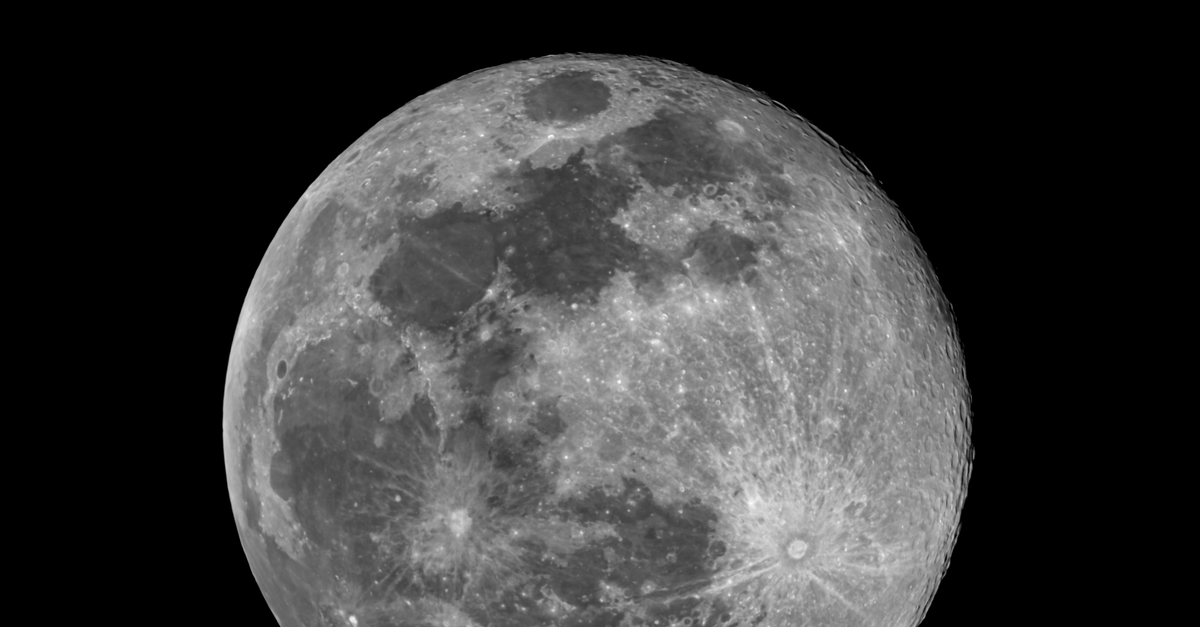
Why? Water ice. Permanently shadowed craters near the pole contain frozen water, and water is the most valuable resource in space. Split it into hydrogen and oxygen, and you've got rocket fuel. You've got breathable air. You've got drinking water for a permanent base.
The country or company that establishes a foothold there first writes the rules for everyone who follows. That's not a metaphor — it's geopolitics. China's space program has stated its intention to build a lunar research station by the 2030s. NASA's Artemis aims to put boots on the ground before that. And the private companies are the ones actually building the hardware.
The new space race isn't about flags. It's about resources, infrastructure, and who gets to sit at the table when the rules get written.
What This Actually Means for the Rest of Us
Maybe you're thinking this is all billionaire vanity projects and government waste. I get it. There's a version of this story where we spent a fortune to put footprints on dead rock while Earth burns.
But I'd argue the opposite is happening. The cost of getting to orbit has dropped by an order of magnitude in fifteen years. That's opened the door to satellite internet for rural communities, cheap Earth observation for climate monitoring, and scientific missions that used to be impossible on academic budgets.
The lunar economy, if it materializes, could be bigger. Helium-3 mining, space-based manufacturing, fuel depots in orbit — these aren't science fiction anymore. They're business plans with funding rounds.
Here's the uncomfortable truth, though: we're trusting private companies to do what governments couldn't, and we haven't figured out how to hold them accountable. Who owns the water ice? What happens when a company's lander crashes into a competitor's base? What labor laws apply to workers on the Moon?
Nobody has good answers. We're making it up as we go.
That's the actual story of the new space race. Not the rockets, not the billionaires, but the fact that we're writing the laws of an entire frontier in real time, and most of us aren't even paying attention.
So here's my ask: follow the launches. Read the contracts. Argue about it with your friends. Because the decisions being made right now, in boardrooms and budget hearings and launch pads, will shape what the next century looks like for everyone.
The Moon is coming back into our lives. The only question is whether we're paying enough attention to notice who's steering.



