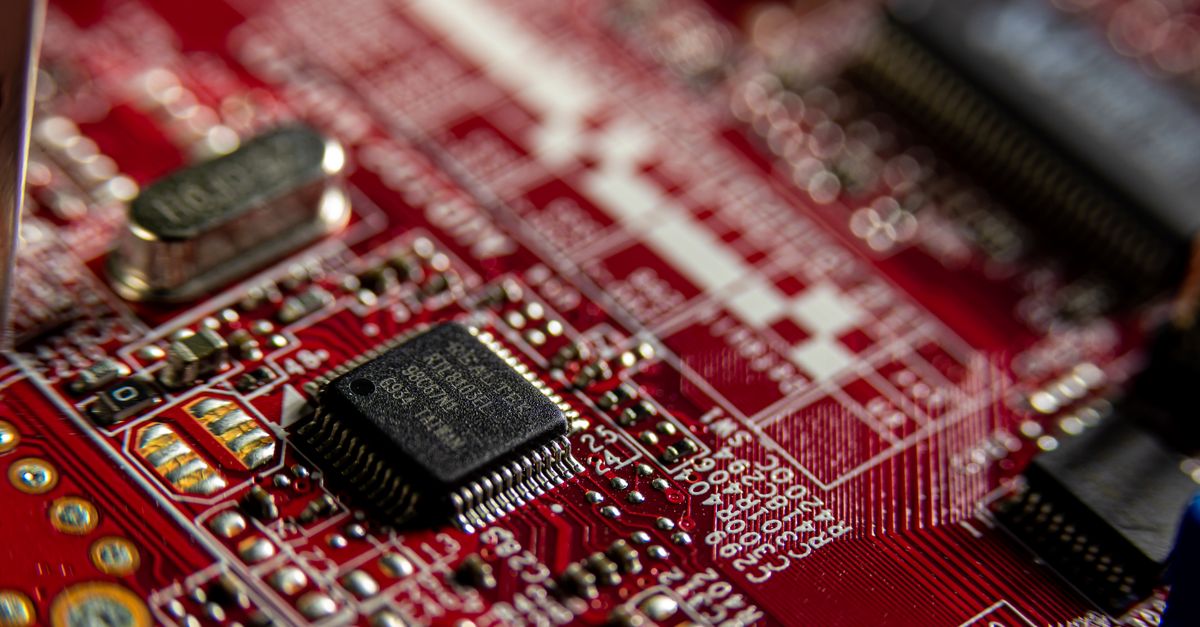
Let’s be honest for a second. I didn’t realize how bad the chip shortage was until my brand-new washing machine started singing error codes like a sad robot. There I was, staring at a pile of soggy laundry, realizing that the "smart" appliance I bought was dumber than a brick without a specific microchip that costs about $2 to make.
It hit me then: we are living in a world where a piece of silicon controls whether I have clean socks.
And just when we thought the supply chain was catching its breath, the floor dropped out again. The global chip shortage just got worse, and it’s not just about your inability to buy a PS5 anymore. This is a full-blown industrial crisis. While everyone is fixated on AI data centers and fancy GPUs, three major industries are quietly bracing for a tsunami of pain.
Here is what most people miss: the shortage isn't about high-end chips exclusively. It’s about the boring, dumb, ubiquitous chips—the ones that control your car windows, your dishwasher, and your factory robots. And right now, those are disappearing faster than free donuts in a police station.
Let’s dive into the chaos.
The "Smart" Everything Hangover
We did this to ourselves. For the last decade, we demanded that everything be "smart." We wanted smart fridges that order milk, smart toothbrushes that track brushing time, and smart doorbells that judge our delivery drivers.
The irony is that adding "smart" to a product adds about 50 new chips to it. A standard non-smart car uses about 300 chips. A modern EV uses over 3,000. We created a dependency on a manufacturing process that is notoriously difficult to scale up. Building a new semiconductor fab costs upwards of $20 billion and takes three to five years. You can't just turn the dial up on a factory when demand spikes.
Now, the industry is facing a perfect storm of geopolitical tension, export controls, and a sudden surge in demand from AI servers that hoover up every available bit of advanced memory and logic. The result? The "dumb" chips get pushed to the back of the line.
1. The Automobile Industry: Idle Factories and Parking Lot Ghosts
I have a friend who ordered a Ford pickup truck in March. He was told it would arrive in July. It is now October, and he has a VIN number, a loan approval, and a very empty driveway.
The car industry is the canary in the coal mine. They are currently facing a "double whammy": they need more chips for EVs and infotainment systems, but they are last in line for allocation because they operate on razor-thin margins.
Here’s what’s happening now: Automakers are building cars without the chips and parking them in massive fields. I’m not joking. There are literally hundreds of thousands of semi-completed vehicles sitting in lots in Detroit and Germany, waiting for a $10 microcontroller to be installed.
The impact is brutal:
- Job losses: Assembly plants are shutting down for weeks at a time.
- Price hikes: If you can find a car, you’re paying MSRP—or more. Dealerships are adding "market adjustments" that make me want to scream.
- Feature stripping: We are seeing cars ship without heated seats or digital dashboards just to keep the line moving.

2. Medical Devices: The Silent Scramble
This is the one that keeps me up at night. We hear about cars and phones, but we don't hear enough about medical device shortages. Hospitals and manufacturers are in a silent panic right now.
Think about the chips needed for:
- Insulin pumps: These require precise, low-power microcontrollers to dose life-saving medication.
- MRI machines: They need high-end signal processors.
- Hearing aids: Tiny chips, huge demand.
I’ve heard from insiders that some medical device firms are being told lead times are stretching to 50-60 weeks. For a device that is meant to keep a heart beating, that is an eternity.
While the government has put some pressure on chipmakers to prioritize this, the reality is that the margins in medical chips are lower than in AI accelerators. The market is cold, cruel, and follows the money. This is a situation where the "invisible" shortage has life-or-death consequences, and it’s absolutely terrifying.
3. Industrial Automation and Manufacturing: The Gridlock
If you think the chip shortage is just a consumer problem, think again. The industrial sector—the factories that make everything else—is hitting a brick wall.
We are talking about PLCs (Programmable Logic Controllers), motor drivers, and sensors. These are the guts of the machines that build our world. Without these specific chips, robotic arms stop moving, conveyor belts stop rolling, and bottling plants stop bottling.
Here is the dirty secret: The equipment used to make chips is also made of chips. It’s turtles all the way down.
I’ve seen reports of manufacturers having to buy "gray market" components—chips that might be fake, refurbished, or from unknown brokers—just to keep their lines running. That is a massive safety risk. The shortage is stalling the very expansion of the factories that we need to solve the shortage.
This creates a vicious cycle:
- Factory wants to expand to make more goods.
- Factory needs industrial robots to expand.
- Robots need chips.
- Chips are unavailable.
- Factory stays idle.

Why This Time Is Different (And Worse)
If you are thinking, "Didn't we go through this in 2021?"—yes, we did. But the recovery we hoped for never fully arrived. The pandemic-induced shortage was a demand surge. This new crisis is a supply contraction driven by geopolitics.
Export restrictions on advanced chipmaking equipment have thrown a wrench into the global expansion plans. Countries are now hoarding chips like they hoarded toilet paper in 2020. It’s nationalistic, protectionist, and it is wreaking havoc on the global supply chain.
Furthermore, the AI boom is eating the entire supply chain. Nvidia and other AI chip makers are buying up massive amounts of advanced packaging capacity and memory bandwidth. This leaves less capacity for the "trailing edge" chips that the rest of the world needs.
In short, we are running out of the old stuff because we are building too much of the new stuff.
The Silver Lining (Because I’m Not All Doom and Gloom)
Look, I’m a realist, but I’m not a pessimist. The one good thing to come out of this crisis? Innovation in resilience.
I’ve found that necessity really is the mother of invention. We are seeing:
- Chiplet designs: Instead of one massive chip, companies are combining smaller ones, which is faster to produce.
- Reshoring: Governments are pouring billions into domestic fabs. It won't help for 3 years, but it will help.
- Inventory hoarding (the smart way): Companies are finally realizing that "Just-in-Time" is dead. They are moving to "Just-in-Case," which means more buffer stock.
So, what can you do? If you run a business, diversify your suppliers now. Don't put all your eggs in one basket. And if you are a consumer? Maybe hold off on buying that new smart fridge. Trust me, your dumb fridge still keeps your beer cold, and that’s all that matters.
The chip shortage just got worse, but our ability to adapt is still the most powerful resource we have.