I was sitting in a Bengaluru coffee shop last month, watching a startup founder friend of mine nervously refresh his inbox every thirty seconds. He wasn't waiting on a funding round or a client pitch. He was waiting to see if his AI-powered hiring tool would survive the next wave of compliance rules coming out of Brussels.
"Sitting in a Bengaluru coffee shop last month, watching a founder friend nervously refresh his inbox every thirty seconds. Not for funding news. For compliance news."
That moment hit me hard. Because here's the thing nobody tells you about the AI boom — while we've all been marveling at chatbots that write poetry and generate images, governments across the planet have been quietly building the most ambitious technology rulebook in modern history. And it's about to land on every tech giant's desk at once.
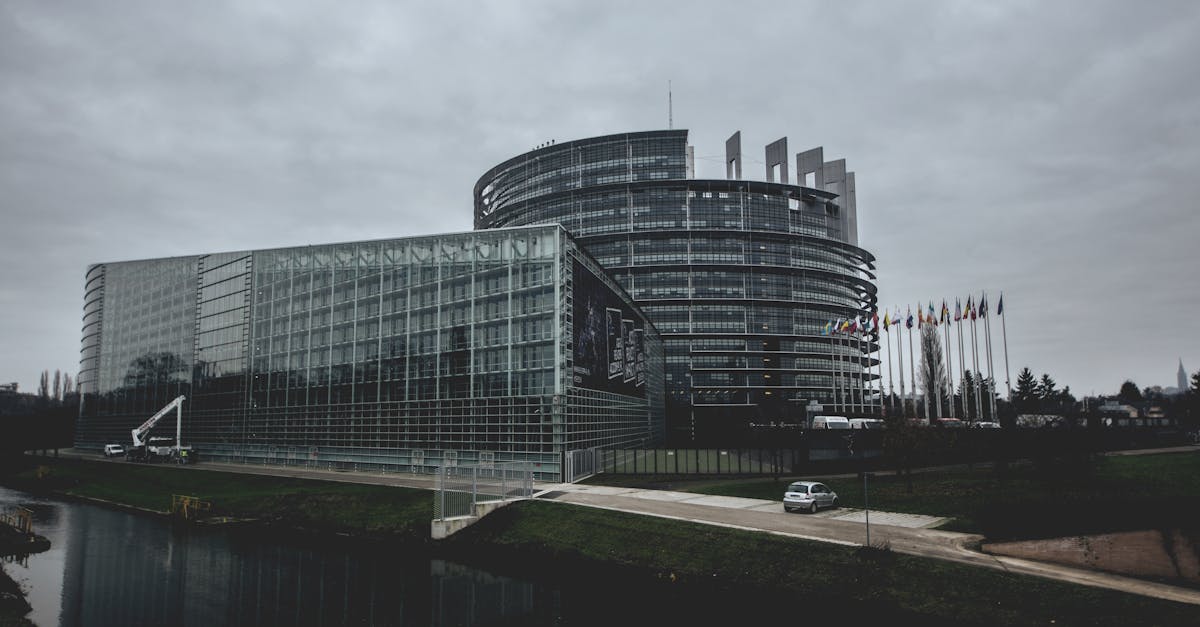
The Brussels Effect Is Back, and This Time It's Aimed at Algorithms
Let's be honest — when the EU AI Act got its final shape, a lot of Silicon Valley folks shrugged. They'd heard the "Brussels Effect" sermon before with GDPR and assumed they'd lobby their way into a softer version. That assumption is now looking very shaky.
The EU AI Act isn't a single law so much as a tiered risk system. Low-risk tools (spam filters, recommendation engines for your Netflix queue) mostly skate by. But anything classified as high-risk — hiring algorithms, credit scoring, biometric surveillance, medical diagnostics — faces a completely different reality. Mandatory audits. Human oversight requirements. Documentation that would make a pharmaceutical company blush.
And the penalties? Up to 7% of global annual revenue for the worst violations. For a company like Google or Meta, that's not a fine. That's a budget line that could fund a small country.
Here's what most people miss: the EU deliberately designed this so it applies to any company serving European users, regardless of where the company is headquartered. You can't just host your model in Wyoming and call it a day.
America's Approach: Fifty Labs, Fifty Rulebooks, One Headache
If Europe is the strict professor, the United States is currently the chaotic group project where everyone's working on a different slide.
I've found that the US AI regulation landscape is genuinely confusing even for people paid to track it. There's no single federal AI law. Instead, you've got:
- The White House Executive Order framework pushing safety testing for frontier models
- The FTC flexing its existing consumer protection muscles against deceptive AI claims
- State-level laws in Colorado, California, and Texas that sometimes contradict each other
- Sector-specific rules from the SEC, FDA, and EEOC that apply to AI in finance, drugs, and hiring
My honest take? The US will stay fragmented for at least another two years. The lobbying money is too enormous, and the political coalitions too unstable. But that fragmentation itself becomes a competitive disadvantage against European and Chinese firms operating under clearer (if stricter) rules.
China Writes the Rules in Real Time
Meanwhile, Beijing has taken a genuinely different path. Rather than one sweeping law, China has rolled out targeted AI regulations for specific use cases — recommendation algorithms, deepfakes, generative AI content. Every major model that goes live in China needs to register with authorities and pass security assessments.
Is it heavy-handed? Absolutely. But there's a perverse clarity to it. Chinese AI companies know exactly what's expected of them. They iterate fast because the boundaries, while strict, are defined.
The interesting twist: China is now exporting this regulatory model to parts of Southeast Asia and Africa through infrastructure deals. So the global AI regulation race isn't just about which country writes the toughest rules — it's about whose rulebook becomes the default for a hundred other nations.

The Three Things Tech Giants Are Actually Doing Right Now
I've talked to enough people inside these companies to know the public statements rarely match the internal reality. So here's what's genuinely happening behind the scenes:
1. Regulatory arbitrage is dying. For years, companies could launch a feature in a permissive market, test it, then adapt for stricter ones. That playbook is over. The EU's extraterritorial reach and China's registration requirements mean features are now designed for the strictest jurisdiction first, then relaxed elsewhere.
2. Compliance is becoming a product. Microsoft, Google, and Amazon are all building AI governance tools they can sell to smaller companies terrified of running afoul of new laws. The regulation they once fought is now a revenue stream. Cynical? Sure. Smart? Very.
3. Talent wars are shifting. The hottest job in AI right now isn't a prompt engineer. It's a regulatory-affairs specialist who actually understands transformer models. Good luck finding those — there are maybe a few thousand globally.
What This Means If You're Not a Tech Giant
Here's where I want to get personal, because most readers of this blog aren't running a trillion-dollar company.
If you're a startup founder, a product manager, or even a freelancer using AI tools, these laws will reach you. Not through dramatic enforcement actions, but through the terms of service you click past and the APIs you build on. When OpenAI updates its usage policies to comply with EU rules, that cascades down to every app built on top of it.
My advice? Stop treating regulation as someone else's problem. Spend an afternoon reading the summaries of the EU AI Act's high-risk categories. Check whether your state has passed anything relevant. It's boring. It's also the difference between a company that survives the next three years and one that gets blindsided.
The Race Nobody Actually Wins
The phrase "AI regulation race" implies a finish line. There isn't one.
Every time a major law passes, the technology evolves past it within eighteen months. Regulators are chasing a moving target with a bicycle, and the bicycle keeps getting new wheels. The companies that thrive won't be the ones that dodge rules or the ones that over-comply into paralysis. They'll be the ones that build compliance into their architecture from day one — not as a burden, but as a design principle.
So here's my challenge to you this week: pick one AI tool you use daily. Find out who regulates it, and how. You might be surprised how much of your digital life is already governed by laws you've never read.
And if you're building something with AI? Build like Brussels is watching. Because increasingly, it is.