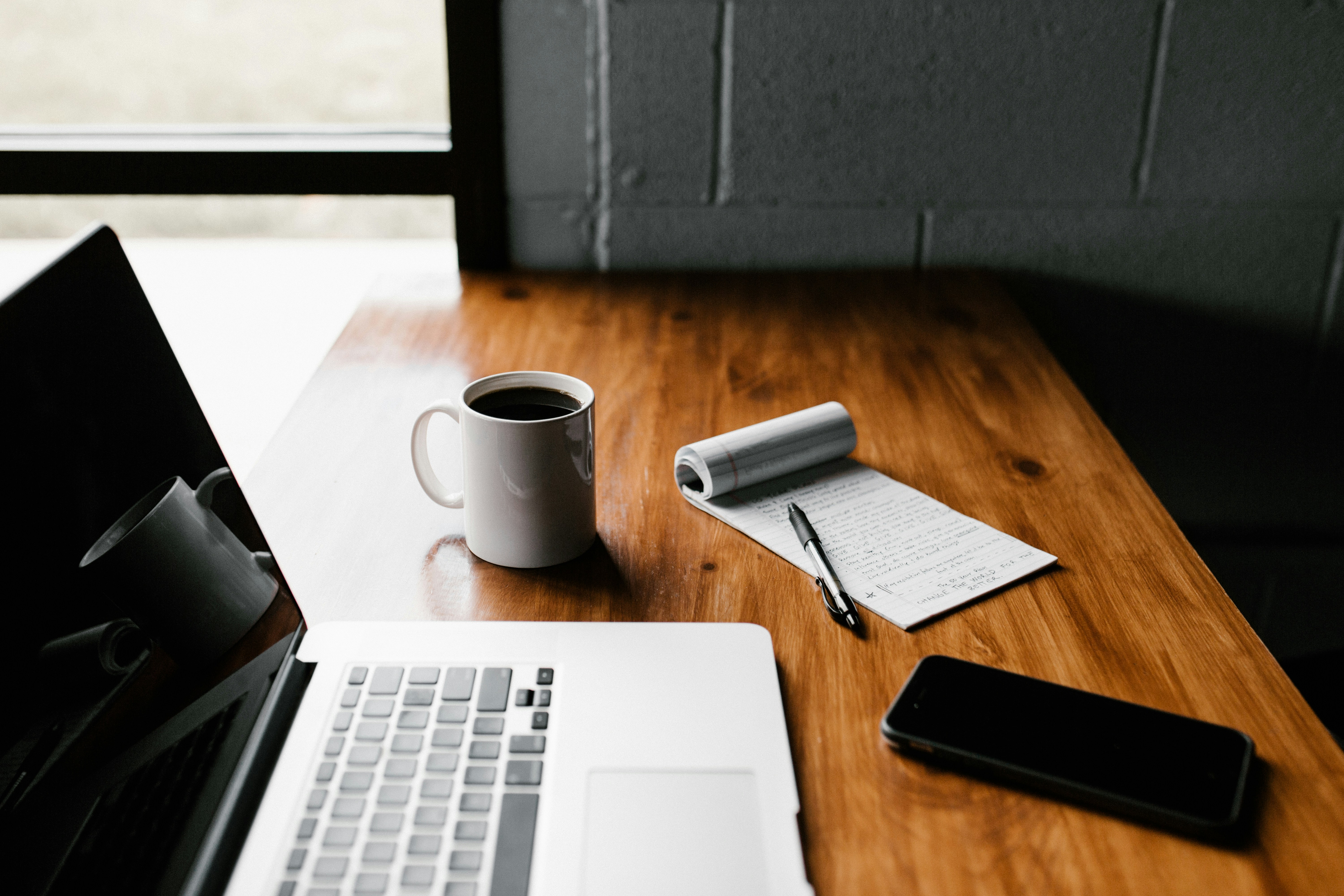
I was sitting in a coffee shop last Tuesday, watching a guy across from me answer a Slack message, then an email, then a text, then a Slack message again — all within about four minutes. His latte went cold. He looked exhausted. And here's the thing: I recognized him, because I used to be him.
That's the funny part about the digital detox conversation in 2025. It's not about escaping to a cabin with no Wi-Fi anymore. It's about admitting that your "productivity system" might actually be a sophisticated way of avoiding your actual work. I've watched friends buy $400 focus apps, subscribe to three different task managers, and schedule "deep work blocks" they spend checking notifications. The irony is thick enough to spread on toast.
So let's talk about why unplugging has quietly become the most underrated productivity hack of the year — and how to actually do it without pretending you're moving to a monastery.

The Productivity Paradox Nobody Warns You About
Here's what most people miss about the digital detox conversation: the problem isn't the technology, it's the fragmentation. Every notification is a tiny context switch, and context switches are expensive. A 2023 study out of UC Irvine (the Gloria Mark work, if you want to look it up) found it takes over 20 minutes to fully return to a task after an interruption. Twenty minutes. If you get interrupted six times in a morning, you've basically lost your entire morning to the recovery process.
I've found that my best writing days aren't the ones where I'm "disciplined" about checking email. They're the ones where I physically can't check email because my phone is in another room and my laptop is on airplane mode. The discipline isn't the point. The environment is the point.
And yet — and this is the part that makes me want to scream into a pillow — we've built an entire productivity culture around optimizing the interruptions instead of eliminating them. We batch notifications. We use Pomodoro timers. We set "focus mode" on our phones. All of that is fine, but it's like putting a nicer lock on a door that's still swinging open.
Why 2025 Is Different (Yes, Really)
I know, I know. "Digital detox" has been a thing since roughly 2014, when everyone was writing think pieces about deleting Facebook. But 2025 is genuinely different for three reasons:
- AI assistants are now ambient. They're in your earbuds, your calendar, your inbox, your grocery list. The number of "helpful" pings has basically tripled.
- Remote and hybrid work blurred the boundaries. There's no commute to bookend your day anymore, so your phone becomes the office.
- The attention economy got more aggressive. Short-form video is now engineered with the same precision as slot machines. This isn't a moral failing on your part — it's a design feature on theirs.

The Detox Playbook I Actually Use
Let me be honest: I've tried the "delete all social media for 30 days" thing, and it lasted about 72 hours before I caved. Cold turkey doesn't work for most of us. What does work is structural unplugging — designing your day so the default state is focus, not reaction.
Here's my current system, refined over about two years of trial and error:
- The phone sleeps in another room. Not on the nightstand. Not face-down. Another room. This one change did more for my sleep and morning clarity than any app ever has.
- First 90 minutes are analog. No email, no Slack, no news. Coffee, notebook, whatever I'm actually working on. It feels weird for about a week, then it feels like cheating.
- One "input window" per day. I check news and social media between 12 and 12:30. That's it. Everything else is output time.
- Notification bankruptcy. I've turned off every notification except phone calls and calendar alerts from my partner. Everything else can wait. It always can.
- A weekly 24-hour detox. Sunday to Monday, no social media, no news, no email after 6pm. It's not a religious ritual — it's a reset button.
The Part Where I Push Back on Detox Culture
Here's where I'll diverge from the wellness-influencer version of this conversation: I don't think screens are evil, and I don't think you need to feel guilty about enjoying them. I love a good Twitter scroll. I watch YouTube essays while I fold laundry. The goal isn't purity — it's intentionality.
The digital detox movement has a tendency to slide into moralism, where anyone who checks their phone is a "dopamine addict" and anyone who journals at sunrise is enlightened. That's nonsense. The real question isn't "how much screen time do you have?" — it's "does your screen time serve your life, or does it run it?"
I've found that framing shift makes all the difference. You're not depriving yourself. You're reclaiming the hours that were quietly being siphoned off by apps designed by people who never met you but know exactly how to keep you scrolling.

The Uncomfortable Truth About Boredom
The hardest part of unplugging — and nobody tells you this — is the boredom. Not the fun kind. The itchy, restless, "I should be doing something" kind that hits about 40 minutes into a screen-free evening.
That discomfort is the whole point. Your brain has been trained to expect a hit of novelty every few seconds, and when you remove it, the withdrawal is real. But somewhere on the other side of that boredom is where the good stuff lives — the half-formed ideas, the actual thoughts you have when no one's algorithm is steering them, the weird connections your brain makes when it's not being fed.
I've found that my best ideas in 2025 have all come from unplugged moments: a walk, a shower, a long drive with the radio off. Not from a productivity app. Not from a tweet. From the empty space I had to fight to protect.
So Here's My Challenge to You
Don't delete your apps. Don't buy a $200 "focus" gadget. Don't post a dramatic "I'm logging off forever" message that you'll quietly walk back in 48 hours.
Instead, pick one structural change and commit to it for two weeks. Phone in another room at night. Ninety minutes of analog mornings. One 24-hour detox per week. Just one. Then notice what happens to your focus, your mood, and — ironically — your output.
Because here's the thing about the productivity hack everyone's chasing: it was never a new app or a better system. It was the willingness to be unavailable for a while. And in 2025, that's a radical act.
So — what's the one thing you're going to unplug this week? I'd genuinely love to know. Drop it in the comments, or better yet, close this tab and go find out.