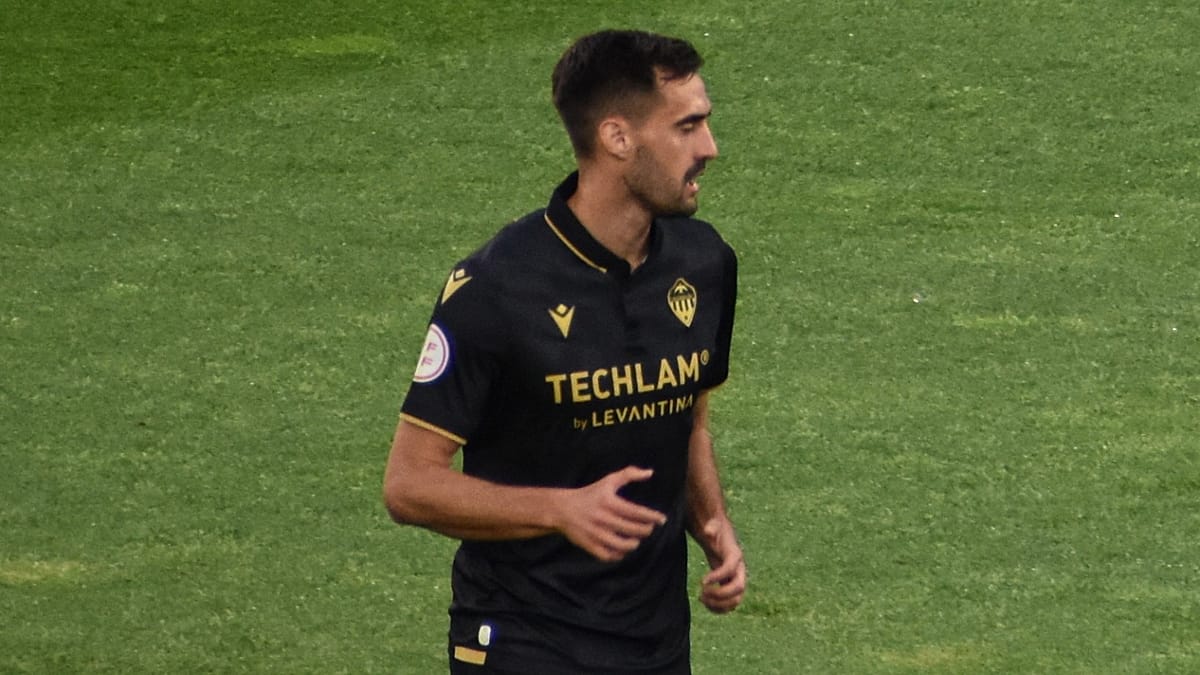
CD Tenerife forward Jesús de Miguel has died after he was struck in the chest by Andorra goalkeeper Jesús Owono during a Spanish second division match, the club announced on Tuesday. The collision happened in the closing stages of Monday's game at the Estadio Heliodoro Rodríguez López in Santa Cruz de Tenerife.
The club said in a statement that de Miguel Alameda passed away at 8:00 am on Tuesday, November 3, 2026, according to Euronews.com. He was 30 years old.
According to Euronews.com, the forward was competing for the ball in midfield when Owono's chest made contact with him. The match, level at 2-2, was halted in the 108th minute.
De Miguel was transported to hospital following the incident. Tenerife said in an earlier statement that he was in the intensive care unit of the Hospital Universitario de Nuestra Señora de Candelaria in Santa Cruz and described him as stable at that point, despite the seriousness of his condition, Euronews.com reports.
Why it matters
Deaths during professional football matches are rare, and a fatal injury arising from a routine challenge for the ball raises difficult questions about medical response times, pitch-side care and the physical risks players accept as part of the game. The incident also puts attention on the goalkeeper involved, who was performing his normal duties when the collision occurred.
For Tenerife, the loss is immediate and personal. De Miguel had joined the club only last year and was part of the squad in the middle of a league campaign. The club's announcement, issued within hours of his death, framed the news as a tragedy for the institution rather than a sporting story.
A well-travelled career across Spanish football
De Miguel's professional path took him through a series of Spanish clubs rather than a single long spell at one side. Euronews.com reports that he made his debut in 2015 with Leganés B and went on to represent eight other clubs in Spain before arriving at Tenerife last year.
That kind of career is common in the lower and middle reaches of Spanish football, where players move between clubs and divisions in search of regular minutes. De Miguel was 30, an age when many forwards are settled and producing their most consistent football.
The match itself was not completed. With the score at 2-2 and the game deep into stoppage time, the collision ended play in the 108th minute. Spanish second division matches do not normally run that long, which indicates the extent of the delay caused by the incident and the medical attention that followed on the pitch.
Tenerife's initial update, issued while de Miguel was in intensive care, used careful language: the club said he was stable but acknowledged the severity of his condition. That phrasing suggested the situation remained serious even as he was reported to be holding on. The confirmation of his death came the following morning.
Reaction and the wider context
The death of a player during a competitive fixture is the kind of event that tends to prompt reviews of safety protocols, from the availability of defibrillators and ambulance access to the training of stewards and medical staff. Euronews.com's reporting does not detail the medical steps taken at the stadium, and it is not yet known what assessments, if any, the relevant authorities will carry out.
What is clear from the reporting is the sequence: a collision in midfield, a player down, hospital treatment in intensive care, and a club confirming his death the next morning. Andorra, the opposing side, has not been quoted in the source material, and no statement from Owono has been reported.
De Miguel's death also lands on a club and a league that operate far from the financial spotlight of La Liga's biggest names. Second division football in Spain is intensely competitive and physically demanding, with squads that rotate heavily and players who often carry the burden of long travel and short recovery periods. None of that explains a fatal chest impact, but it is the environment in which the incident took place.
For supporters, the immediate focus is likely to be on tributes and on the club's next steps. Tenerife's statement was brief and centred on the fact of the death rather than on arrangements. Clubs in Spain have previously held minutes of silence and opened condolence books after the deaths of players and former staff, though no such plans have been announced in this case.
What to watch
The immediate question is how Spanish football's authorities and the clubs involved respond in the coming days — whether the fixture is replayed or annulled, what the league says publicly, and whether the circumstances of the collision lead to any review of medical procedures at second division grounds.