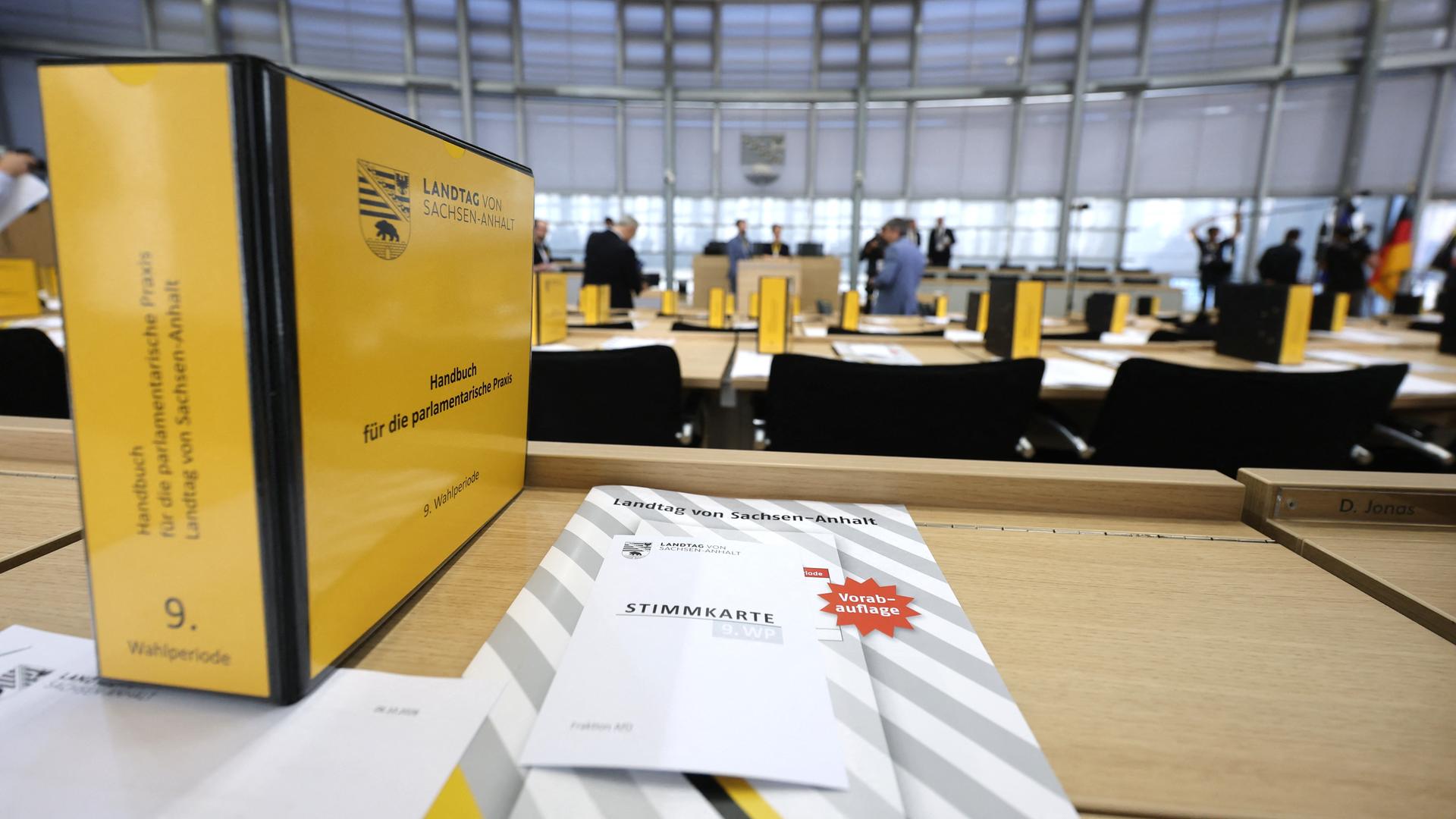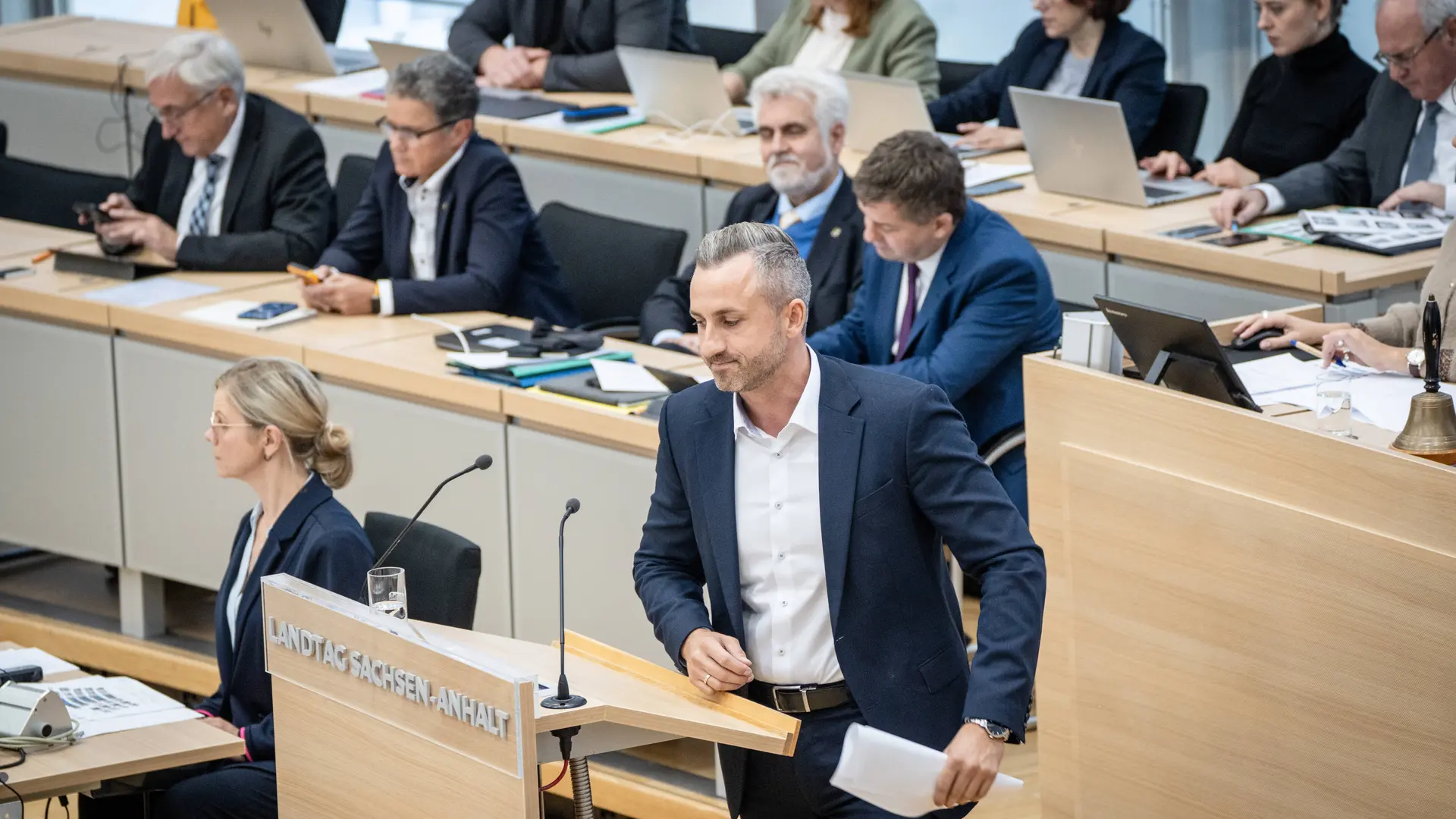
The parliament of the eastern German state of Saxony-Anhalt approved a joint motion from the far-right Alternative for Germany (AfD) and the left-wing Sahra Wagenknecht Alliance (BSW) on Wednesday calling for an immediate end to all aid to Ukraine, according to MDR.de.
The motion, titled "Peace talks instead of expanding the war in Ukraine," was passed by a majority during an extraordinary session in Magdeburg. Together, the two parties hold 44 of the 83 seats in the newly elected state parliament.
The vote drew sharp condemnation from the acting state premier, Sven Schulze of the Christian Democratic Union (CDU), along with speakers from the CDU, the Social Democrats (SPD), the Greens and the Left party. MDR.de reports that Schulze described the motion as a "wedding gift to the BSW" ahead of a planned vote on the state's premiership in December, and called the session a "show."
The sitting was suspended for roughly an hour before the agenda could be taken up because the parties could not initially agree on speaking times.
Why it matters
The decision has no practical effect on German or European policy. Decisions on sanctions against Russia and military or financial support for Ukraine rest with the federal government in Berlin and the European Union, not with individual states. MDR.de notes that the motion is therefore likely to carry only symbolic weight.
SPD state chairman Andreas Schmidt made that point before the vote, saying that anyone who creates the impression that weapons deliveries and sanctions could be ended from Magdeburg was generating headlines rather than solving problems in Saxony-Anhalt.
Still, the vote illustrates the shifting arithmetic in a state parliament where the two parties that campaigned against continued support for Kyiv now command a majority. It also puts pressure on the CDU ahead of the December premiership vote, which Schulze's remark about a "wedding gift" appeared to acknowledge.
What the motion demands
The text calls on the acting state government to use every means at its disposal — in particular an initiative in the Bundesrat, Germany's upper house of parliament — to prevent further escalation in Ukraine and to pursue a policy aimed at creating peace. Diplomacy should be the focus, according to the motion.
It further states that economic sanctions against Russia must be lifted immediately, that financial support for Ukraine must stop at once except for humanitarian aid, and that weapons deliveries to Ukraine should be suspended.
The Bundesrat is the chamber through which the sixteen states participate in federal legislation, which gives the demand at least a formal channel even though the state government cannot set foreign policy on its own.
Rejected alternatives and a diplomatic rebuke
The CDU, the Left, and the SPD together with the Greens each submitted alternative motions, none of which were adopted, according to MDR.de.
Speakers from nearly every party used their time at the lectern largely for personal attacks on the opposing side, MDR.de reports. Ukraine's ambassador to Germany, Oleksij Makeiev, called the motion a "summit of absurdity."
The session was the first major test of the new parliament's composition, and the outcome showed the AfD and BSW able to set the agenda even without governing. The Left party's position is notable: it belongs to the same broad political family as the BSW, which split from it, yet it joined the CDU and the governing parties in opposing the motion.
A split public response
MDR SACHSEN-ANHALT reported that readers and listeners responded in large numbers, and their reactions reflected the same divide visible in the chamber.
Some commenters argued that the motion should be read as a signal aimed at Berlin, with one noting that other parties "seem to forget the Bundesrat and the influence of a possibly incoming AfD premier." Another predicted the motion would spark further debate about the dangers of what the commenter called a warmongering policy rather than change the national line on weapons and sanctions.
Other commenters described the sanctions on Russia as ideological, pointless and marked by double standards, arguing they harm German citizens and the German economy. Opposing voices warned that halting weapons deliveries could encourage Russia to seize the rest of Ukraine.
Taken together, the responses ranged from outright rejection of the sanctions to an emphasis on military deterrence — and reflected uncertainty about whether a state parliament can do more here than make a statement.
What to watch
The vote is not binding, and the state government's room to act on the demands is limited to the Bundesrat initiative the motion requests. The next point of interest is the December election of the state's premier, the context in which Schulze framed Wednesday's session.