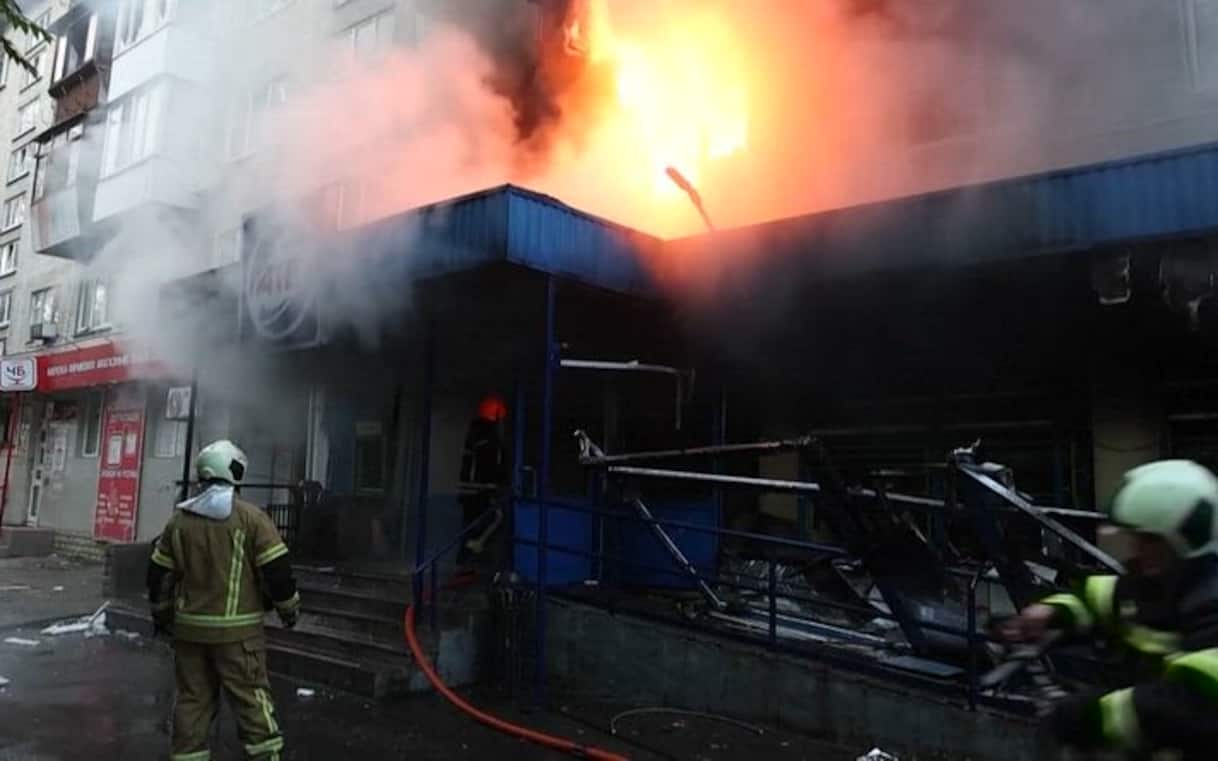
Russian forces bombarded a train in Dnipro, killing at least 14 people, local authorities said, according to Sky TG24. On the same evening, Russia carried out a large-scale attack on Kyiv, Mayor Vitali Klitschko said in a post on Telegram.
In Kyiv, one person died after a missile strike, RBC-Ukraine reported, citing the city's military administration and Klitschko. The exact location of the death had not yet been established. The attack began at around 10:50 pm local time, according to the same reporting.
Why it matters
The strikes came as diplomatic efforts to end the war appeared to be accelerating. US President Donald Trump told journalists that a meeting between Russian President Vladimir Putin and Ukrainian President Volodymyr Zelensky would be arranged "very soon," adding that he believed significant progress was possible. Sky TG24 reported that Zelensky has said three-way talks involving Moscow and Washington could take place on 10 November.
The attacks also fit a pattern that has alarmed Ukraine's allies. With autumn under way and cold weather approaching, Russia has stepped up strikes on Ukraine's energy infrastructure. According to an account by the New York Times cited by Sky TG24, Moscow's aim is to leave Kyiv without heat through the winter in order to wear down the morale and resistance of both civilians and the military. Kyiv, Kharkiv and Odesa are said to be priority targets.
Damage reported across Kyiv
In Kyiv's Dnipro district, missile fragments fell into the courtyard of a residential complex and caught fire, according to Sky TG24. At another site, the shockwave shattered the windows of an apartment building. Emergency services were dispatched to the affected locations.
The full extent of casualties and damage from the Kyiv attack was not immediately clear in the reporting.
Humanitarian operation in occupied Oleshky
Separately, a humanitarian operation is under way to deliver aid to civilians in Oleshky, a town in Ukraine's Kherson region held by Russian troops. According to the latest reports cited by Sky TG24, around 2,000 civilians, including children and elderly people, are in dire conditions because of shortages of food, medicine and even drinking water.
Russia's human rights commissioner, Yania Lantratova, said the humanitarian truce is being observed and that departures from the town could begin shortly for those who wish to leave. According to the White House, the truce was helped by mediation efforts by First Lady Melania Trump, Sky TG24 reported. On Tuesday, Vladimir Saldo, the Russia-installed governor of the Moscow-controlled part of Kherson region, said roads into the town were being cleared of mines to allow evacuations.
Frozen assets and a warning from Berlin
On the financial front, EU foreign policy chief Kaja Kallas said discussions are still ongoing over whether frozen Russian assets could be used to fund Ukraine's needs. Speaking at an event at the University of Montreal on the sidelines of the EU-Canada summit, she said the 27 member states had agreed that the assets would not be released unless Russia pays reparations to Ukraine, but that the issue resurfaces whenever Ukraine needs money. She said a solidarity mechanism would be needed to share the risk among member states should it materialise.
In Germany, the head of the BND intelligence service, Martin Jaeger, warned that the country faces the risk of a violent conflict with Moscow. According to the service, Russia is already waging a "shadow war" against Berlin and the threat of attacks remains "real and imminent." Jaeger said the confrontation would outlast the war in Ukraine, Sky TG24 reported.
The reporting also touched on the turbulent relationship between Trump and Zelensky, which has been marked by repeated friction since Trump's first term and has been shaped by his interest in Putin. In recent days, Trump announced an agreement with Putin on Russian diesel supplies to global markets, a move that drew sharp criticism from Zelensky, who said any easing of sanctions without a clear and lasting de-escalation agreement would signal weakness.
What to watch next: whether the announced Putin-Zelensky meeting is confirmed and dated, and whether the reported 10 November three-way talks go ahead.



