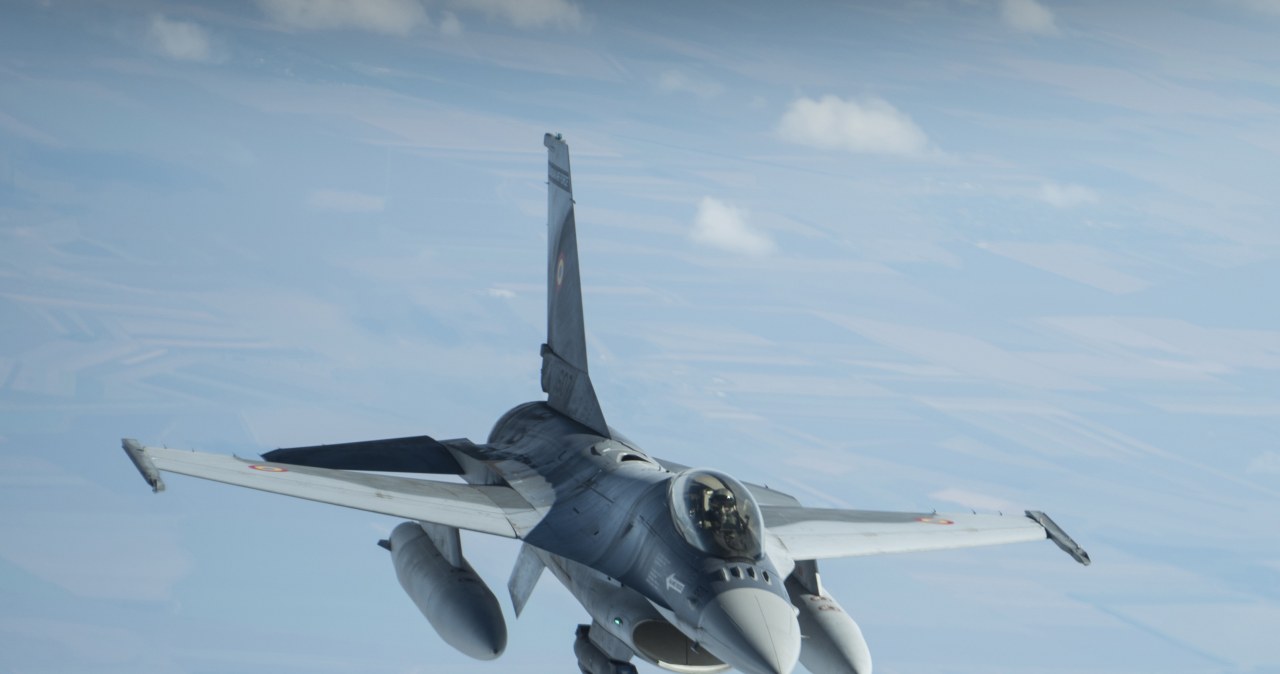
Romania scrambled F-16 fighter jets on Saturday after two drones entered its airspace over the Black Sea, and the aircraft shot both of them down, according to Interia Wydarzenia. The incidents took place near the Sulina canal, the waterway linking the Danube to the Black Sea that serves as an export route for Ukraine.
Defence Minister Radu Miruta announced the intercepts in a Facebook post, writing that Romanian military pilots brought down the two drones over the Black Sea shortly after they crossed into the country's territory unlawfully. He thanked the pilots for the operation.
According to the minister, the first drone entered national airspace at 17:59 and was destroyed within two minutes, about 25 kilometres south-east of the Sulina canal. The second was spotted and shot down at 18:05, five minutes after it entered the airspace, roughly 20 kilometres east of the canal, in the same area.
The origin of the drones has not been disclosed. Interia Wydarzenia notes that this is not the first such episode over the Black Sea: a few days earlier, two chemical tankers were struck by foreign drones near the Romanian coast.
Why it matters
Romania borders Ukraine and has repeatedly reported violations of its airspace by Russian drones since Russia's full-scale invasion. Earlier this year, authorities in Bucharest decided that such drones would be shot down. Saturday's action is the clearest test of that policy so far, and it puts a NATO member's air defences directly into a live engagement over a corridor that matters to Ukraine's economy.
The timing also stands out. The intercepts came amid a wider surge of drone attacks on shipping in the western Black Sea. Reuters, cited by Interia Wydarzenia, reports that at least five cargo vessels have been attacked by drones off the coasts of Romania and Bulgaria in the past 10 days, with 23 sailors killed or missing. Most of those incidents occurred outside NATO territorial waters.
A corridor under pressure
The Sulina canal gives Ukraine a route to move grain and other goods out through the Danube and into the Black Sea, which makes the area around it strategically sensitive. Having drones appear within a few kilometres of the channel — and having them met with fighter jets — shows how close the war's aerial spillover is coming to NATO infrastructure.
The broader pattern described by Reuters is one of sustained pressure on commercial shipping. Attacks on cargo ships near the Romanian and Bulgarian coasts have killed and injured crews and raised questions about how far the alliance can protect vessels once they leave territorial waters. The earlier strikes on two chemical tankers near the Romanian shore fit that same pattern.
Romania's decision earlier this year to authorise shoot-downs changed the calculus for any drone entering its airspace. Saturday's engagements, each completed within minutes of detection, suggest that rule is now being applied in practice rather than remaining a statement of intent.
Regional alarm and requests for help
The incidents feed into a wider regional response. Bulgarian officials have asked NATO for fighter aircraft and anti-drone systems after drones struck commercial ships, according to Bankier.pl. Polish media, including Defence24, have reported on delays involving F-16 deliveries and the role of Polish MiG-29s in the region's air policing arrangements.
There is also a diplomatic dimension. Wiadomości Onet reported on behind-the-scenes talks over what it described as Russia drawing NATO into a dangerous game, and PolsatNews.pl quoted warnings of a coming reaction to attacks on ships off Romania's coast. None of those reports identified the drones downed on Saturday, and Romanian officials have not attributed them.
What is clear is the sequence: two incursions, two intercepts, no casualties reported on the Romanian side, and an investigation into the drones' provenance that has yet to produce a public answer.
Watch for Romania's defence ministry to release further details on the drones' origin and for NATO to adjust air policing along the Black Sea coast, particularly around the Danube delta and the shipping lanes near Sulina.



