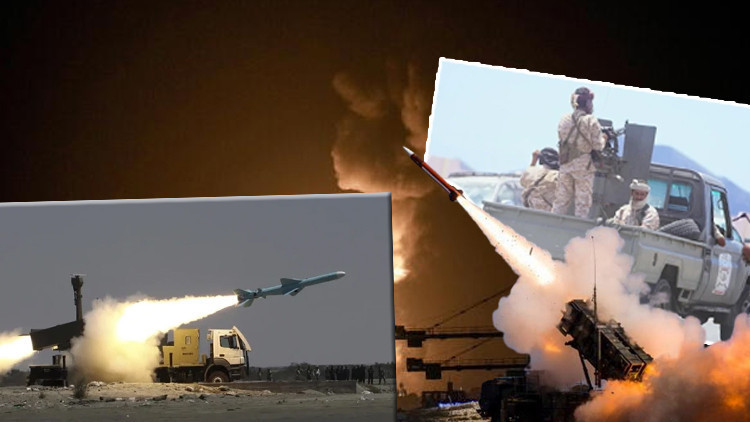
Saudi civil defence authorities activated the kingdom's early-warning system across Riyadh and the Eastern Province on Tuesday, and witnesses in the capital reported hearing three successive blasts after the alert, according to the Turkish outlet Hürriyet.
The same day, the Saudi-led Arab Coalition said its air defences intercepted and destroyed two ballistic missiles fired by the Iran-backed Houthis — one aimed at the Harad district in the Eastern Province's Ahsa governorate, the other at the city of Zahran. Coalition spokesman Major General Turki al-Maliki announced the interceptions in a post on X, the platform owned by the US-based company X Corp.
The Houthis, for their part, said Saudi forces carried out air raids on facilities belonging to the Yemen Petroleum Company in the Ras Isa area of Hudeyde, on Yemen's western coast. In a written statement, the group said two people were killed and two others wounded in the bombardment. Earlier reports said ten air strikes had hit oil infrastructure in Ras Isa during the day, without specifying who carried them out. Footage circulating on social media showed black smoke rising from the targeted sites in Hudeyde.
Why it matters
The exchange marks a fresh escalation in a conflict that had been relatively quiet for an extended period, and it puts civilian infrastructure and densely populated areas on both sides of the Red Sea in the firing line. Riyadh's decision to trigger a nationwide alert system is unusual and signals that Saudi authorities treated the threat as serious enough to warn the public directly.
The strikes also carry economic weight. The Eastern Province is the heart of Saudi oil production, and any disruption there — or to shipping and energy infrastructure in Yemen — feeds directly into global crude markets. US President Donald Trump said the Houthis were "probably" trying to push oil prices up deliberately ahead of the 3 November elections, adding that they were attacking Saudi Arabia "very badly" at Iran's direction.
What the coalition says it hit, and what the Houthis say they lost
Major General al-Maliki accused the Houthis of using civilian facilities for military purposes, naming the al-Sabaha main power station in Sana'a, underground reserve fuel depots and docks set aside for fuel unloading in various areas. The coalition said it targeted stations, civilian facilities, vital resources and piers that the Houthis use to build up their war capacity.
Yemen's army, meanwhile, said it had carried out 2,200 operations against Houthi military positions, putting the number of Houthi members "neutralised" at around 1,200 and saying more than 440 military vehicles were destroyed or rendered unusable. In a statement on its "Yemen Dawn" operation, the army said its units were continuing offensive activity on the eastern and southern fronts and advancing under heavy fire support, using warplanes, drones, field artillery and multiple rocket launchers.
Riyadh's warning, and a region on alert
Saudi Arabia's Council of Ministers, meeting in Riyadh under Crown Prince and Prime Minister Mohammed bin Salman, discussed national security and regional developments and said the Houthis would face the consequences of their attacks on the kingdom's airports, on Mecca and Medina, on visitors to the two holy sites, and on civilian and economic facilities. In a statement carried by the official Saudi Press Agency, the council condemned the strikes and said they would not go unanswered, while offering condolences to the families of those killed and wishes for a quick recovery to the wounded.
Saudi civil defence published guidance telling residents to stay calm, follow official instructions, move to the nearest safe enclosed space and remain there until the danger passes. It advised people not to leave their homes or buildings before the threat ends and to stay away from open areas, windows and glass. The directorate had earlier said the early-warning system for the Eastern Province had issued a danger alarm.
The wider picture remains contested. Turkish media also reported that Istanbul Airport suspended flights to Riyadh while continuing services to Jeddah and Medina, and that US citizens who filmed the attacks in Saudi Arabia were detained. Neither detail was independently confirmed in the material reviewed here.
Trump, writing on Truth Social, said the Houthis "are doing very wrong things," that he had thought they learned their lesson when they were bombed heavily a year earlier — a campaign he said was halted at their request — and that after a long silence they had re-emerged, drawing strength from Iran to intensify attacks on Saudi Arabia.
What to watch next: whether the intercepts hold and the alert system is triggered again, and whether Washington or Riyadh signal a military response before the 3 November US elections.



