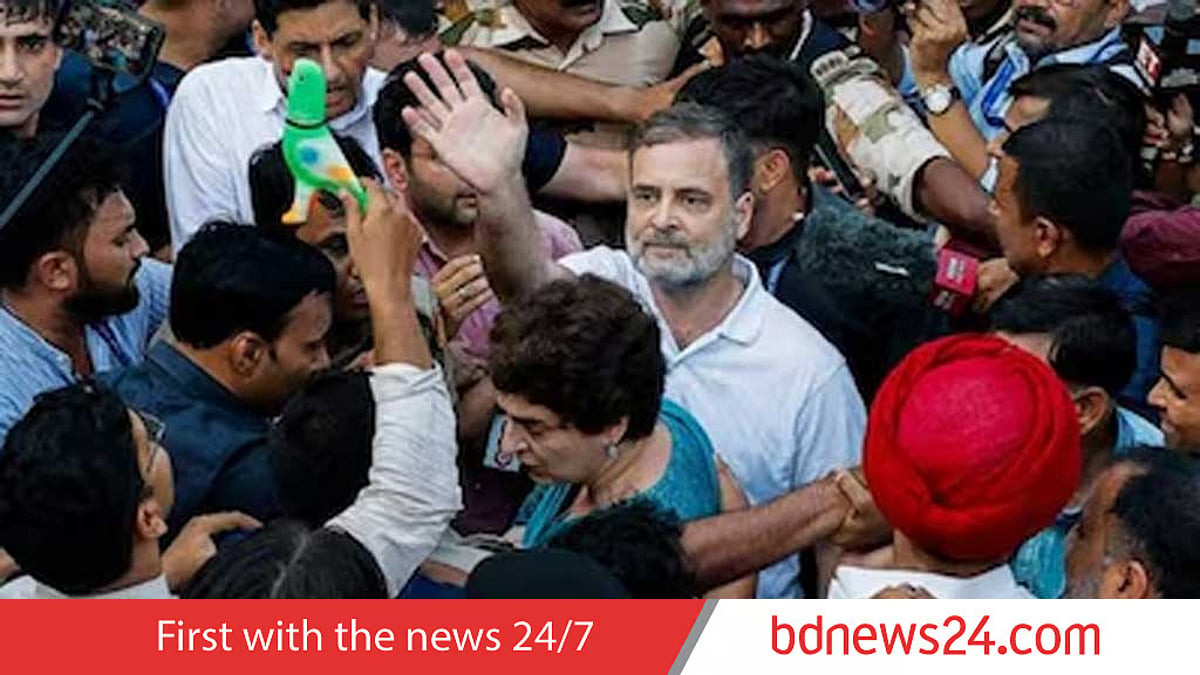
Congress leader Rahul Gandhi led a march of several thousand people through Delhi on Monday, pressing past police barricades to reach the Supreme Court, where the opposition INDIA bloc filed a petition challenging the Election Commission's handling of the electoral roll revision process.
The march was called by the Congress-led opposition alliance to demand the removal of the Chief Election Commissioner, safeguards against vote theft, and a halt to the Special Intensive Revision (SIR) of voter lists. According to bdnews24.com, opposition leaders eventually reached the court complex by an alternate route after a brief scuffle with police who tried to stop the procession.
The petition, filed on behalf of the opposition leaders, asks the top court to intervene against decisions taken by the Election Commission. Indian outlet News18 reported that the plea sets out ten specific demands for relief.
Why it matters
The confrontation places the opposition alliance directly against both the Election Commission and the Chief Justice of India in a dispute over how voter rolls are being revised — a process that determines who is eligible to cast a ballot.
The standoff also tests the boundaries between political protest and judicial process. Chief Justice Surya Kant declined to meet the opposition delegation, stating that the matters they intended to raise are already pending before the Supreme Court and that the court is not a venue for politics, according to reports. The INDIA bloc proceeded with its announced programme regardless.
What the petition asks for
Lawyer S. Prasanna filed the petition on Rahul Gandhi's behalf roughly two hours before Gandhi himself arrived at the court, as the large crowd on the streets delayed his scheduled arrival past 4:30 pm, according to News18.
The ten demands recorded in the filing are:
- A direction to the Election Commission to submit all documents related to the SIR to the Supreme Court, including files, contracts, decisions taken at meetings, and records of objections raised.
- A review of the legal validity of decisions taken under the SIR process, specifically whether they comply with Section 324 of Article 18 of the Chief Election Commissioner and Other Election Commissioners (Appointment, Conditions of Service and Term of Office) Act, 2023, and with past Supreme Court directions.
- Punitive action against any official who acted unconstitutionally in revising or preparing voter lists.
- A direction that the Election Commission properly record all objections raised when SIR-related decisions were taken.
- A demand that Form 6 not be altered or amended outside what is permitted under the Registration of Electors Rules, 1960.
- The constitution of a committee comprising a retired Supreme Court judge, technical experts, and eminent citizens to examine, within a fixed timeframe, the deletion of names from voter rolls under the SIR, along with all related documents and decisions, and to verify whether protocols governing EVM use in elections are being followed.
- Publication of booth-wise lists of voters whose names were removed under the SIR, along with the reasons for removal and the gender and age of those affected.
- A rule that no voter's name may be deleted without proper legal notice and an opportunity to be heard, and that all eligible voters in Punjab and other poll-bound states be allowed to apply for inclusion in the voter list before the legal deadline.
- A stay on the SIR process in all states until the issues are decided or the complaints are resolved.
- Any additional directions the Supreme Court considers necessary to protect the electoral process and the voting rights of eligible citizens.
How the day unfolded
The INDIA bloc announced the "Supreme Court march" on Sunday, with plans for Rahul Gandhi, Mamata Banerjee, Akhilesh Yadav and other senior opposition figures to meet Chief Justice Surya Kant and hand over a memorandum.
That evening, the Chief Justice said he could not grant the opposition leaders time, noting that the issues they planned to raise are already under consideration and being heard by the Supreme Court. He also conveyed that the court is not a place for politics, according to bdnews24.com.
Opposition leaders went ahead with the march on Monday anyway. Police attempted to block the procession, and after a period of pushing and shoving, the leaders made their way to the Supreme Court complex via a different road, bdnews24.com reported.
The wider dispute
At the centre of the confrontation is the Special Intensive Revision, a process under which names have been removed from voter lists. The opposition's petition seeks transparency at every stage — from the documents behind the decisions to booth-level data on whose names were struck and why.
The filing also raises concerns about the use of electronic voting machines, asking the court to have a committee verify whether all protocols are being observed. And it seeks protection for voters in states approaching elections, arguing that eligible citizens should be able to register before the deadline.
The Election Commission has not publicly responded to the specific demands in the petition, based on the reporting available.
What happens next depends on whether the Supreme Court agrees to hear the plea and grant any interim relief. The court has already indicated that related matters are pending before it, and the Chief Justice has made clear he will not meet the opposition delegation outside the judicial process. Watch for the court's response to the filing and for whether the SIR process is paused in any state in the meantime.