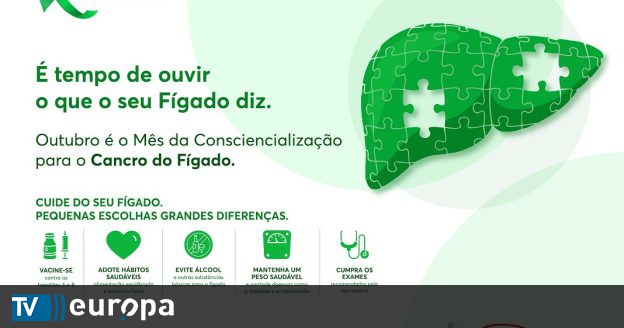
The Portuguese Association for the Study of the Liver (APEF) has launched a national awareness campaign on liver cancer prevention and early detection, according to TV Europa. The initiative, running under the slogan "Prevention Makes the Liver," is tied to October's Liver Cancer Awareness Month and is being promoted through media and the association's social media channels.
According to TV Europa, APEF president Paula Peixe said liver cancer incidence is growing in Portugal, with more than 1,500 new cases recorded annually. She said the campaign aims to alert the public to the importance of preventing, detecting and treating what she described as a silent disease that often produces no symptoms until advanced stages and is fatal if not diagnosed in time.
Why it matters
Liver cancer is the seventh most common cancer worldwide, TV Europa reports. In Portugal, the rising number of new cases has prompted doctors to speak out about the need for greater public awareness.
The disease is difficult to catch early because it typically causes no symptoms until it has progressed, according to Peixe's statement cited by TV Europa. That delay between the onset of disease and the appearance of warning signs is central to why APEF is focusing its campaign on prevention and screening rather than on treatment alone.
Peixe said most of the risk factors for developing liver cancer can be modified, which is the reason the association is running the campaign. Among the measures she listed are avoiding alcohol consumption, maintaining a balanced diet and a healthy lifestyle, exercising regularly, getting vaccinated against hepatitis B, and avoiding risky behaviours — whether sexual or otherwise — such as sharing instruments that may be contaminated with blood.
Hepatocellular carcinoma accounts for most cases
APEF said hepatocellular carcinoma represents more than 90 percent of liver cancer cases, according to TV Europa. The association said this form of cancer arises mostly in people who already have liver disease, such as fatty liver, hepatitis B or hepatitis C, among other conditions, usually by the time cirrhosis has developed.
Because of that pattern, specialists say all patients should be guided by their doctor, and those in risk groups for liver cancer should undergo screening as established — a high abdominal ultrasound every six months, TV Europa reports.
The association and specialists cited in the reporting say prevention and timely diagnosis of liver diseases play a significant role in lowering the risk of liver cancer and improving treatment outcomes. Recognising risk factors and adopting healthy habits are described as important steps in preventing liver disease.
The campaign is being carried out through media appearances and APEF's social media accounts, with the goal of reinforcing the message that prevention and early detection can reduce deaths from the disease.
What to watch: whether the October campaign leads to measurable increases in screening uptake among Portuguese patients in liver cancer risk groups.



