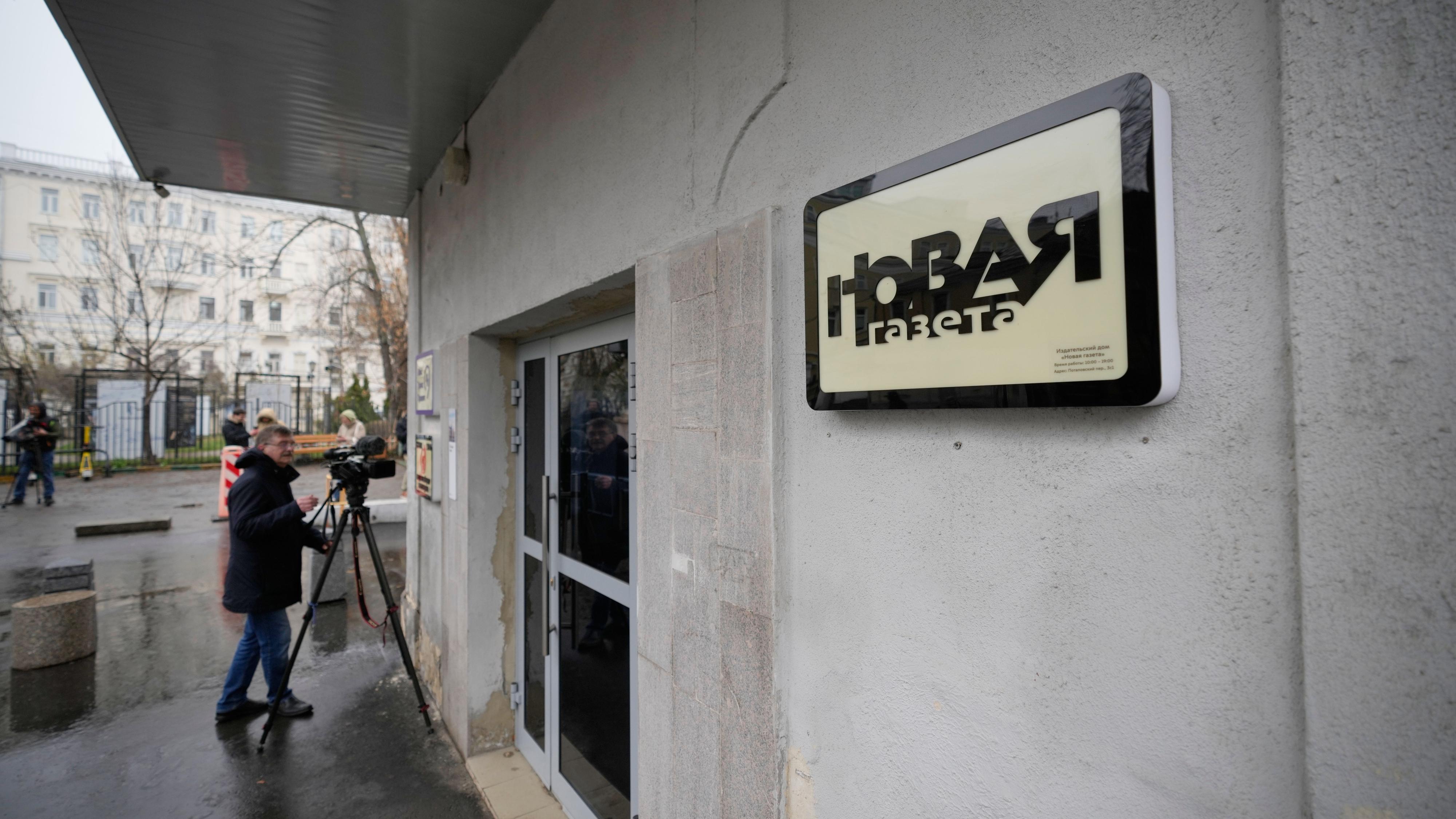
Novaya Gazeta, one of Russia's last independent news outlets, announced on Friday that it is closing entirely, according to RTVE.es. The paper said the decision followed a state pressure campaign that included the detention of one of its editors and the seizure of its financial sources and premises.
"We have been killed," the publication said in a statement reported by Reuters and cited by RTVE.es. The paper said it would switch off the lights in the building it has occupied for 30 years on November 9, shut down its servers and leave. In its words, the newspaper no longer exists, and Russian authorities and security services have forced its editorial team to stop operating.
Russian officials have not responded to the announcement. The Kremlin has previously argued that censorship is justified while the country faces what it describes as an existential struggle over the war in Ukraine, RTVE.es reports.
Why it matters
Novaya Gazeta was founded in 1993 with funding from Mikhail Gorbachev, the last president of the Soviet Union, and reflected the glasnost, or openness, policy he pursued while leading the country, according to RTVE.es. Over three decades it became one of Russia's most influential outlets, known for corruption investigations and critical coverage of Russian policy.
The paper's longtime co-founder and editor, Dmitry Muratov, shared the 2021 Nobel Peace Prize with Filipino journalist Maria Ressa for their work defending freedom of expression. When he received the award, Muratov dedicated it to six colleagues who were killed for their reporting, among them the investigative journalist Anna Politkovskaya, who wrote about the war in Chechnya. RTVE.es notes that the 20th anniversary of her killing was recently marked.
The Norwegian Nobel Committee condemned the closure, according to RTVE.es. The shutdown leaves Russia's media landscape with even fewer outlets willing to report independently of the state.
A slow squeeze that ended in a full stop
The paper stopped printing inside Russia in 2022, but it continued to publish online and worked from its Moscow headquarters, RTVE.es reports. Its print licence was revoked that year and its printing presses were seized. The website was blocked inside Russia, leaving it reachable only from abroad or through a VPN.
The outlet had been designated a "foreign agent" by Russian authorities. One of its editors, Oleg Roldugin, is under house arrest awaiting trial on a charge of misusing personal data and faces up to 10 years in prison, according to RTVE.es. The Moscow office was searched, as was the home of editor-in-chief Sergei Sokolov.
In its statement, Novaya Gazeta said it had carried on as long as it could. It said that since the start of what Russia calls the "special military operation" in Ukraine, and the introduction of criminal penalties for "discrediting" the Russian army, it has been unable to report on the most critical and tragic events of the time. Censorship, the paper said, now covers virtually the whole of public life.
Many of its journalists have left the country, as have reporters from other outlets. Some of them launched a digital publication in Latvia called Novaya Gazeta Europe, which the Kremlin has classified as an "undesirable organisation" and banned in Russia.
The closure comes against a wider backdrop of restricted press conditions. In its annual report published in April, Reporters Without Borders warned that Russia remains among the worst countries in the world for press freedom. The organisation said that among regimes closed to the press, Vladimir Putin's Russia has become a specialist in using laws against terrorism, separatism and extremism to limit access to information. At the time the report was published, 48 journalists were in detention, and those who wanted to keep working were forced into exile, which the organisation said has not shielded them from judicial repression reaching beyond Russia's borders.
Novaya Gazeta's own account of its end is blunt: the team has been pushed to stop, and the paper's 30-year run in Moscow will close with the servers going dark on November 9. What to watch next is whether any of its journalists continue publishing from abroad, and whether international bodies beyond the Nobel Committee respond to the closure.



