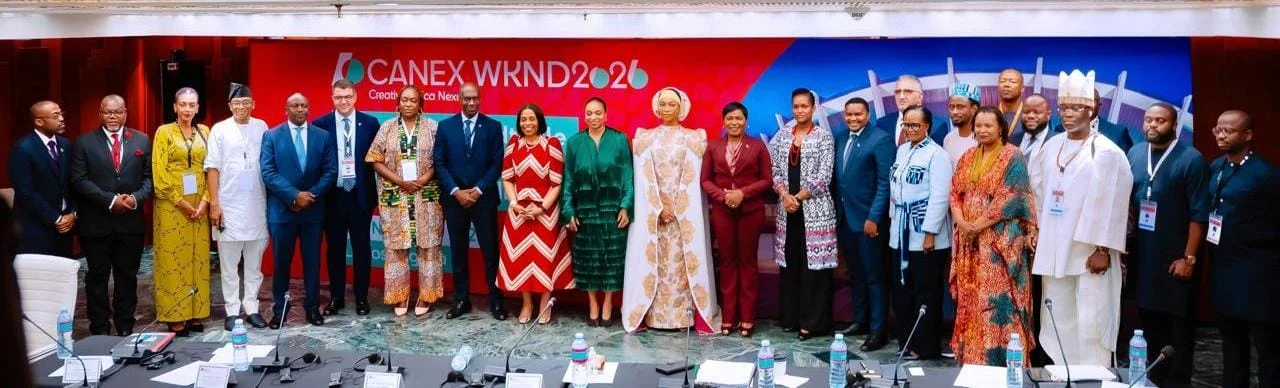
Nigeria's Minister of Art, Culture and Creative Economy, Hannatu Musawa, has urged faster implementation of the African Union's revised plan of action for cultural and creative industries, the News Agency of Nigeria reports.
She made the call at a four-day gathering in Lagos that brings together creatives, investors, policymakers and industry leaders from Africa, the Caribbean and the diaspora. The event is organised by the African Export-Import Bank (Afreximbank) and hosted by the Nigerian government, in partnership with the African Union Commission and the African Continental Free Trade Area Secretariat.
According to the News Agency of Nigeria, the programme is built around business, collaboration and cultural celebration, with the aim of linking participants across borders and encouraging cultural exchange. It also gives players in the Creative and Cultural Industries (CCI) a platform to present their work, exchange ideas, form networks and work together.
Why it matters
The push from Musawa places the continent's creative sector within a wider policy framework rather than treating it as entertainment alone. The AU's revised plan of action is intended to guide how member states develop cultural and creative industries, and the minister's call suggests she wants governments to move from planning to execution.
The Lagos event reflects the same logic on the commercial side. By convening investors alongside creatives and policymakers, organisers are testing whether cultural products can be treated as tradable goods and bankable businesses across African borders. The involvement of the AfCFTA Secretariat points to an interest in regional trade rules as a route for creative exports.
Ratification gap slows continental film body
Progress on the institutional side is less advanced. Amma Twum-Amoah, the African Union Commission's Commissioner for Health, Humanitarian Affairs and Social Development, said efforts to set up a continental body to coordinate Africa's film and audiovisual industry have been held up.
The delay, according to the News Agency of Nigeria, stems from the fact that no AU member state has ratified the statute that would establish the African Audiovisual and Cinema Commission. Twum-Amoah was represented at the event by Sabelo Lyndon Mbokazi, Officer-in-Charge of Social Development, Culture and Sport.
Her remarks set up a contrast with the minister's appeal: while the policy blueprint exists, the machinery meant to coordinate one of the sector's most visible segments is still waiting on national-level approvals.
A four-day platform for deals and exchange
The Lagos programme is designed to run for four days, mixing commercial sessions with cultural showcases. Participants include creatives, investors, policymakers and industry leaders drawn from across the continent as well as the Caribbean and diaspora communities.
For the Creative and Cultural Industries, the format matters. The sector spans film, music, fashion, visual art and other disciplines, and its practitioners often work across borders. Bringing them into the same space as financiers and regulators is intended to shorten the distance between an idea and a deal, and to build networks that outlast the event itself.
The African Export-Import Bank's role as organiser places a trade finance institution at the centre of the creative economy conversation. The African Union Commission's participation ties the gathering to continental policy, while the AfCFTA Secretariat's involvement connects it to the rules governing trade between African countries.
Musawa's message was that the AU plan should not sit on paper. Her call for accelerated implementation, as reported by the News Agency of Nigeria, frames the coming period as one of delivery rather than further drafting.
What to watch: whether AU member states begin ratifying the statute for the African Audiovisual and Cinema Commission, and whether the Lagos discussions translate into concrete commitments for the sector.


