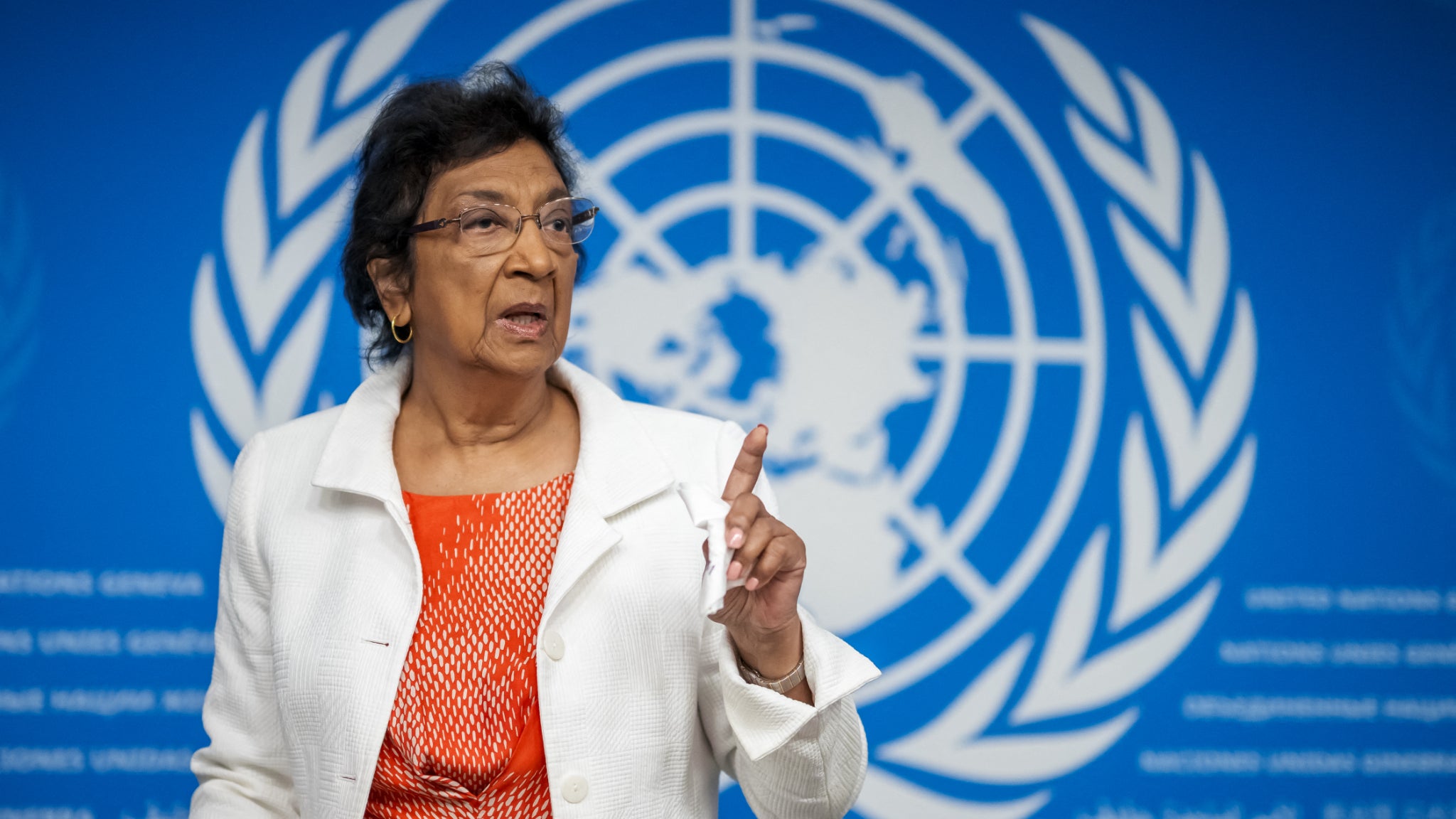
The Norwegian Nobel Committee announced on Friday, 9 October 2026, that the 2026 Nobel Peace Prize goes to Navanethem "Navi" Pillay, a South African jurist, according to BFM. The committee cited her commitment to peace and international law, and said her work on justice and human dignity offers hope to those who want a more peaceful world.
Pillay, 85, is known internationally for leading the independent United Nations inquiry that accused Israel of committing genocide in the Gaza Strip, BFM reports.
Why it matters
The award places one of the most contested legal questions of the past two years at the centre of the world's most visible peace prize. Pillay's UN commission concluded that Israel's actions in Gaza amounted to genocide — a finding Israel rejects and that has divided governments, legal scholars and human rights groups. By honouring the commission's chair, the Norwegian committee has effectively amplified that finding, even though the committee's own citation frames the prize around Pillay's broader career in international law rather than the Gaza report alone.
The decision also lands in a year when the prize had already drawn unusual political attention. The 2025 laureate was Maria Corina Machado, recognised, in the committee's words, for her tireless work promoting democratic rights for the Venezuelan people and for her fight for a just and peaceful transition from dictatorship to democracy. That choice angered Donald Trump, who later received the actual laureate's medal during a meeting with her, according to BFM.
A career built in international courts
Pillay's path to the prize runs through some of the institutions that shaped modern international justice. She served as a judge at the International Criminal Court in The Hague and earlier as a judge and later president of the International Criminal Tribunal for Rwanda, the UN court set up to prosecute those responsible for the 1994 genocide in that country. She also spent a decade as the UN High Commissioner for Human Rights, from 2008 to 2014, a role that made her the world body's most senior voice on human rights questions.
The Nobel committee's citation, as reported by BFM, praised her engagement in favour of justice and human dignity and described it as a source of hope and inspiration for everyone who longs for a more peaceful world. Le Monde reported that the prize was given for her efforts on behalf of peace and international law. Le HuffPost framed the award around her work on war crimes.
The Gaza commission she chaired was established by the UN Human Rights Council and produced findings that drew fierce criticism from Israel and its allies, while being welcomed by Palestinian officials and many human rights organisations. The committee's decision to honour her is likely to be read in those same divided terms.
What the prize carries
Beyond the diploma and gold medal, the Nobel Peace Prize comes with a cash award of 12 million Swedish kronor, a little over one million euros, BFM notes. The prize has been awarded 107 times between 1901 and 2026, going to 144 laureates in total — 113 individuals and 31 organisations.
Its roll of past winners includes the International Committee of the Red Cross, Martin Luther King Jr., René Cassin and Mother Teresa. By country, the United States has produced the most laureates with 24, followed by the United Kingdom with 14 and France with 11, according to BFM.
The economics prize is the only Nobel still to be announced this year. It is due on the morning of Monday, 12 October.
The political backdrop
Trump's comments on the prize added a sharp political edge to this year's announcement. Speaking a day before the committee's decision, he said the Nobel Peace Prize would discredit itself if he did not receive it, according to BFM. He pointed to his role in conflicts involving Israel, Iran and the wider Middle East, and said he had settled eight wars since taking office. BFM notes that the conflict in Iran and the Middle East remains ongoing.
That remark followed the unusual episode of the previous year, when Trump ended up with Machado's medal weeks after she was named the 2025 laureate.
Pillay's selection shifts the prize back toward the legal and human rights tradition that has produced several past laureates, and away from the electoral-democracy framing of 2025. It also puts a spotlight on the UN's independent inquiry processes at a moment when their findings are being cited in proceedings and debates far beyond Geneva and The Hague.
What happens next: the economics prize on Monday, 12 October, closes out this year's Nobel season, while the response to Pillay's award — from Israel, from the UN, and from the governments that have taken sides on the Gaza report — will shape how the prize is received in the coming weeks.



