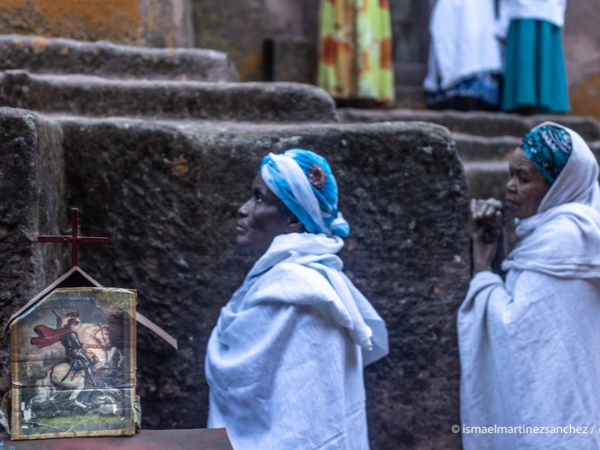
At least 60 people are reported to have been killed in attacks on Orthodox Christian communities in Ethiopia's Oromia region, according to Church in Need. The victims include elderly people and children, the organization reports.
The killings took place on October 20 in Merti district and on October 24 in Shirka district, both in the Arsi area of Oromia. Media accounts cited by Church in Need describe the Shirka attack as the work of armed men who moved from house to house, killing residents with firearms and knives.
One church was reportedly damaged in the violence, and churches in nearby villages opened their doors to people fleeing the attacks, according to the same reporting.
Why it matters
The killings land at a moment when Ethiopia's conflicts are already multiplying. Renewed fighting in the north has revived fears of a large-scale escalation, and the reported targeting of a religious community raises the prospect that a religious dimension could be layered onto conflicts already shaped by political, ethnic, territorial and regional disputes.
Ethiopia's Orthodox Tewahedo Church is the country's largest religious body, with roughly 44 percent of the population, according to figures cited by Church in Need. Muslims account for about 34 percent, Evangelical and Pentecostal Christians about 19 percent, and Catholics approximately 0.7 percent. Religious identity in the country varies by region and frequently overlaps with ethnic and territorial allegiances — a combination that Church in Need's 2025 Religious Freedom Report says leaves coexistence under growing strain.
Disputed responsibility and a fragile national picture
Who carried out the attacks remains contested. The Oromia regional government has blamed armed rebel groups, saying the killings were intended to provoke religious conflict, Church in Need reports. That allegation has not been independently verified.
The violence comes as fighting involving the Tigray People's Liberation Front, allied armed groups and government forces has spread across parts of Tigray, Afar and Amhara in recent weeks. The 2022 Pretoria Agreement formally ended two years of war in Tigray, but unresolved political and territorial disputes, the circumstances of displaced people, and friction between regional and federal authorities have kept the country unsettled.
Ethiopia's Catholic bishops issued an appeal in which they said the Church grieves over the armed conflict present in Tigray, Afar, Amhara, Oromia and other regions. War, they warned, deepens divisions instead of resolving differences and multiplies suffering, leaving behind loss of life and what they described as seeds of hatred and vengeance that can last for generations.
Bishop Lesanechristos Matheos of the Catholic Eparchy of Bahir Dar-Dessie, in northern Ethiopia, made a similar point in a pastoral letter dated October 3 and sent to Aid to the Church in Need. He wrote of deep concern for people facing fear, insecurity, displacement, loss and uncertainty, and urged all people of good will to answer with prayer, wisdom, compassion and a firm commitment to peace.
The bishop also cautioned against letting violence against one community produce satisfaction in another. Every life lost is a tragedy, he wrote, pointing to the grief of mothers who have lost children, children who have lost parents, and families driven from their homes.
Seeking peace, he added, does not require silence in the face of injustice. Christians are called to defend human dignity, protect the vulnerable, pursue the truth and open paths toward reconciliation and healing. He asked the faithful to turn away from hatred, rumors, misinformation and language that inflames conflict, and to be careful before passing information along.
Church in Need's religious freedom reporting notes that ethnic rivalries, power imbalances and long-standing grievances continue to feed instability in Ethiopia, with religious communities often drawn into broader political and ethnic violence. The politicization of religious identity and repeated episodes of religiously motivated violence, the report says, are putting increasing pressure on relations between faith groups.
What happens next will depend in part on whether the Oromia government's account of the attacks gains independent confirmation, and on whether the fighting in the north continues to spread.