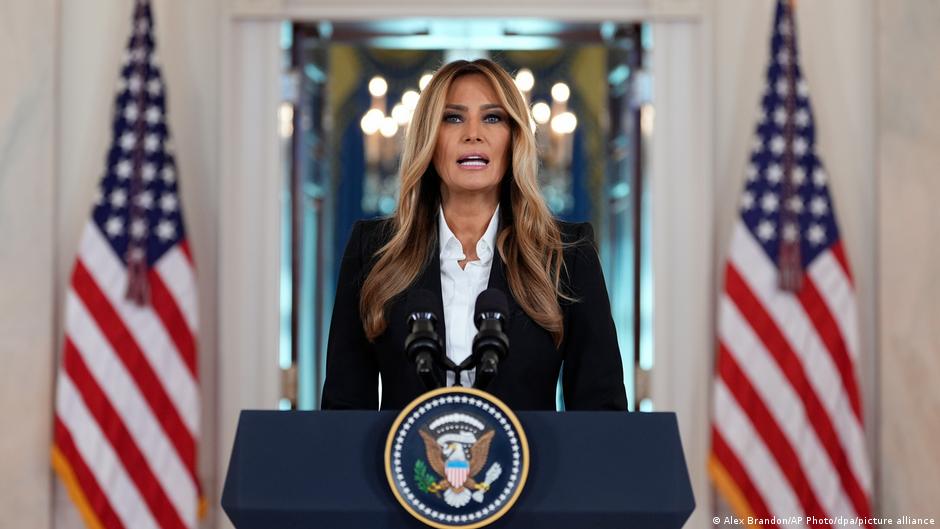
The U.S. first lady, Melania Trump, said on Friday, October 23, 2026, that a ceasefire between Russia and Ukraine has been arranged in the Ukrainian city of Oleshki through her mediation, taking effect on October 29. In a statement, she described Oleshki as a front-line city on the edge of disaster and said humanitarian aid could not have reached it without her involvement, according to DW.com.
The Kremlin confirmed a local truce for the evacuation of civilians. Spokesman Dmitry Peskov told reporters that Moscow welcomes the U.S. first lady's efforts, which he said made a significant contribution to coordinating the humanitarian operation, and that the military was working out the ceasefire timetable. Russia's general staff said its troops would observe a truce in the city from Tuesday to allow humanitarian work, placing it "in the Kherson sector" without specifying how far it extends or how long it will last.
Why it matters
Oleshki sits near the Dnieper River, the natural front line across much of southern Ukraine and the scene of some of the heaviest fighting of the war. Both sides acknowledge a humanitarian crisis there while blaming each other for blocking food deliveries and the evacuation of the wounded. A pause brokered outside the usual diplomatic channels, and confirmed by both capitals, is therefore notable — though its limited scope leaves the wider war untouched.
A city reduced to a fraction of its population
According to the first lady's statement, Oleshki had about 24,000 residents before the war. Fewer than 2,000 remain now, most of them elderly, along with roughly 50 children. She said civilian officials, not military officers, from both countries will work together to visit residents in their homes and assess what assistance they need. Those who choose to leave will receive coordinated support and transport to a destination of their choosing. She added that she expects some to head toward Russia and others toward Ukraine.
The arrangement is confined to a single city and framed as humanitarian rather than political. It does not address the broader conflict, and neither side has presented it as a step toward wider negotiations. The statement also did not detail how the truce would be monitored or what would happen to residents who stay.
What to watch
The ceasefire is due to begin on October 29. The coming days will show whether the timetable holds, whether aid convoys and evacuations proceed as described, and whether the pause remains limited to Oleshki or is extended in the Kherson sector.



