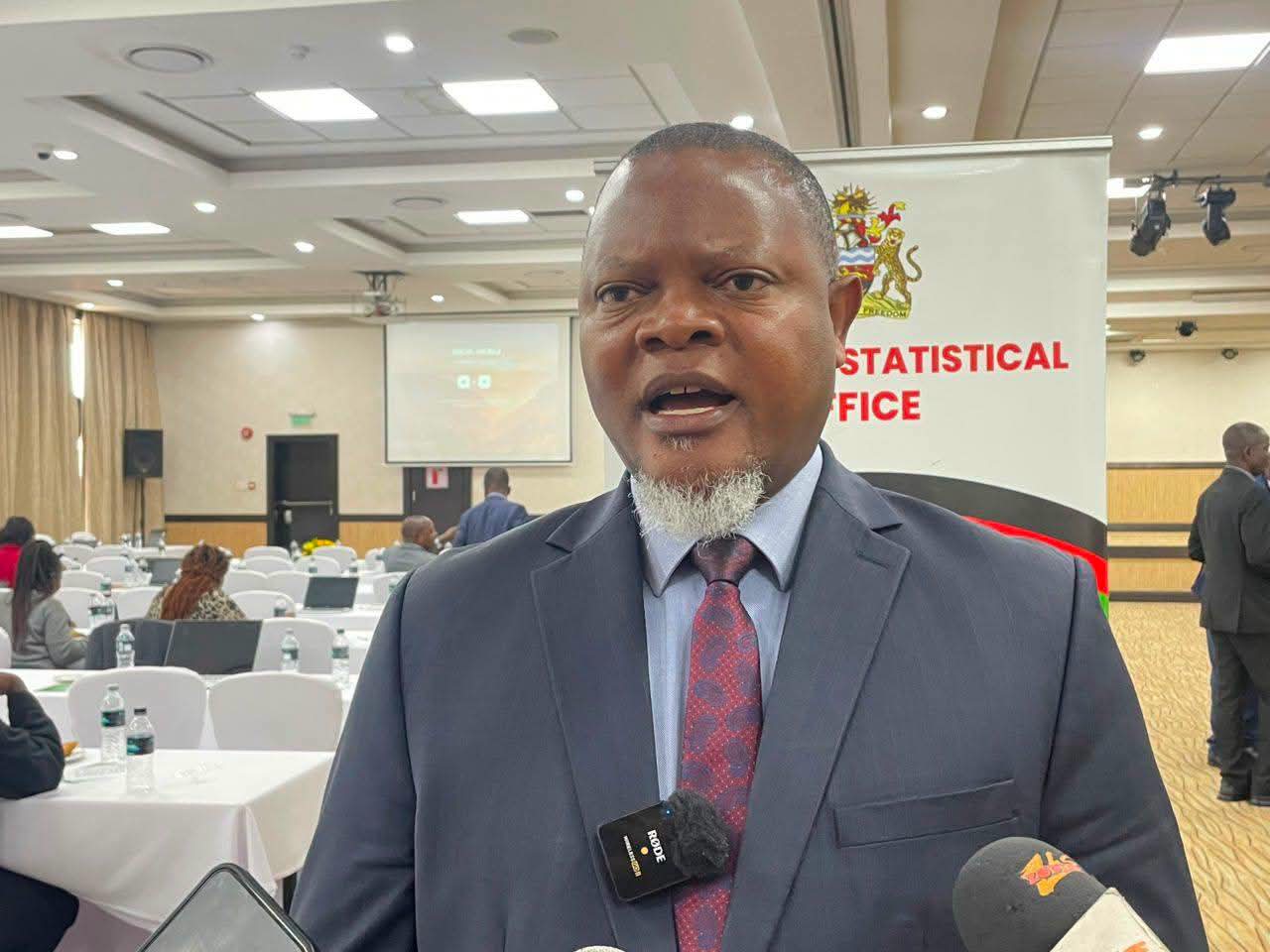
Malawi's National Statistics Office says the country is already seeing gains from programmes run by the Common Market for Eastern and Southern Africa's Committee on Statistical Matters, according to Nyasa Times.
NSO Commissioner Shelton Kanyanda said Malawi became the first country to issue a food security analysis report prepared together with Comesa and Statistics Norway, drawing on data from the 2024 Integrated Household Survey.
He added that the office is also engaged in other work streams, among them informal cross-border trade. Kanyanda's comments were reported as the NSO took part in the 17th CCSM meeting, held in Lusaka, Zambia, on 7 and 8 October.
Why it matters
Statistics sit underneath most of what a regional trade bloc tries to do. Tariff schedules, food security planning, and monitoring of cross-border flows all depend on numbers that member states can compare with one another. When those numbers are late, incomplete, or built on different methods, the resulting policy is weaker.
The Lusaka meeting put the 2026-2030 Comesa Regional Strategy for Development of Statistics at the centre of discussions. That framework is intended to strengthen the statistical system across the bloc. Delegates reviewed how the strategy's pillars have performed so far, looking at what has been achieved, where problems have persisted, and which gaps still need attention, Nyasa Times reports.
They also examined what statistical programmes have contributed and went through the findings of the Regional Statistical Production and Capacity Assessment.
Progress reviewed, obstacles acknowledged
Comesa Assistant Secretary General for programmes, Ambassador Dr Mohammed Kadah, said in a statement that the strategy presents an opportunity to build on existing gains while responding to fresh demands placed on statistical systems.
He also set out the difficulties that remain. According to his statement, these include delays and gaps in the submission of data, uneven technical capacity between countries, constraints on both staffing and funding, a statistical system that operates in fragments, and problems embedding harmonised methodologies on a lasting basis.
Those issues are not new to regional statistical work, but the meeting treated them as live obstacles rather than background concerns. The capacity assessment findings fed directly into the review of the strategy's pillars.
Malawi's experience offers one example of what joint work can produce. The food security analysis, produced with Comesa and Statistics Norway from 2024 Integrated Household Survey data, was described by Kanyanda as a first among member states. The NSO's involvement in informal cross-border trade statistics points to another area where regional coordination is being applied.
The meeting drew representatives from every Comesa member state. Development partners taking part included the African Development Bank, the Southern African Development Community, the European Union, PARIS21, Norway, Sweden and the Economic Commission for Africa.
The presence of that group reflects the funding and technical support that underpins much of the bloc's statistical agenda. Norway's role alongside Comesa in Malawi's food security report is one illustration of how external partners feed into national outputs.
What the meeting did not produce, at least in the reporting available, was a set of binding commitments or deadlines attached to the remaining gaps. The review of achievements, challenges and gaps was framed as an assessment feeding into the strategy period that begins in 2026.
For Malawi, the immediate takeaway is that the NSO regards its participation as productive. The commissioner's remarks point to concrete outputs rather than general aspirations, with the food security report as the clearest example and informal cross-border trade as the next area of focus.
The wider question is whether the 2026-2030 strategy can close the submission delays and capacity differences that Kadah identified. Those problems affect the bloc's ability to generate comparable regional data, which in turn shapes how effectively member states can plan around trade and food supply.
Watch for the rollout of the 2026-2030 strategy and whether the gaps flagged in Lusaka are matched with resources and timelines in the months ahead.



