President John Dramani Mahama has called on ministers and other holders of public office to give an account of why government projects have fallen behind schedule and to answer journalists' questions about how taxpayers' money is used, Graphic Online reports.
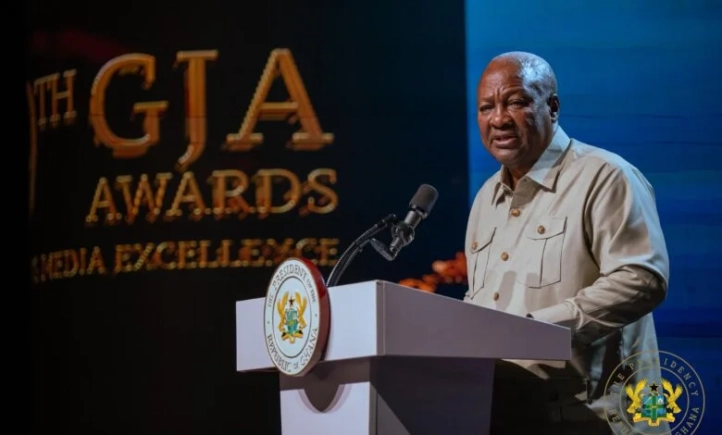
Speaking at the 30th Ghana Journalists Association (GJA) Media Awards in Accra on Saturday, November 7, 2026, the President said officials should be candid about hold-ups, set out the causes, and tell the communities affected when work is likely to pick up again or finish.
Why it matters
The remarks tie the practical business of government projects to the right of access to information. According to Graphic Online, Mahama argued that this right only carries weight when officials actually respond to requests for information in a proper manner.
His intervention also sets an expectation for the officials who serve under him, at a ceremony held under the theme "Celebrating Excellence, Advancing Media Freedom, and Combating Hate Speech in the Digital Age".
A clear answer for every question on spending
The President was direct about what reporters should expect when they ask about public expenditure. A journalist inquiring how public money has been used ought to get a straightforward response, he said, and supporting documents should be supplied where the law requires them to be disclosed.
He applied the same logic to construction and other government works that have run into difficulty. Where a project is behind, he said, the delay should be explained and the community told what comes next.
Mahama also said officials should own up when a government department gets something wrong, and should describe what is being done to put it right. That, in his view, is how citizens work out whether their concerns are being taken seriously or passed over.
He reminded those in public office of the commitment the administration made to govern with accountability and transparency, and asked them to field hard questions as readily as they announce their successes.
The President included himself in that obligation. He said scrutiny of this kind helps leaders test whether the information they receive in official briefings matches what is actually happening on the ground. Having spent time both putting questions and being on the receiving end of them, he said he appreciates why officials should be open to being questioned.
Graphic Online reports that he described the clearest proof of a government's regard for press freedom as the moment it is confronted with a question it would prefer not to answer.
A call for even-handed reporting
The President did not confine his remarks to the duties of officials. He asked journalists to keep to professional standards, applying the same test of evidence to the government, the opposition and anyone else trying to shape public debate.
People facing serious allegations should be given a fair chance to respond, he said, and news organisations should make it easy for audiences to find corrections.
He gave journalists an assurance that his government would respect their role in holding public officials to account, and said their mandate would be upheld even when their questions are at their most difficult. At the same time, he warned against efforts to deliberately create scandals.
The GJA awards, now in their 30th year, brought together journalists and public figures in the capital for the annual ceremony.
What to watch is whether the instruction translates into practice: whether ministries publish explanations for delayed projects and respond to information requests with the speed and documentation the President described.