The 30th Ibero-American Summit opens in Madrid on Wednesday with Argentina's Javier Milei confirmed to attend, while the leaders of Brazil and Mexico, Luiz Inácio Lula da Silva and Claudia Sheinbaum, are staying away. Spain is hosting the gathering for the fourth time, and according to RTVE.es it is taking place against the backdrop of a pre-election period in Spain and the aftermath of the train accident at Urda in Toledo province, which killed 69 people.
Only ten of the 22 member countries are sending their top-level representatives, well short of the 18 to 20 leaders the Ibero-American secretary-general, Andrés Allamand, had once anticipated. Brazil, Mexico and Venezuela are all dispatching their foreign ministers. Keiko Fujimori of Peru and Santiago Peña of Paraguay pulled out at short notice, citing domestic matters.
Why it matters
The Spanish government of Pedro Sánchez had hoped the meeting would restore the forum's capacity for agreement, two years after the previous summit in Cuenca ended without a consensus declaration. The thin turnout complicates that goal. RTVE.es reports that Moncloa nevertheless described itself as "satisfied" with the confirmed attendance, and official spokespeople pointed to the contrast with Cuenca in 2024, where only four heads of state or government took part.
Even so, Madrid's ten top-level delegations fall below the 13 that attended Santo Domingo in 2023 and the 15 at Antigua in 2018. The absences carry political weight: the leaders staying home are among the most prominent figures of the Latin American left, while the most visible confirmed guest, Milei, is the region's best-known right-wing president.
A mixed picture of arrivals and cancellations
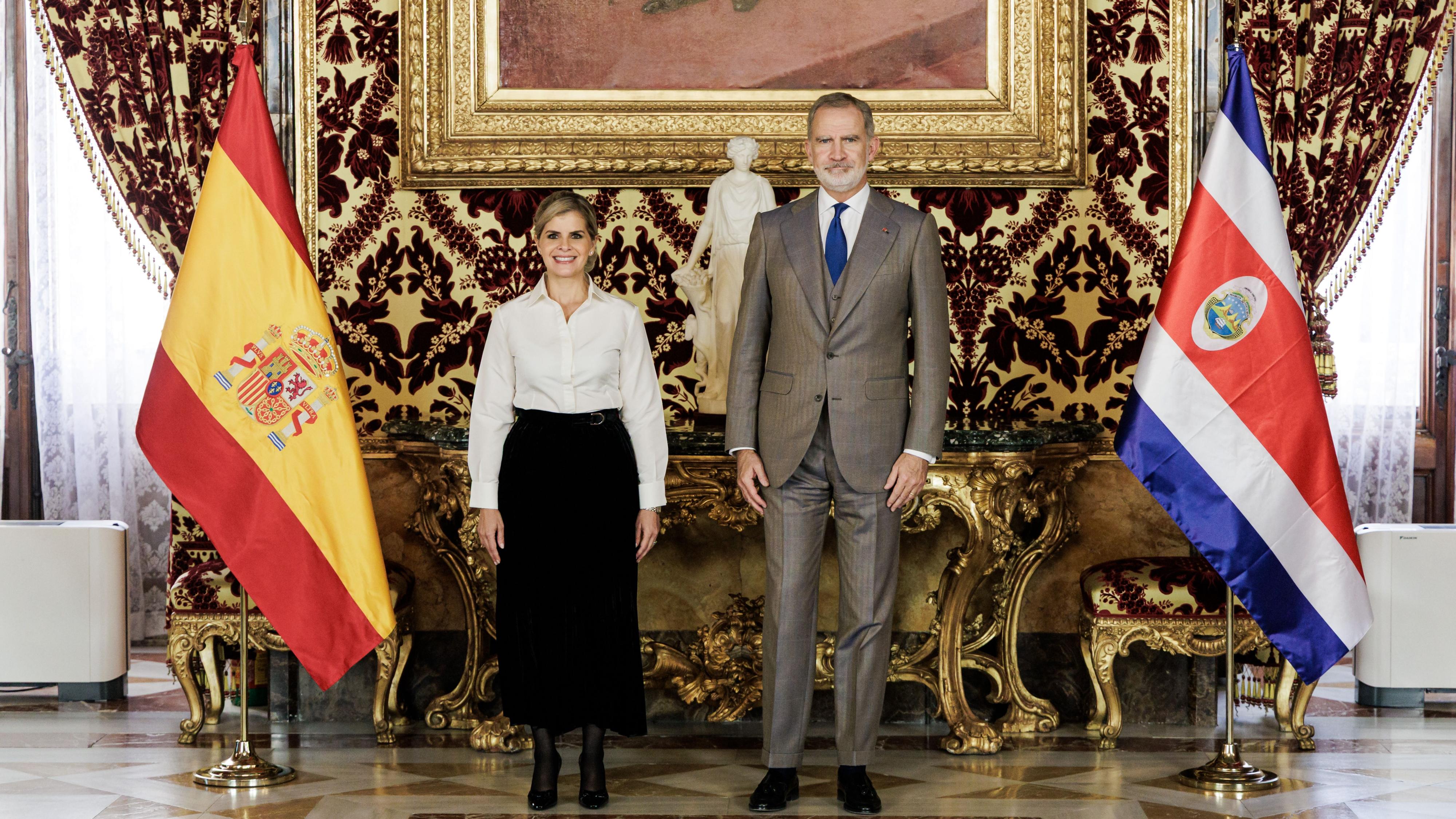
Alongside Spain, the countries represented by their highest authorities are Argentina, Bolivia, Chile, Costa Rica, Guatemala, Honduras, Andorra, Portugal and the Dominican Republic. The confirmed leaders include Milei, Rodrigo Paz of Bolivia, José Antonio Kast of Chile, Laura Fernández of Costa Rica, Bernardo Arévalo of Guatemala, Nasry Asfura of Honduras, Xavier Espot of Andorra and Luis Abinader of the Dominican Republic. Portugal is sending both its president, António José Seguro, and its prime minister, Luís Montenegro; as with Spain's King Felipe VI and Sánchez, the dual representation does not change the count of ten countries.
Milei's confirmation resolved one of the main open questions, since Argentina had been represented only by an ambassador in Cuenca. According to RTVE.es, he is expected to travel with his sister and secretary-general of the presidency, Karina Milei, and foreign minister Pablo Quirno. Chile's Kast is using the visit to launch his first European tour as president; he met Santiago Abascal on Monday, received the Community of Madrid's international medal from Isabel Díaz Ayuso, and was received by King Felipe VI on Tuesday. Honduras will take over the pro tempore secretariat and host the next summit in 2028.
The Spanish government has rejected suggestions that the absence of Lula and Sheinbaum amounts to a snub. Brazil is sending foreign minister Mauro Vieira; sources in Itamaraty cited scheduling reasons, while the Spanish government also points to the toll of Brazil's recent election campaign. Lula is due in Antalya, Turkey, on 10 November for the COP31 climate conference. Mexico will be represented by foreign minister Roberto Velasco. Sheinbaum's attendance had raised expectations of a further warming with Spain after years of friction over the colonial conquest, but Moncloa notes that she travels abroad rarely and must attend the APEC meeting in China this month.
Venezuela will not send Delcy Rodríguez, despite earlier reports about a possible visit and debate over EU sanctions that bar her from entering the bloc; the country is sending foreign minister Oliver Blanco, appointed on 29 October. Cuba will be represented by foreign minister Bruno Rodríguez rather than Miguel Díaz-Canel.
The withdrawals do not follow a single political line. Fujimori cancelled to deal with El Niño-related rains in northern Peru, a phenomenon her government had asked to place among the summit's priorities. Peña cited "priority affairs of the state" hours after Paraguay's presidency had confirmed he would attend; foreign minister Rubén Ramírez Lezcano will take his place. Colombia, Ecuador and El Salvador are sending vice-presidents José Manuel Restrepo, María José Pinto and Félix Ulloa respectively, and Panama is sending foreign minister Javier Martínez-Acha. Uruguay's Yamandú Orsi and Nicaragua's Daniel Ortega will also be absent.
Five initiatives and a still-open final text
The host government has put five initiatives on the table: civil protection, academic mobility, artificial intelligence, care work and cooperation. Their differing stages of development, and negotiations still under way on the final political text, will shape how far the summit delivers. The opening takes place at the Teatro Real, with the plenary session on Thursday at the Galería de las Colecciones Reales. El País reported that Spain salvaged Ibero-American consensus with a minimal final declaration.
The expected clash between Milei and Sánchez threatens to dominate coverage. The Argentine president arrives after calling Sánchez an "unpresentable dictator" in October, accusing him of corruption and theft and arguing that socialists should be "thrown out." Sánchez responded in Barcelona on Monday that Spain is governed from Spain, not from Washington, Tel Aviv, Moscow or Buenos Aires.
Moncloa has confirmed there will be no bilateral meeting, as there was none during Milei's seven previous visits. The Argentine leader has no scheduled audience with King Felipe VI; the royal household indicated in October that a meeting with the King would need to be paired with one with the prime minister. The two men will nonetheless share the opening dinner, Thursday's working lunch and the plenary session, which Felipe will chair.
What to watch: whether the final declaration holds together, and how the Milei-Sánchez dynamic plays out in the shared sessions.