French Prime Minister Sébastien Lecornu will announce that the fuel bonus is being renewed, according to information from BFM, as part of a package of measures intended to lift household purchasing power. The move was reported on Monday 9 November, the same day Matignon hosted a social conference bringing together trade union and employer organisations. The fuel bonus had already been renewed and widened for the October–December period.
The announcement came amid a fresh week of industrial action. Several unions and youth representatives who were not invited to the social conference have called for strikes and demonstrations on Tuesday. The government used the Matignon meeting to set out a series of decisions on pay and benefits, many of which will be carried through amendments to the 2027 budget bill.
Why it matters
The measures land at a moment of open social tension over the cost of living, with unions arguing that the government's answers fall short. They also come ahead of an electoral period that Lecornu himself acknowledged, telling reporters that promises multiply in such times. According to BFM, the early revaluation of the Smic was also confirmed: the minimum wage will rise on 1 December rather than 1 January, taking net pay above 1,500 euros a month.
What the government announced
Labour Minister Jean-Pierre Farandou said the Smic would increase by 1.6% on 1 December, putting the minimum wage at 1,502 euros net. He added that over the course of 2026 the Smic will have risen by 5.3%, which he described as considerable and equivalent to 75 euros net. Lecornu defended the scale of the increase, calling it the second-largest rise in the minimum wage in 20 years and arguing that a larger increase would have destroyed jobs on a significant and lasting scale.
Economy and Finance Minister Roland Lescure said the government wants to reduce uncertainty over inflation and purchasing power, and announced a more durable raising of the ceiling on the fuel bonus. He explained that until last year employers could pay a fuel bonus of up to 300 euros, and that during the crisis in the Strait of Hormuz the cap was lifted to 1,000 euros. The government will table an amendment to keep that ceiling in place next year, he said. BFM reported separately that Lescure confirmed the fuel bonus would be extended into 2027.
Small and Medium Enterprises Minister Serge Papin announced that the value-sharing bonus, previously limited to companies with fewer than 50 employees, will be opened to larger firms. He said this brings in an additional 1.5 million people, for a total of almost four million. Papin also announced tax relief on overtime, with the exemption ceiling raised to 10,000 euros from 7,500 euros.
Lecornu said he wants to release all the tools available to the government on purchasing power, citing the release of 10 million barrels of diesel as an example of steps already taken. Decisions on energy-related bonuses, the lifting of overtime ceilings and the tax exemption of value-sharing bonuses will be made through government amendments to the 2027 finance bill, he said. Farandou added that a committee to monitor wages will meet in the coming days with union and employer organisations.
Unions call the response insufficient
Union leaders emerging from Matignon gave the package a cool reception. Frédéric Souillot, general secretary of Force ouvrière, said the responses did not match expectations, while conceding that for the first time the doctrine of a symbolic boost to the Smic had been set aside. He argued that purchasing power comes through wage increases, and said he wants the same mirror clause in the public sector as in the private sector, with a unfreezing of the index point and an improvement in purchasing power. Lecornu is due to receive civil servants on Friday.
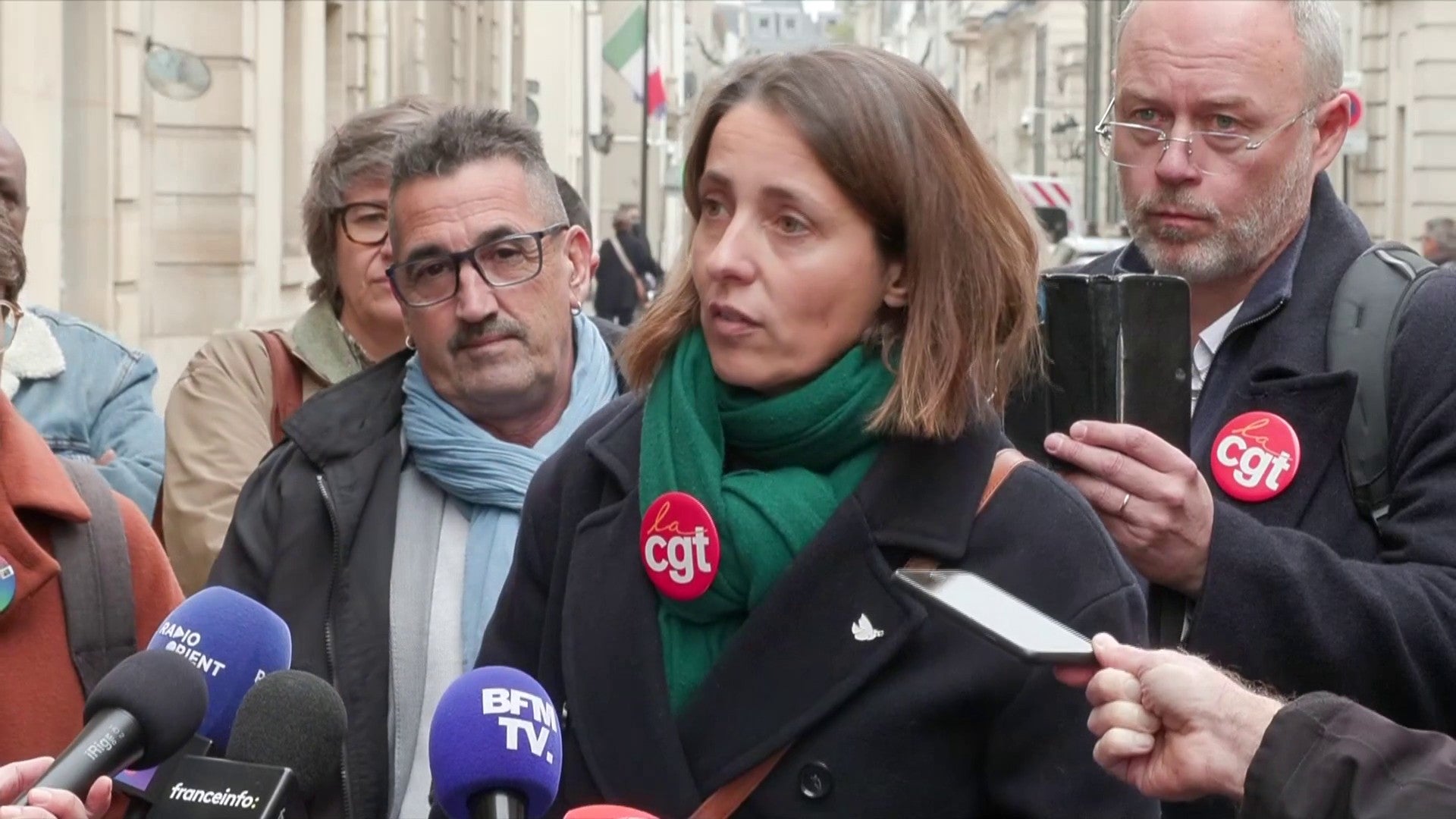
Sophie Binet, general secretary of the CGT, criticised what she called crumbs and announced that her union is calling a new nationwide day of strikes and demonstrations on 17 November, matching a call from the public sector inter-union grouping. She took particular aim at the size of the Smic increase, saying the government had announced a 23-euro rise on 1 December when the minimum wage would in any case have gone up automatically by 18 euros on 1 January.
Marylise Léon, general secretary of the CFDT, described the increase as insufficient. She did, however, welcome the fact that for the first time a number of business aids are tied to branch-level negotiations.
Pressure in schools and on the streets
The social conference took place against a backdrop of scattered disruption in schools. The Ministry of Education said that by 9:30 on Monday only 31 of the country's 3,700 lycées, or 0.8%, were blockaded. The Île-de-France region reported that 50 lycées had been disrupted during the morning, adding that many attempted blockades were foiled through intervention.
Lecornu said several chapters had been opened with precise proposals, and that while the Smic revaluation is not enough on its own, it carries real weight because it starts a cycle of discussion on wage increases. He said employer organisations are waiting on the government to ensure labour costs do not rise and companies remain competitive. He also said he had asked ministers to engage sincerely in the responses, particularly in an electoral context where promises come easily, and that in a moment when the country appears fractured the government's duty is to find solutions.
The immediate test is whether the measures calm the mood before Tuesday's planned strikes and demonstrations, and then before the 17 November action called by the CGT and public sector unions.