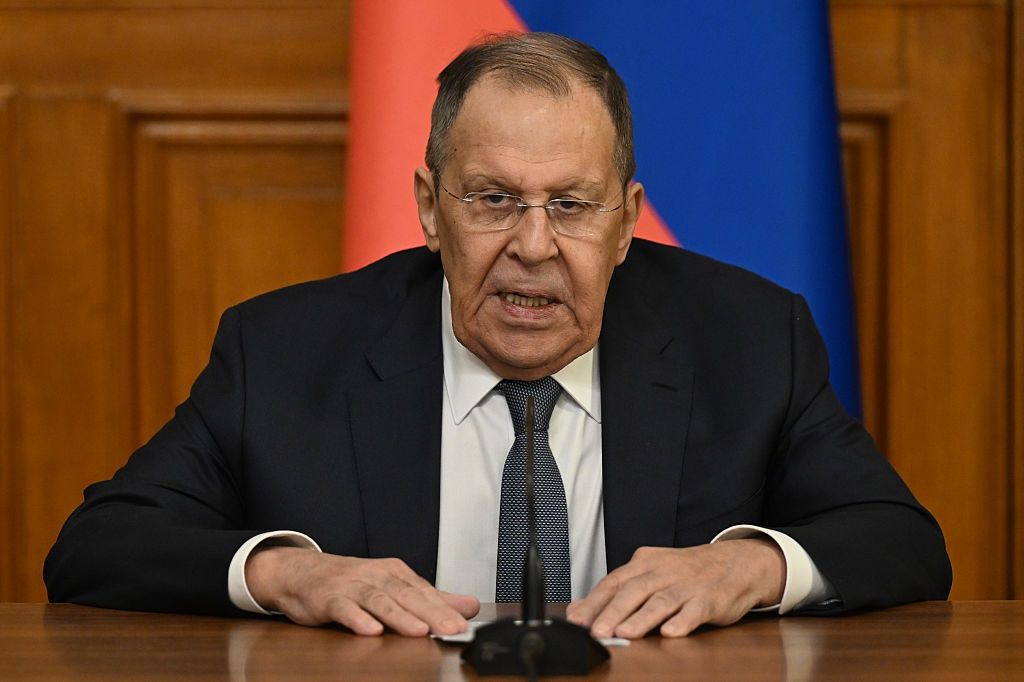
Russian Foreign Minister Sergey Lavrov said on Friday that Poland's presence at the G20 foreign ministers' meeting in Atlanta undermines the consensus-based way the group normally operates, according to Money.pl. Speaking to reporters on the sidelines of the two-day gathering, which opened Friday and closes Saturday, Lavrov argued that Warsaw adds nothing to the talks and does not belong at the table.
The meeting is being held under the United States' G20 presidency this year, and Poland is taking part as a full participant on a special American invitation. Polish Foreign Minister Radosław Sikorski represents Warsaw at the talks.
Why it matters
The exchange puts a spotlight on how the G20 — a forum built around agreement among its members — handles guest participation at a moment when the group's composition is itself contested. It also signals that Poland's push for a more permanent foothold in the body will face resistance from Moscow, which Lavrov made little effort to hide.
His remarks came at a meeting meant to focus on global economic and diplomatic coordination, but they quickly turned into a public dispute over who should be in the room. For Warsaw, the invitation is a chance to sit alongside the world's largest economies; for Moscow, it is a precedent worth objecting to openly.
Lavrov's objections
According to Money.pl, Lavrov described the invitation as a departure from diplomatic practice, and specifically from the multilateral custom in which members of bodies like the G20 reach decisions by consensus. He said this applies both to the meeting's agenda and to the admission of new participants.
The Russian minister said Poland "brings nothing" to the gathering. In his view, Warsaw does not meet the bar for participation because its economy is not large enough, and he added that NATO and European Union members are already well represented within the group.
Lavrov also said no pressure had been applied on Russia to extend the invitation. He claimed the Americans simply invited the Polish foreign minister, who then took the seat set aside for him, Money.pl reports.
Warsaw's counterpoint and next steps
Sikorski, for his part, used his time in Atlanta to look ahead. Money.pl reports that he noted the United Kingdom has invited Poland to take part in next year's G20 work. He also said Poland is lobbying the incoming Korean and Mexican presidencies to extend similar invitations, and acknowledged that he does not expect Russia to welcome that effort.
The back-and-forth leaves the immediate question of Poland's role unresolved beyond this week's meeting. What to watch is whether the Korean and Mexican presidencies respond to Warsaw's requests — and whether Lavrov's objections gain any traction among other members as the group prepares for its next round of talks.