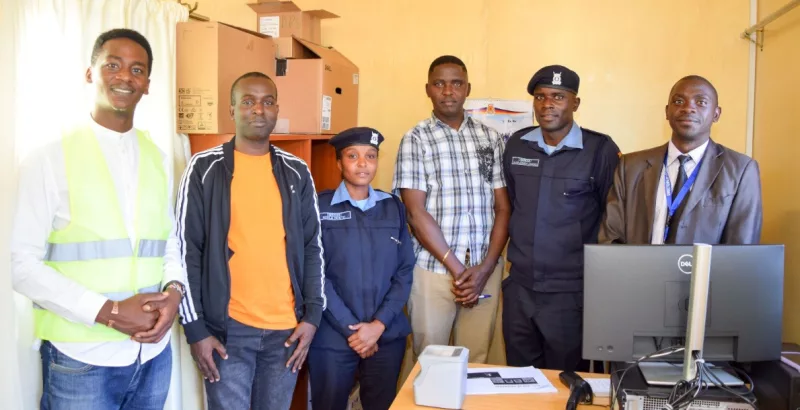
The Directorate of Criminal Investigations has extended access to its Multi-Biometric Identification System to the Diplomatic Police Unit headquarters, allowing diplomats, foreign nationals and staff of international missions to apply for Police Clearance Certificates without travelling to DCI headquarters or Huduma Centres, according to The Star, Kenya.
The expansion, reported on 14 October 2026, forms part of a nationwide rollout of the digital platform. The DCI said the move was intended to improve the efficiency and accessibility of police clearance processing for the diplomatic community.
The system was first introduced at DCI headquarters in Nairobi on 23 July 2026, when Interior Cabinet Secretary Kipchumba Murkomen officially launched the upgraded platform. That launch marked a shift away from the previous automated palm and fingerprint identification system toward a platform that incorporates several biometric identification methods.
Why it matters
Police clearance certificates are a routine requirement for Kenyans and foreign residents who need to prove they have no criminal record, often for visa applications, job offers or residency processes abroad. The DCI's stated aim with the new platform is to cut the time applicants spend waiting for those documents and to widen the number of places where they can be processed.
For the diplomatic community, the practical effect is that applications can now be handled at the Diplomatic Police Unit rather than requiring trips to DCI headquarters or Huduma Centres. The DCI said the addition extends the service to a group of applicants whose work and residence arrangements may make travel to other application centres less convenient.
The agency also frames the technology as more than an administrative tool. According to the DCI, the platform is intended to support criminal records management and help investigators identify individuals through biometric information, strengthening forensic capabilities in criminal investigations.
What the DCI says the system delivers
The DCI reported a set of performance improvements following the system's introduction. According to the agency, the MBIS has reduced police clearance certificate processing time from 14 days to same-day issuance. It has also increased record-handling capacity from 2 million to 10 million records, and raised daily search capacity from 4,500 to 20,000.
The Kenya News Agency reported at the July launch that the platform was expected to reduce certificate processing time from as long as 14 days to within 24 hours.
The system relies on fingerprint, palm-print and facial recognition technology to verify identity. Its digital capture process replaces the traditional ink-based collection of fingerprints and paper-heavy procedures. The DCI said the platform integrates these technologies to enhance identification accuracy and strengthen forensic capabilities in criminal investigations.
The DCI's Forensic Fingerprint Identification Bureau maintains the national repository of criminal records. Its responsibilities include forensic fingerprint analysis, the issuance of police clearance certificates and the identification of individuals through fingerprint evidence.
A phased rollout across the country
The diplomatic unit is the latest addition to a rollout that has proceeded in stages. In September 2026, the second phase of the MBIS rollout connected 20 additional application centres, primarily serving the Central Region and neighbouring areas.
That phase brought the number of connected Police Clearance Certificate application centres to 26 out of 63 nationwide, according to the DCI. The total includes six centres in Nairobi that had been connected earlier.
The second phase covered locations in Kajiado, Machakos, Kiambu, Murang'a, Nyeri, Nyandarua, Laikipia, Samburu, Kirinyaga, Embu, Tharaka-Nithi, Meru and Isiolo counties.
The DCI has said the nationwide rollout is continuing, with the remaining application centres expected to be connected as the expansion progresses.
How applicants use the service
The DCI's published application guidelines already provide for foreign nationals living in Kenya to apply for police clearance certificates through the eCitizen portal. Applicants must select the appropriate immigration category and provide the required documentation before proceeding with fingerprint capture.
The agency says applicants are notified when their certificates are ready for download through their eCitizen accounts.
The rollout has been covered by several Kenyan outlets. The Star, Kenya reported the expansion to the diplomatic community, while Kenyans.co.ke reported that Kenyans and foreign nationals were set to receive police clearance faster under the new DCI system. People Daily reported that the DCI had rolled out a system allowing diplomats and foreigners to obtain police clearance locally, and Nairobi Leo reported the launch of the system for diplomats.
What happens next depends on the pace of the remaining connections. The DCI has said the rest of the country's application centres will be brought onto the platform as the rollout continues, which will determine how widely the same-day processing the agency reports is available beyond Nairobi, the Central Region and the Diplomatic Police Unit.



