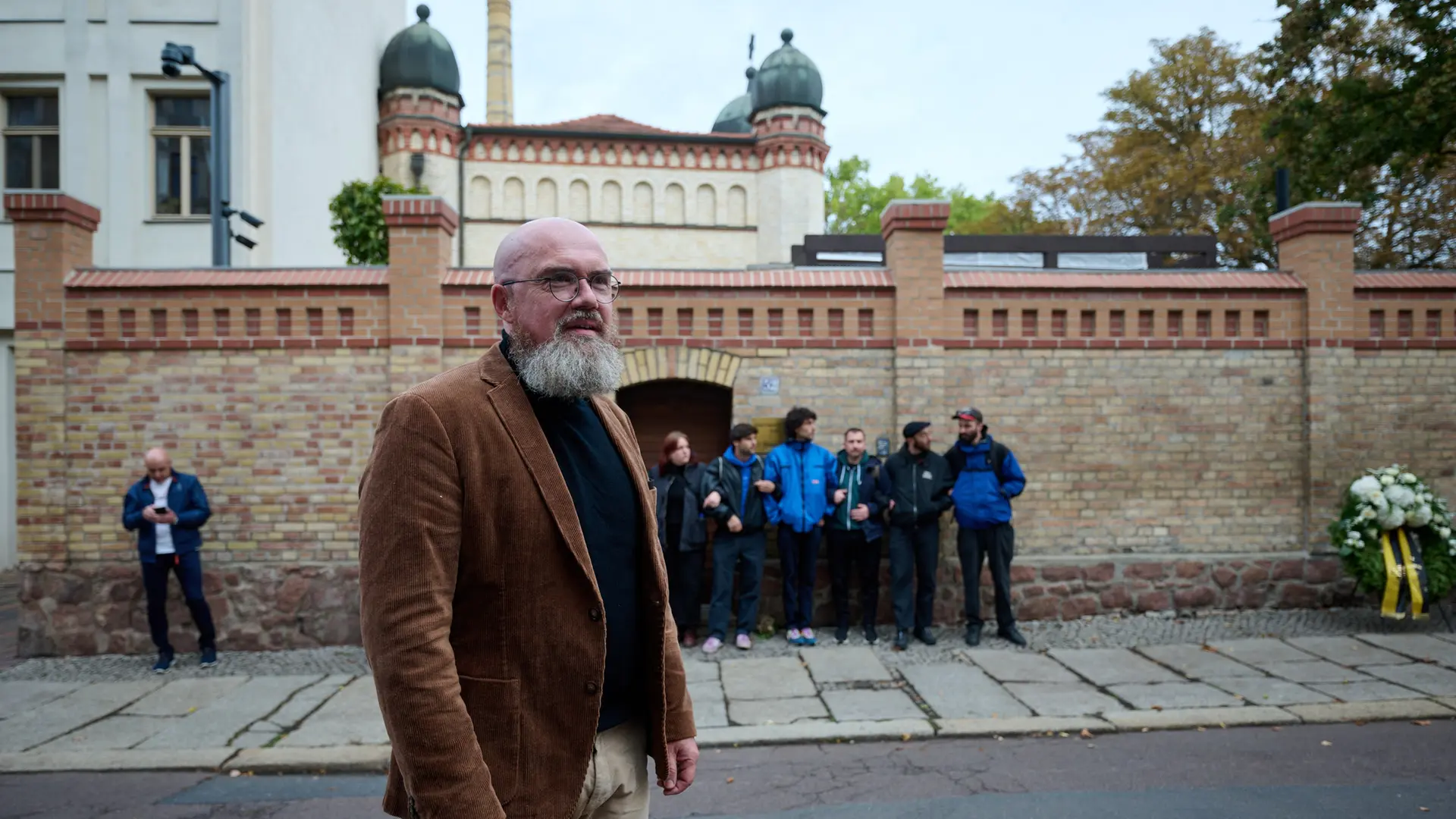
Members of the Jewish Students Union of Germany (JSUD) formed a human chain outside a Halle synagogue on Friday to prevent AfD politician Hans-Thomas Tillschneider from entering a memorial service for the victims of the 2019 antisemitic attack, MDR.de reports.
The ceremony marked seven years since a heavily armed right-wing extremist tried to force his way into the synagogue on Yom Kippur, the Jewish Day of Atonement. When he failed to get inside, he shot dead a 40-year-old woman passing by and then killed a 20-year-old man in a nearby kebab shop. He wounded more people as he fled before police arrested him. The Naumburg Higher Regional Court sentenced him in 2020 to life imprisonment with subsequent preventive detention.
According to MDR.de, the blockade was a spontaneous gathering. Police said representatives of the assembly authority mediated between Tillschneider and the demonstrators, the situation stayed calm, and the AfD politician left the site after a lengthy discussion.
JSUD president Ron Dekel said the group acted to stop right-wing extremists from claiming the commemoration for themselves. "We will not let our remembrance be hijacked," Dekel said, according to MDR.de. Speaking directly to Tillschneider, he said: "You are not welcome here. We will not let right-wing extremists into our synagogues a second time."
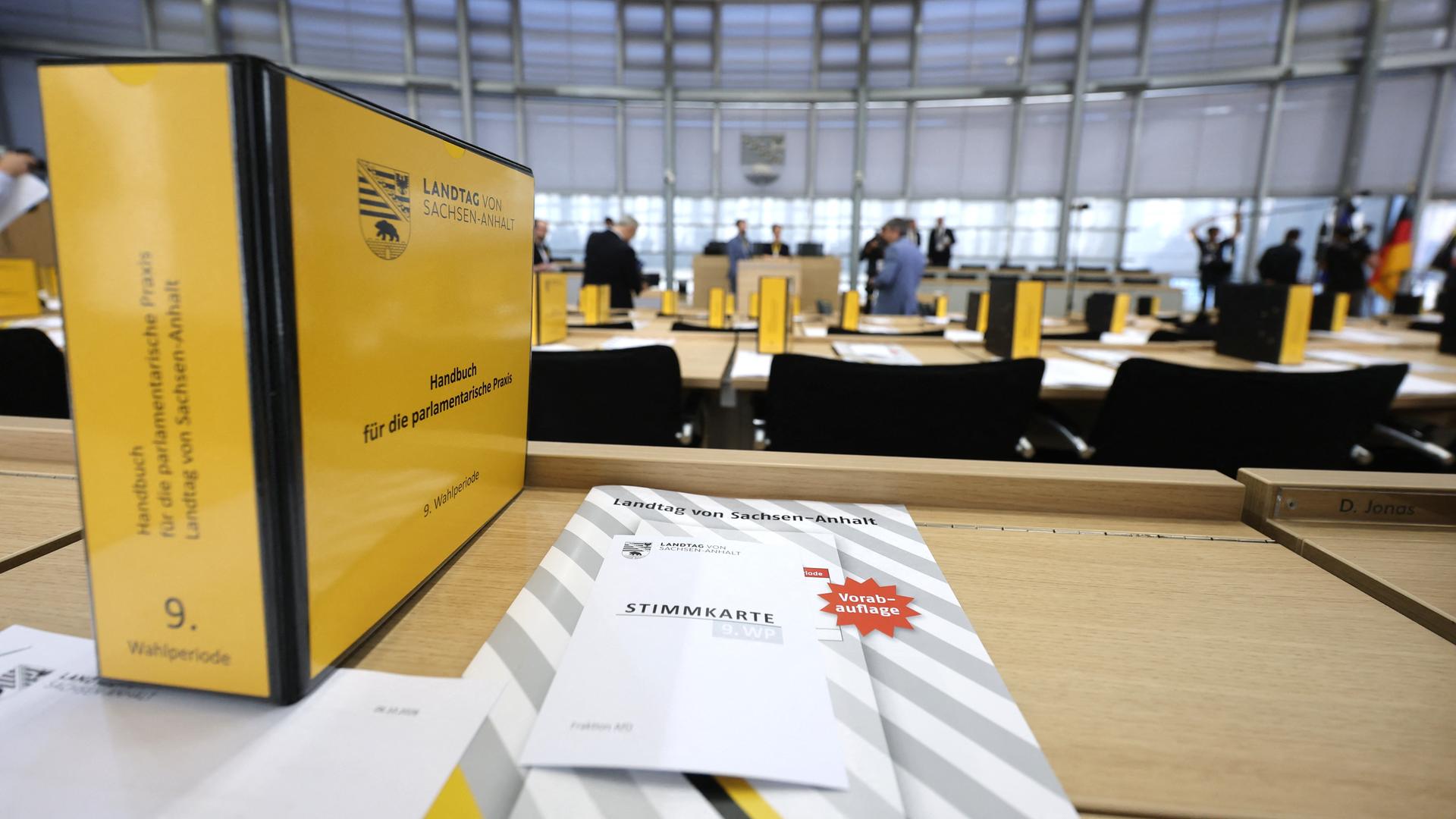
Tillschneider, an AfD state parliament member who became vice-president of the new Saxony-Anhalt legislature on Tuesday, said he had been prevented from taking part in a "rowdy" manner and had been insulted as a Nazi. He said he had never spoken out against Jewish life, rejected the label of right-wing extremist, and called on Max Privorozki, head of the Jewish community in Halle, to hold talks with him.
The AfD in Saxony-Anhalt is classified by the state domestic intelligence service as a confirmed right-wing extremist movement.
Why it matters
The confrontation puts a spotlight on how German democratic institutions handle a party that the state's own security service treats as extremist — and on who gets to represent those institutions at moments of official mourning.
Tillschneider attended in place of state parliament president Tobias Rausch, according to his parliamentary group. That decision drew sharp criticism from the opposition and from within the governing camp.
The CDU parliamentary group in Magdeburg faulted Rausch for sending Tillschneider to represent the legislature. Group leader and acting minister-president Sven Schulze called the move an "affront to the Jewish community," MDR.de reports. Schulze said it was "simply unbearable" to entrust precisely Tillschneider with representing the parliament at a commemoration that demands respect, sensitivity and a clear stand against antisemitism and right-wing extremism.
CDU lawmaker and state parliament vice-president Carsten Borchert said Rausch had not asked him, and that he would have been available to attend. He said democratic institutions in particular must live up to their special historical responsibility on a day like this.
Eva von Angern, who leads the Left party group in the state parliament, accused Tillschneider and the AfD of using the memorial day for a staged performance. She said the party would try to instrumentalize further commemorations and was accepting harm to the interests of the victims.
A city remembers, seven years on
Halle marked the anniversary with wreath-laying, church bells and a moment of silence, MDR.de reports. Representatives from politics, the churches, the city and civil society attended the synagogue ceremony, along with relatives of the two people killed. Among the guests were Schulze and his predecessor Reiner Haseloff.
Schulze said people must keep recalling what happened seven years ago — not only to honor the victims. Antisemitism and right-wing extremism have not disappeared, he said, and Jewish life belongs to Saxony-Anhalt, where Jewish women and men must be able to live safely and without question.
The JSUD framed its action in similar terms. In its account, the students wanted to ensure that a day reserved for the victims and their families would not be turned into a platform for a party whose state branch is under extremist watch.
The episode also revived scrutiny of the 2019 attack itself. A parliamentary inquiry committee's final report identified shortcomings in the police response, MDR.de notes — a finding that has kept questions about official preparedness alive in the years since the attack.
For the Jewish community in Halle, Friday's events carried a double weight: the annual duty of remembrance, and a fresh argument over whether a party classified as extremist should stand in for the state at that remembrance at all.
What happens next is unclear. Tillschneider has asked Privorozki for talks, and it remains to be seen whether the Jewish community accepts. The dispute over Rausch's decision is likely to continue in the state parliament, where the CDU has already called the choice a failure of political judgment.