Italy's cabinet approved its Documento programmatico di bilancio (Dpb) at the end of the day, but the path toward the country's budget law has grown markedly less clear, according to Il Fatto Quotidiano. The government's plans remain vague, the funding sources are unresolved, and the timetable for the last financial manoeuvre of the Meloni executive has slipped to an unspecified date.
The confusion was visible in the paperwork. Palazzo Chigi circulated an agenda listing both the Dpb and an "illustration of the lines" of the manoeuvre. Roughly forty-five minutes later, that agenda was updated and the second item vanished. Sources at Palazzo Chigi described it as a "mere clerical error," noting that Economy Minister Giancarlo Giorgetti had already told the chamber that approval would come at a later stage, Il Fatto Quotidiano reports.
Why it matters
The delay matters because the measures that had been presented as near-certainties — above all a new Irpef cut aimed at middle-income earners — are now in question. That uncertainty is producing friction inside the governing majority. The executive is also waiting on signals from Brussels before deciding how to respond to rising prices, from fuel pumps to supermarket shelves, Il Fatto Quotidiano reports.
Giorgetti wants to wait for the conclusion of the European procedure on the safeguard clause before settling on a manoeuvre with "defined contours." The verdict is expected from the Eurogroup on 9 November. That could push past the 20 October deadline — described as non-binding — for sending the text to Parliament.
The Irpef cut and the fight over priorities
The government has not denied press reports that it may freeze the plan, announced repeatedly by Deputy Economy Minister Maurizio Leo and invoked by Premier Giorgia Meloni, to lower the rate on incomes between 50,000 and 60,000 euros from 43% to 33%. The "blanket is short," and with an election year approaching, the reasoning has shifted toward measures with a bigger electoral return, according to Il Fatto Quotidiano.
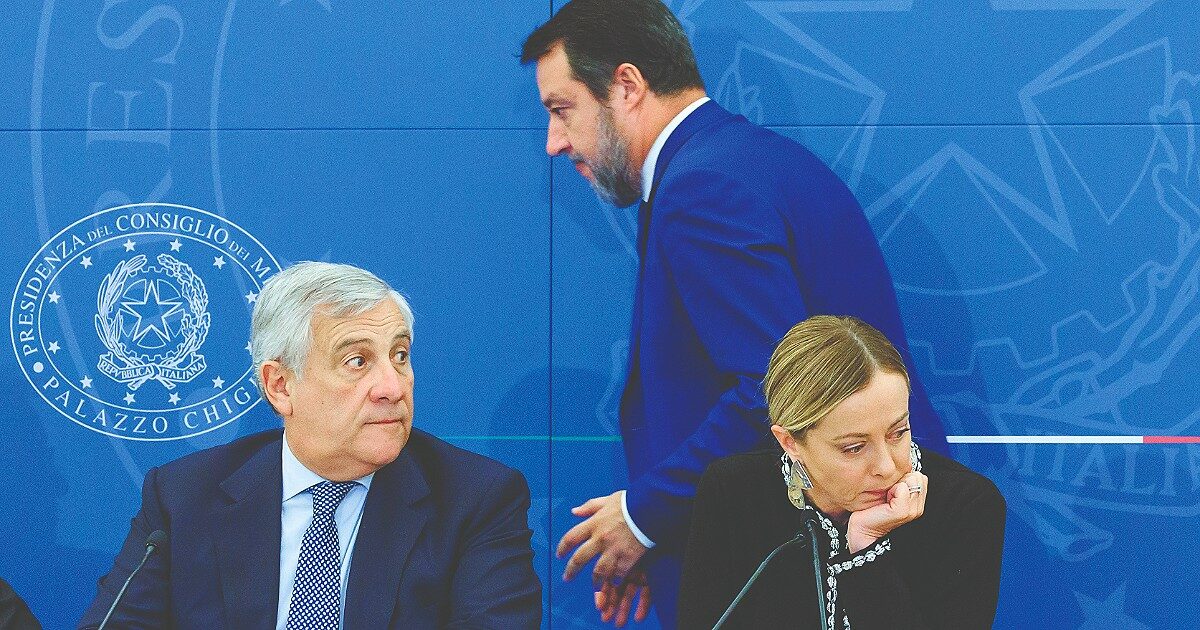
Deputy Premier and Forza Italia leader Antonio Tajani pushed back in the afternoon. Speaking to reporters at the Chamber of Deputies, he said the cut must go ahead and that interventions for young people are needed too. He has repeated since July that the Irpef intervention is a priority.
Under hypotheses circulating in recent hours, the government is weighing concentrating resources on the elderly and frail, particularly to ease the cost of medical care, and on supporting the pay of young workers. On health, technicians are said to be working on a flat-rate bonus for certain expenses incurred outside the national health service, starting with dental care. The aim would be to bring forward, at least in part, the tax deduction for medical spending, which today is claimed in the tax return for the year after the costs are incurred. A general advance would have a cash impact that would be hard to sustain, so a flat contribution is being studied instead, with the amount to be set according to beneficiaries' income thresholds.
For workers, another route would be to repeat the tax exemption on pay increases resulting from contract renewals. The idea of a tax discount on year-end bonuses, or tredicesime, is seen as more distant; according to Il Sole, it could be revived only at the end of 2027, elections permitting. There is also the notion of raising the income ceiling under which VAT-registered freelancers can use the flat-rate regime. After the threshold moved from 65,000 to 85,000 euros, it could be shifted to around 100,000 euros — though that would require a green light from Brussels because of EU VAT rules.
Funding gap and market pressure
On funding, the League is aiming to raise at least five billion euros from banks and insurers without introducing new taxes on extra profits, instead seeking a contribution that Matteo Salvini has described as "voluntary, joyful and spontaneous." Early estimates after talks at the Economy Ministry pointed to a smaller figure, between two and three billion. Whether institutions will cooperate remains to be seen. ABI president Antonio Patuelli has repeatedly said he is not prepared to go beyond the 10.5 billion agreed with the government last year under a three-year accord. No meetings with the executive are currently scheduled to discuss further contributions, Il Fatto Quotidiano reports.
Market conditions are adding to the difficulty of finding cover. The Treasury sold eight billion euros of twelve-month Bot at an average weighted yield of 3.175%, the highest level since July 2024. Rates on new home mortgages taken out in August also returned to highs last seen two summers ago, approaching 4%. Higher yields make financing the public debt more expensive and further narrow the room for new measures, all else being equal.
It also remains unclear how much additional flexibility Italy can obtain under European rules. Beyond the 28.8 billion already granted for energy and defence through activation of the safeguard clause, the government is still waiting to learn what else may be available.
Parliament, meanwhile, gave the government the go-ahead on the Documento programmatico di finanza pubblica and on the deviation for nearly 29 billion in flexibility conceded by the EU for energy and defence.
The next signal to watch is the Eurogroup meeting on 9 November, which will shape how much room Italy has — and whether the middle-class tax cut survives.