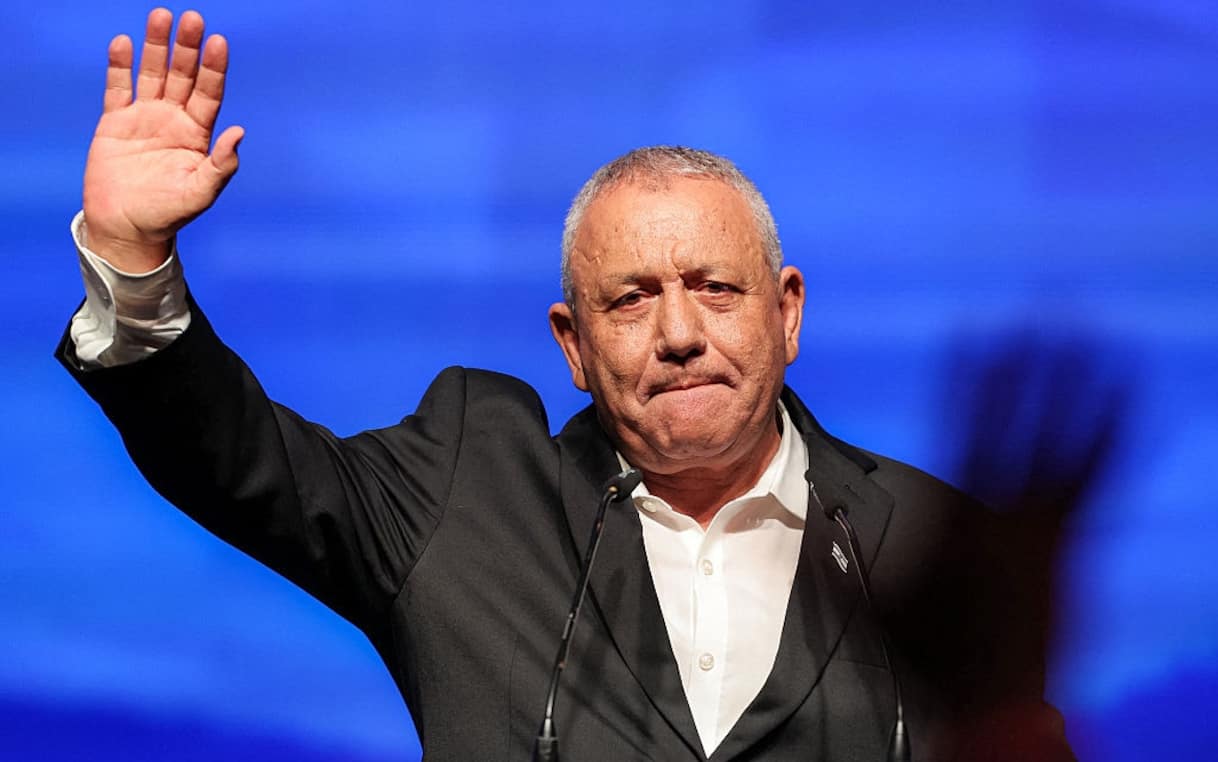
Israeli President Isaac Herzog has informed Gadi Eisenkot, leader of the Yashar party, that he intends to hand him the mandate to form the country's next government, according to Sky TG24. The two are scheduled to meet at 5 p.m. today, when the appointment is expected to be announced officially.
The decision follows consultations in which parties holding a combined 67 seats in the Knesset named Eisenkot, Sky TG24 reports. Parties controlling 46 seats backed outgoing Prime Minister Benjamin Netanyahu, the Likud leader, who now steps back while it remains to be seen whether Eisenkot can assemble a governing coalition.
Why it matters
The mandate marks a potential end to Netanyahu's tenure, which across six governments since 1996 has totaled 20 years, according to Sky TG24. It also hands the task to a former general who built his reputation outside party politics and who, as the Italian press has framed it, has positioned himself against Netanyahu.
Eisenkot's path to a sworn-in government is not guaranteed. The parties that recommended him do not by themselves guarantee a stable majority, and the shape of any coalition — including which partners he must rely on — is still unresolved.
A narrow bloc and the Arab parties' role
The centrist bloc led by Eisenkot holds 48 seats, according to Haaretz reporting cited in the source material. That leaves him dependent on outside support unless he can widen his base.
Ra'am, the Arab-Israeli party that won eight Knesset seats in the election, has said it will back a government headed by Eisenkot even without a coalition agreement, Haaretz reported, citing a senior figure in the party. According to that reporting, Ra'am wants to prevent Eisenkot's bloc from having to depend on the ultra-Orthodox Ashkenazi party United Torah Judaism, and wants a new government installed as quickly as possible to replace Netanyahu's — even without a solid, assured majority.
The other Arab party, the Joint List, will not vote in favor of such a government but will not work to bring it down either, according to the same reporting. Both parties intend to cooperate with Eisenkot's bloc on replacing the current Knesset speaker, Likud lawmaker Amir Ohana, and on establishing a state commission of inquiry into the October 7 attacks.
A fractured US debate on Iran
As Israel's political transition unfolds, the Trump administration is divided over Iran, according to Sky TG24. Vice President JD Vance is pressing for an end to the conflict, while Defense Secretary Pete Hegseth and the head of US Central Command, Brad Cooper, are pushing for a return to fighting, the outlet reports.
Regional tensions remain high in the same reporting. Explosions were reported at Qeshm, and Centcom said a vessel in the Gulf of Oman was struck and immobilized. Iran's Revolutionary Guard said two oil tankers hit mines near the Strait, according to the source material.
Iran's army said it is "stronger" than at the start of the Middle East war and ready to respond to any attack "immediately" and "without geographic limits," following recent US threats, according to Sky TG24.
Iranian authorities also executed three men today after convicting them of carrying out operations for Israel and the United States during January's anti-government protests, the judiciary said, per the source material. The death sentences against Hassan Divband, Hamid Kazemi and Reza Zanganeh were carried out after confirmation by the Supreme Court, the judiciary's Mizan Online portal reported. Other defendants in the same case received prison terms of five to ten years.
The protests began in December over the cost of living and grew into widespread anti-government demonstrations that peaked on January 8 and 9, according to the reporting. Iranian authorities have reported more than 3,000 deaths and blamed violence on "terrorist acts" orchestrated by the United States and Israel, while some foreign-based NGOs have given higher figures and said Iranian security forces fired on protesters. Executions in Iran have risen since the Middle East conflict began, triggered in late February by US and Israeli strikes on the Islamic Republic, per the source material.
Missiles toward Riyadh
Saudi Arabia's air defenses intercepted and destroyed two ballistic missiles fired by the Houthis toward Riyadh, the Saudi-led coalition fighting the Houthis in Yemen said, according to Middle Eastern media including Al Jazeera cited in the source material. The announcement came hours after the coalition reported intercepting another ballistic missile aimed at the kingdom's eastern province.
Saudi civil defense had issued a danger warning overnight for the Riyadh area and for Najran, according to the reporting. Witnesses told AFP that the financial district of Riyadh was targeted and that an Aramco building in the area was damaged. One witness said the Aramco tower in the King Abdullah Financial District "was hit, that is certain," and two other witnesses confirmed seeing damage to the building. Powerful explosions were heard in Riyadh after an alert of a "hostile air threat," witnesses said.
What to watch: the 5 p.m. meeting and official announcement, and whether Eisenkot can convert recommendations from 67 Knesset members into a durable coalition.