Polling stations opened across Israel at 8 a.m. local time on Tuesday for parliamentary elections, with Prime Minister Benjamin Netanyahu's political future at stake against a field led by his former War Cabinet colleague Gadi Eisenkot. According to Hürriyet, the vote is unfolding in a tense atmosphere, with the opposition saying far-right groups have tried to stop voters from casting ballots.
The Central Elections Committee reported unusually heavy early participation. By 10 a.m., 16.68 percent of registered voters had voted, about 1.2 million people, compared with 15.9 percent in the first two hours of the 2022 election. Hürriyet reported that turnout was on course to be the highest since 1981.
Why it matters
The result will decide whether Netanyahu, Israel's longest-serving prime minister, stays in office or is replaced by a coalition that could include the Arab-led Joint List, which is aiming to block him from forming another right-wing government. The campaign has also exposed open friction inside the outgoing right-wing bloc, with a senior coalition partner publicly accusing Netanyahu of cutting a secret deal behind his back.
Ben-Gvir accuses Netanyahu of a deal with Eisenkot
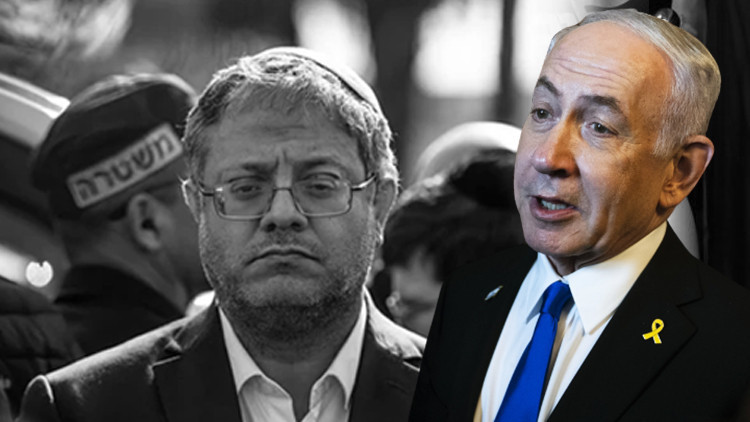
Itamar Ben-Gvir, the far-right national security minister and a Netanyahu coalition partner, claimed on election morning that the prime minister had promised the US administration he would form a unity government with opposition leader Eisenkot after the vote, excluding Ben-Gvir. In a post on X, Ben-Gvir shared a report by the newspaper Israel Hayom and wrote that Netanyahu had made such a commitment to Washington.
Ben-Gvir further alleged that Netanyahu had agreed with Eisenkot to be pardoned in his corruption case in exchange for a post-election government that leaves the minister out. He urged his supporters to vote so that a strong Ben-Gvir presence remains in government. The claims, reported by Hürriyet, have not been independently confirmed.
Rivals, turnout and disputes at the polls
Netanyahu released a campaign video on election morning, filmed at a settlement in the West Bank, in which he argued that Eisenkot would need backing from Palestinian-origin politician Mansour Abbas and Arab parties, from Yair Golan, who says a Palestinian state should be established, and from Avigdor Lieberman, whom he quoted as saying the Jordanian army should be allowed into the region.
Eisenkot, a Morocco-born former chief of staff who served 41 years in the Israeli military, sat in the War Cabinet formed during Israel's campaign in the Gaza Strip. He founded his Yeshar Party in 2025 and is now seeking to unseat Netanyahu, according to Anadolu Ajansı.
Far-right Finance Minister Bezalel Smotrich said on X that high turnout was concentrated in areas with large numbers of Palestinian citizens of Israel and on the left. He argued that parties polling below the electoral threshold would also fail on the day and urged voters to back parties certain to enter parliament.
Yousef Jabareen, leader of the Joint List, which represents parties of Palestinian citizens of Israel, voted at a school in Umm al-Fahm and told reporters the goal was to send the Netanyahu, Ben-Gvir and Smotrich government "to the trash heap of political history." He said hundreds of thousands of people needed to vote and that the day could be historic for the Arab community in Israel, adding that the bloc could build a parliamentary majority against Netanyahu and prevent him from forming another right-wing government.
The Central Elections Committee acknowledged reports that Arabic-language ballot papers had run out at a number of polling stations and said it was working on a solution, Hürriyet reported. The far-right Amcha Yisrael party said it had contacted the committee after reports that ballots cast for it were being destroyed at several stations, including one case in which a voter allegedly tried to destroy all the party's votes.
The Haredi public party said its activists had been attacked and campaign stands outside polling stations vandalized in Bnei Brak, Beit Shemesh and Beitar Illit, and that it had filed a complaint with police. Members of religious Zionist groups and youths from the radical settler group known as "Hilltop Youth" were seen in several Arab communities and near polling stations, though no clashes or unusual incidents linked to their presence had been reported.
Israelis are electing a new parliament, and the outcome will shape both the country's leadership and the future of the cases against Netanyahu. Results and coalition talks are the next thing to watch.